Friday, November 30, 2018

Revelation Read-Along

Dear Bible Adventurer-

The written word of God, what we call the Bible, is a gift of the Holy Spirit to the faithful in the ages of scrolls, of parchment, of the printing press, and of digital technology. The Bible is not our God, but it is a manger in which Christ is laid. When we come to this manger like a shepherd, with humble hearts, and at heavenly urging, we will find our hope and our salvation. 

Why Revelation during Advent (or ever)? Advent is an in-between season that often gets overlooked in both church and secular society. The themes of anticipation, hope, peace, restoration, letting go, quietude, and discipleship can easily get lost in either frenetic Christmas preparation or in fear of the more dystopian themes of our news cycle and the biblical readings assigned for this time of year.

When Revelation was written, either very late in the first-century A.D./C.E. or early in the second, the people who followed the Way of Jesus find themselves outside of their society. If they lived in Roman-occupied areas, as did most of the people who received this letter, they were confronted with an emperor who had declared himself the son of the gods. Furthermore, both Jews (Christian or religiously Jewish) and Gentiles (Christians who were not ethnically Jewish or Judean) were being persecuted for their faith practices that put them at odds with the Roman culture.

Those who chose to live in imitation of Christ disregarded some of the social “norms” of their time. They shared what they had with one another and with those who struggled. They understood equality among men and women, slave and free, young and old to be a hallmark of their community. They did not give worship or undue honor to the emperor, especially not as a god. Their refusal to participate in the guilds that honored Roman gods and goddesses interfered with the Roman marketplace and finances.

Apocalypse means “unveiling”. So this unveiling or revelation to John is a Spirit-led interpretation of what it means to follow Jesus under the oppression of Rome and Rome’s leaders. The back and forth between Roman power and heavenly power described in the book was meant to give encouragement to Christians to continue in worship, discipleship, and trust in God. John’s writing involves a lot of Roman imagery, especially the symbols of the emperor and Roman power. 

When we read Revelation, it is important to understand what metaphor and symbolism mean in the book and then how the Spirit may lead us to understand these things in our own time. There is not always a direct correlation between a metaphor of Roman power and a way that power may be used well or abused in our own time.

The overarching theme of the book is to remember that God is the beginning and end of all things. When we are afraid, rather than seeking to clarify the signs around us, we are compelled by Christ to our knees and to our community in worship of the one true God and then driven back out, by the Spirit, to serve our neighbor-  be they Roman, Lutheran, Montanan, or other. 

I encourage you to take (at least) 10 minutes a day for this study. Give yourself time to read the Bible passage in your preferred translation. If you can read it out loud, do it. I often find that it is easier for me to understand difficult passages if I read them out loud to myself. Then read the devotional and the prayer. Let the words of the scripture and the meditation roll through your mind like water in a river over rocks. Allow the power of the Spirit in that rolling to smooth out the jagged edges of fear and to bring to you the consolation of God’s power and majesty.

In peace,

Pastor Julia


December 1
Revelation 1
December 2
Revelation 2:1-11
December 3
Revelation 2:12-29
December 4
Revelation 3
December 5
Revelation 4
December 6
Revelation 5
December 7
Revelation 6
December 8
Revelation 7
December 9
Revelation 8
December 10
Revelation 9:1-12
December 11
Revelation 9:13-21
December 12
Revelation 10
December 13
Revelation 11:1-14
December 14
Revelation 11:15- 12:6
December 15
Revelation 12:7-18
December 16
Revelation 13
December 17
Revelation 14
December 18
Revelation 15-16
December 19
Revelation 17
December 20
Revelation 18
December 21
Revelation 19
December 22
Revelation 20
December 23
Revelation 21
December 24
Revelation 22
December 25
Luke 1-2


Tuesday, November 27, 2018

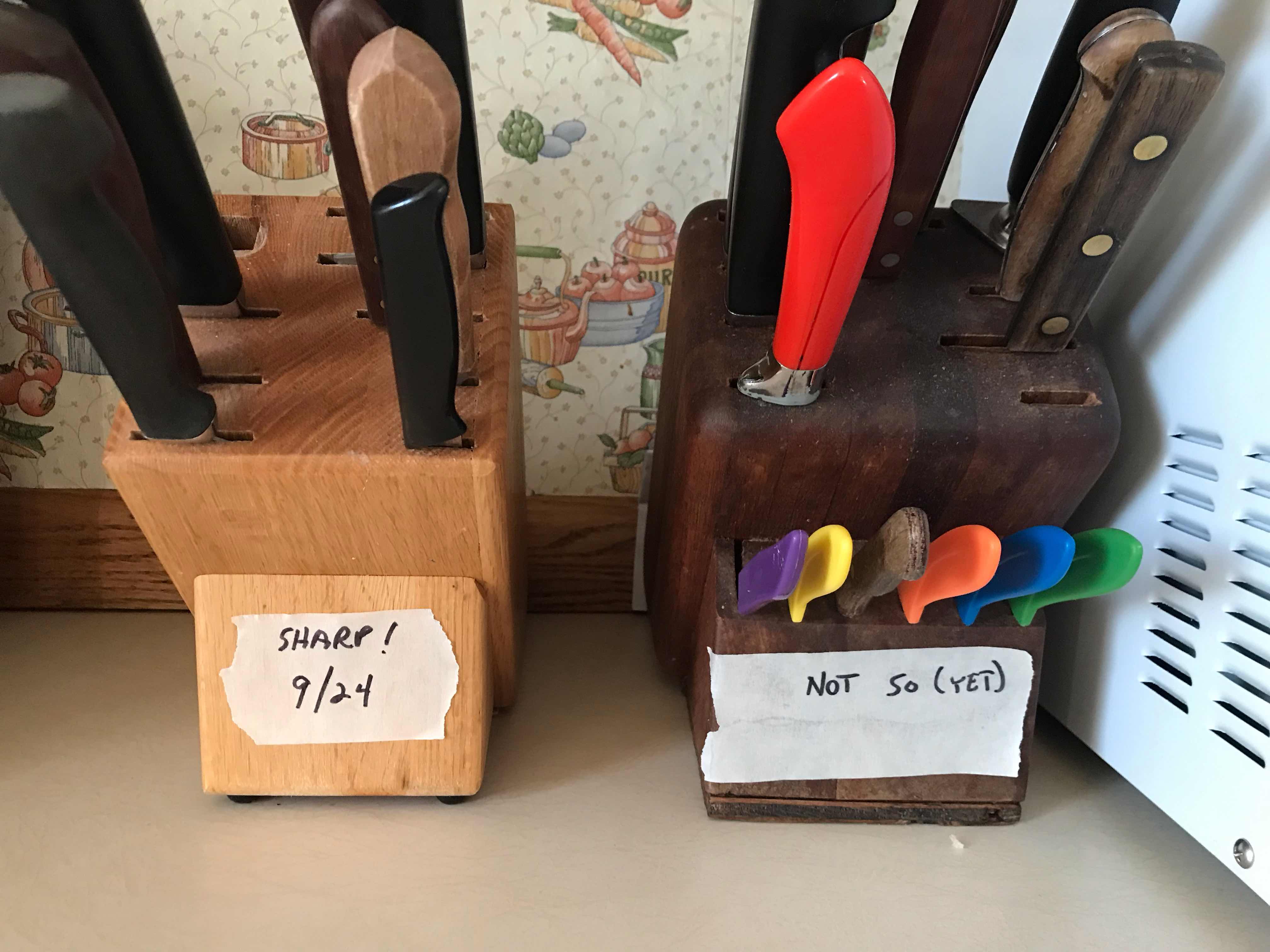
Sharper Image (Thoughts on Sanctification)

I've had this image floating around in my head and in my social media feeds for more than a week.

I even wrote a prayer around it here.

Lutherans famously are "weak on sanctification". I even have one colleague who had a t-shirt to that effect in seminary. I cringe.

The most significant theological aspect of Lutheran theology is justification. This "being made right with God by God's own work and not our own" is the whole basement of our belief system, built with the cornerstone of Jesus the Christ.

Lutheran theologian Gerhard Forde said here (in a really good article that I recommend!),
Sanctification, if it is to be spoken of as something other than justification is perhaps best defined as the art of getting used to the unconditional justification wrought by the grace of God for Jesus sake. It is what happens when we are grasped by the fact that God alone justifies. It is being made holy, and as such, it is not our work. It is the work of the Spirit who is called Holy. The fact that it is not our work puts the old Adam/Eve (our old self) to death and calls forth a new being in Christ. It is being saved from the sickness unto death and being called to new life…Sanctification is thus simply the art of getting used to justification. It is not something added to justification. It is not the final defense against a justification too liberally granted. It is the justified life. It is what happens when the old being comes up against the end of its self-justifying and self-gratifying ways, however pious. It is life lived in anticipation of the resurrection.

It takes nerves of steel to want to contradict or add to what Forde says because his pen was certainly often, if not always, guided by the Holy Spirit. Yet, I do think there is something not fully formed in this thought. Justification can be complete, through Jesus Christ, and we can be fully saved AND simul justus and peccator (simultaneously saint and sinner) AND still have growth in our life of faith and in our discipleship.

Sanctification does not have to be seen a completion of anything God has done, but instead the Spirit's on-going ordering of our internal chaos (as in the beginning of creation), so that we may more fully become the people God has made us to be.

Martin Luther himself understood that even when justification was complete (as it has been since the day of resurrection), we are still on a journey. He wrote in the snappily titled "An Argument- In Defense of All the Articles By Dr. Martin Luther Wrongly Condemned by the Roman Bull..."

This life, therefore, is not righteousness but growth in righteousness,
not health but healing,
not being but becoming,
not rest but exercise;
we are not yet what we shall be,
but we are growing toward it;
the process is not yet finished, but it is going on;
this is not the end, but it is the road;
all does not yet gleam with glory, but all is being purified

 
That sounds like sanctification to me- gleaming with the grace and power of Christ and yet becoming stronger in faith and discipleship, through the Spirit's power, day by day. Additionally, an enormous aspect of understanding the purpose of justification is that, through Christ's work, we have been freed so that we might more fully and purposefully love and serve our neighbors. It seems to me, then, that sanctification is, in part, coming to understand that our neighbors too have been justified by Christ.

It is one thing to believe that I have been made right with God. It is quite another to trust that the person whose motives I question, whose actions I despise, whose being I slander, has also been made right with God by the very same Jesus who has saved me! Surely we are all being moved along in our understanding of this.

Lastly, I think of Paul's words to the Philippians- his happy letter- wherein he is offering encouragement and words of promise to people whom he loved in Jesus.

I thank my God every time I remember you, constantly praying with joy in every one of my prayers for all of you, because of your sharing in the gospel from the first day until now. I am confident of this, that the one who began a good work among you will bring it to completion by the day of Jesus Christ. -Philippians 1:3-6

Now, it is possible to say that this is a comment to a group of Christians, not about individual growth in righteousness, but I believe that kind of theological hair-splitting isn't necessary. Clearly, God's work in and among Christians is never completed, aside from their salvation, and we are constantly being shaped, molded, reformed, restored, stretched, compelled, halted, and burnished for the sake of Christ in the world. We must take this work on God's part seriously and take our own selves less seriously. None of us is presently so good that God's work in us is done.

What's the TL:DR (too long: didn't read)here? Sanctification is a real thing. It matters for our faith and it is apart from justification. Sanctification remains God's work in us, yet we are called and empowered by the Holy Spirit to take part in it, to perceive it, to celebrate it, and to know that God remains at work in us- from the beginning to the end.

Saturday, November 17, 2018

Psalm 27 Revisited (Crosspost)

This was originally written for and posted at Revgalblogpals.org on 16 November 2018.


Psalm 27, Revised Julia Edition

God is my opening to life and my deliverance from evil—
who thinks they can scare me?
The Lord is a solid fence around me—
who will try and come through God’s defenses?

When those who oppose God’s will come at me
thinking they can do something,
it is all over for their evil plans-
Boom! Crash! Rubble.

Though they bring friends to gang up on me,
my heart will not panic;
though hostilities confront me at every turn,
even then I will be confident.

I do have one request for God, though, 
one thing that I really, really want:
that I may perceive the presence of the living God
every day of my life,
to gaze on the splendor of the Lord
and to find the Divine in every place I look.


For in times of trouble
God will keep me safe in the Divine dwelling;
God will hide me in the shelter of the sacred tent
and give me a perch upon the rock of ages.

Then I will look down on all those
who thought they could plan my destruction;
at the Divine tent I will offer my endless praise and thanksgiving;
I will sing and make music to the Lord.

Hear my voice when I pray to you, O God;
be merciful to me and answer me.
My heart says of you, “Look for God!”
Your face, Lord, I will seek.

This is no time for holy hide and seek,
please do not frustrate me;
you have been the one thing I could count on.
Do not swipe left on me or unfriend me,
God my Savior.

Though the people closest to me leave and hurt me,
I know You will greet me at each turn.
Teach me the way of Divine love and mercy;
lead me in a life that brings honor to You,
so that no one can find fault with me.

Do not let those who oppose Your will for my life win,
for people lie about me and my motivations,
making up a lot of crap.

I know one thing is true:
I will see God’s goodness and provision
in this life; I don’t have to die first.

Wait for the Lord;
be faithful and brave
and wait for the Lord.


Tuesday, November 13, 2018

Both Sides Now


For over ten years, I unlocked this door to go to work. Not always the first person in the building, but usually. Not always the last person in the building, but usually. I unlocked this door to run in and grab my communion kit, a Bible, or an address. I unlocked the door to get ready for a funeral, for a wedding, for the 18th Sunday after Pentecost. I unlocked the door to come into God's House and I locked it behind me to go out into God's World. 

I accepted a call to serve a new congregation, which meant leaving my keys for the maroon and glass door behind. From what I learned on both sides of that door, I have come to a new place to serve new people, but the same God. For the first time the other day, I unlocked a new door. Eventually, I will unlock it for all the same reasons and then some new ones. 

Mostly, I think about how God remains the same. I do believe that God's character is immutable, but I also believe that God's actions, throughout history, happen in spite of and despite the actions of people. I think that the Divine Three in One has, on occasion, had to change course due to the reality of human self-centeredness, stubbornness, and desire for control. Even in the course change, God's own heart remains merciful, loving, and compassionate- even in correction. 

So, there are new doors, new faces, and new lessons. And I still love what we've left behind. 

But life is made in the little motions of daily living. The habits. The paths. The words. The keys, the doors, what we unlocked and hold open. What we lock and hold closed. 

And, in all of this, God remains on both sides of all doors. 


Sunday, October 28, 2018

What Needs to Be Said

How do we measure the impact of 65,000 words?

A novel is considered a piece of writing that is a least 40,000. So 65K is a book, for certain.

Now, imagine 65,000 words in 1543.

Those words have to be written out with ink and a quill. They must be scratched onto expensive paper. Then to print and distribute your work of 65,000 words, each page must be set out carefully in the moveable type of the time, inked, and printed. Then the pages must be collated and then tightly handsewn together.

If a book had an illustration, it was likely a block print- carved out of wood, pressed in ink, and the image transferred onto the paper.

All of this sounds tedious, and it was, but it was so much faster than the hand-copying of the previous centuries, prior to Gutenberg and his glorious printing press.

What was carefully written up and printed in 1543? What ideas were worth carefully laying out the moveable type, carving a block print, and distributing far and wide? What topic could inspire 65,000 words?

This is the year in which Martin Luther published "On the Jews and Their Lies". In his earlier years, Luther believed that Jews had been unable to be drawn to the truth of the gospel due to misinterpretation by the Church. Now, in the midst of reinterpretation, he has assumed that Jews and Turks (the name he called Muslims) would be drawn to Christianity. As that turned out not to be the case, and then his prince and benefactor- John Frederick, Elector of Saxony- began to persecute Jews with his (the Elector's) realm.

Slowly, as Luther aged, he became embittered against Jews and then wrote his treatise, "On the Jews and their lies". Sixty-five thousand words railing against Jewish people and calling for their schools and synagogues to be burned, their rabbis and teachers to be prevented from doing their work, for Jews to be ghettoized- unable to live among Christians, for physical protection to be withdrawn from them, and for them to be enslaved or have their property taken away until they truly converted.

Luther never renounced these views.

Neither, in full, did the Protestant Church at the time or the Roman Catholic Church. A full rejection of anti-Jewish sentiment in the church did not happen until well into the lifetimes of some of the youngest people here. 

Great effort was taken to print and disseminate this treatise around Europe, especially among those who could read German. At the same time, there was an enormous (and commendable) effort to have the scripture translated into the vernacular. Thus, people now could read the Bible in their own language, but may or may not have had the skills to reflect openly on what they read.

This means that the subject of "On the Jews and their lies" was in conversation and at the same time that people could, for the first time, read about Jesus' encounters with his own people, their conversations, and their responses to one another. If one had not been adequately taught that Jesus was Jewish, that God always keeps God's covenants, and that Christianity was grafted into Israel's tree of life, then what does do with the idea that Jews are terrible people, living in one's own cities and towns?

Like a contaminated stream flowing into a river, "On the Jews and their lies" polluted the waters of Christian consciousness. To be clear, this particular river already had anti-Jewish and anti-Semitic detritus floating in from historical persecution against Jews, which has a very long history. This poison stream, fed for thousands of years, continued to contaminate the river of Christian consciousness beyond the Reformation on through the Renaissance, the foundations of American history, in 19th century Russia, into the European and American eugenics movements, through the horrors of the Third Reich and Holocaust, continued on in various forms in the Soviet Union, was present in the KKK and neo-Nazi movements of the United States, and committed its most recent horror yesterday in Tree of Life synagogue in Pittsburgh, Pennslyvania on the sabbath day of that community.

Now, please take a deep breath.

Why on earth, on my last Sunday here [at Lutheran Church of Hope], when I have so much to tell you and so much love to share with you, would I take my last twenty minutes of sermon time to speak about the pain, the horror, and the sin of anti-Judaism? Why would I bring up this aspect of Luther's life? Is this the time? Is this the place?

Rabbi Hillel, living close in time to Jesus, said, "If not me, who? If not now, when?"

The ultimate question of life is this: Why are we here?

The religious ultimate question is not "Is there a God?" That is a philosophical question.

The ultimate religious question, which already accepts that there is a god of some kind, is: What does God want with me?

If I have accepted, on through hearing the words of faith, that there is a God and I am not that God, then my life is spent coming to understand and further accept that I am not in control of very much. 
If God has done the work of:
- providing me with a pioneer and perfecter of my faith in Jesus
- giving me the gift of the Holy Spirit
- making me righteous
- ensuring my salvation
- cultivating my love [and]
- bringing me at the last to eternal life...

If I control none of those things, then what exactly is my work?

Let us consider, briefly, Psalm 46, verses 8 and 9:


Come, see the Lord’s deeds,
    what devastation he has imposed on the earth—     
bringing wars to an end in every corner of the world,
    breaking the bow and shattering the spear,
        burning chariots with fire.

What is the devastation that the Lord causes, according to the psalmist? It is the ending of war. The bringing of peace brings devastation to the earth. The end of the weapons of war, the conclusion of the rumors of war, the elimination of the terror of violence- this is the work of the hand of God. 

Why is the end of war devastating? 

Because it shatters the lies about control. War is about dominance, about power, about winners and losers. War and its fellow travelers- death, chaos, pain, and uncertainty- are the tools of the forces that oppose God. They are evil. They tell lies. We forcefully reject them. They oppose God's true reformation work- revelation of love, restoration of relationship, and resurrection in the face of death.

If God's devastating work, to be brought to fruition in creation, is the end of war- in all its forms, then the people of God must be at that work. It is not work that saves us. It is the work we are about precisely because we have been saved. It is the joy of our salvation, of trusting that we have been made right with God and not by our own selves, that allows us to take up work in our homes, in our backyards, in our neighborhoods, in our city, in our state, in our country, and in the world. 

And the work we are to be about, then, is God's own work of ending war. 

We are called to end the actual violence of war that comes about through political contests of will. We are called to end the war of sexual violence against women, girls, and all who identify as female. We are called to end the war of racism- in all its forms, including in institutions, within our justice system, and in our own hearts and minds. We are called to end the war of violence, exclusion, and hate against our LGBTQ+ siblings and neighbors. We are called to end the war of people versus the environment, remembering that the careful stewardship of creation is our first vocation as human beings. We are called to end the war that permits the denial of mental illness, lying about its causes, and ignoring treatment and possibilities for healing. 

We are called to end the war of anti-Jewish sentiment, of lies told about Jews, of misinterpretation and misapplication of scripture, of failing to wrestle with, apologize for, and learn from history. 

If God's devastating plan is to end war, then let it begin! And let it begin with me! Now! 

What is the weight of 65,000 words? Those words have the weight of the destroyed houses of pogroms in Russia, of stolen resources through oppression, inquisition, and general theft, of children who were denied resources because of their homes in ghettos, and the accumulated heft of bodies of murdered Jews through time, political dissidents, and others. That's what 65,000 words weigh. 

It is no small thing- to decide to be on the side of God's work to end war. 

It means, truly, to think about what Jesus would do. It means to pray to have a peacemaking heart, beginning in your closest relationships. This isn't a heart of enabling or accepting pain, but a heart that seeks to speak the truth, dismantle systems that create pain, and to work for the healing of the world. 

This is hard work. 

The work of war is easier, to be sure, because it allows the illusion of control and permits the inflicting of pain to those who are in one's way. War seems easier than peace because peace means a willingness to see, to accept, and to respond to the humanity of another person or group of people. Furthermore, peace means accepting that the other person or people are equally beloved by God and have also been justified (or made right with God)in the same manner as one’s self. 

When I was approved for ordination, the two professors from the now-non-existent Lutheran Theological Seminary at Philadelphia told me that they perceived in me the gift of patience. It was a kind of stubborn patience, they said, that was kind and firm. I would be best, they said, in congregations where there had been pain and conflict. The gift of patience, they said, would be put to use in helping a congregation to heal. 

You, my friends of Lutheran Church of Hope, don't need my patience anymore. I have been called to a place that needs the end of different kinds of wars and needs my patience to help with that. 

You have your gifts- your own desire to welcome, your gift of teaching and shaping pastors, your willingness to be generous with space, time, and money, every single person here and more. You know the wars that must end in Anchorage and in Alaska. The Holy Spirit is already guiding you. 

Though we will no longer be side by side in the work of caring for others and the world that God made, we will never truly be apart. Those who have been baptized, those who have eaten together, those who have wept, laughed, worked, and rested together- those are made into one in Christ- can never truly be separated. 

This will be hard. And we will be sad. But our work will go on, because God will not let us stop. 

65,000 words have a terrible weight. 

But they can be destroyed with a single word. 

Love. 

God is love. (1 John 4)

God's love intends to destroy war. 

God's love brought us together. 

God's love will carry us forward. 

God's love gives us good work for this world. 

God's love is enough. 

I love you. I am not God. My love for you wouldn't be enough, nor would yours for me. 

God's own love for us is enough- enough for our strength, our hope, and our courage. 

Enough to end the wars. 

Enough to bring eternal peace. 


May it be so.

Wednesday, October 24, 2018

When Sad Feels Like Mad

I am in the middle of a big life transition. There are many, many, many feelings associated with any
kind transition. Change is hard. The change- a big move- also affects my children and my spouse (and the dog, though he doesn't know it yet). It also affects many other people- adults and children.

Most people experience a variety of feelings in the midst of change. While a change can have many positive aspects, it is also a kind of death. What was is passing away and what will be is being birthed.

In reflecting on Western, white culture, my experience is that we do not give either much space or much credence to feelings. Since they cannot be seen or proven, they are treated as suspect. Additionally, as our cultural language has tried to make space for people to identify their experiences and associated feelings, we have perpetuated a value system wherein the validity of one's feelings are ranked depending on one's level of cultural power.

While it is possible to prove the exceptions to the rule, it still holds. For example, resources for addiction and for families of addicts are significantly on the rise in the past three years in concert with the growing opioid epidemic. The present crisis is real and horrifying. Nevertheless, it is also true that there have been other addiction crises in the past thirty years. For the most part, however, Americans were happily willing to criminalize addiction when it affected black communities or other people of color. It has only been when the pain (feelings are) is acute and broad in white America that we have chosen to view the problem of addiction as a crisis, not (only) a crime.

Since we tend not have the vocabulary or the willingness to talk about our feelings, we often cannot identify them. In a hyper-individualized society, with very few community spaces, we don't talk openly about grief, about physical pain, about mental health, about familial hurt, and a whole host of other issues. In some circles, the five stages of death from Elisabeth Kübler-Ross have been made into grief totems- denial, anger, bargaining, depression, and acceptance. We rarely note, however, that there is no guaranteed order of the stages, no universal experience, and some of the stages may never come.

All of this is to say that we don't always know or have the skill to express what SAD feels like. Sadness, in its myriad colors and shapes, gets shoved into space we have made for other feelings and emotions. We try to force happiness or a muted acceptance. We reach for ignoring (denial) or go straight to future-tripping, pretending the present messiness does not exist.

Then there is one expression of sadness that I am beginning to realize has a broad cultural shape and effect. Sometimes sad looks and feels like mad. If we are ill-equipped to deal with the griefs of change and the little deaths that happen culturally and communally, we will resist them. The shape of resistance often looks like anger. Anger is activating, assertive, and makes change feel possible. In the midst of mad, we often don't care about who or what we hurt.

In pain, we howl, lash out, seek to reorder the status quo (which likely benefitted us), and deny the feelings of others. Anger expands and takes up space where patience, gentleness, and self-control might live. The wake of anger, additional pain, loss, and sadness are created. Anger, if it is not broken down into its component fellow travelers, self-perpetuates and wounds without end.

We can only come to grips with our feelings when we give them their true identities. We have to have the maturity, the will, and the social vocabulary to say, "I am sad", "This hurts", "I don't like this", "I don't know what to do or think", "I feel uncertain", and "I am tired" (among other realities).

In Western, white America, we are dealing with significant cultural shifting. There is much anger as power dynamics have moved. Societally, because we are ill-equipped for a life of grief, we are not able to understand and process when sad feels like mad. Thus, we see many activated people- moving out of a place of anger and denying what their anger masks.

You cannot tell an angry person, in the midst of their rage, that they are sad or afraid or frustrated. Most of us have seen a person, in the midst of anger, continue to seek ideas and encounters that will feed the rage. The complete exhaustion, and real sadness, that is present when the tide of anger has left is too much to bear for some. Therefore, the furnace of anger must be continually stoked to avoid an internal hearth of spent coals and cool stillness in which everything is clearly outlined and defined.

What we need, societally, in an understanding that grief and sadness are not bad. Furthermore, it is possible to live with pain. It is even more possible to live with pain if we carry it together. A shared grief brings some release to all involved. Most griefs do not go away, but they become less acute and then they are our scars, with flare-ups and reminders.

It would be easy for me to type this out as a way of intellectualizing my own grief at a time of change. I can't. I feel it deeply and it hurts. My spouse has received my two blow-ups of mad that were really about sad. They likely will not be the only two, no matter how I wish otherwise.

That being said, I believe we are at a social moment where we have to really reflect. We will only regress as long as our sad is displayed as mad. Those who choose that path will only continue to act more and more infantile until their tantrums destroy all that we hold dear. And what will happen to those who remain, standing in the middle of a broken society?

I am not totally clear on how we can change this. I only know that I have been using the vocabulary of "sometimes sad feels like mad" with my children and with others around me. Until we move to a large scale understanding of this, I don't know if anything will change.

And that makes me sad.


Friday, October 12, 2018

Asunder (A Sermon on Scripture and Divorce)

Bible passages: Genesis 2:18-24 and Mark 10:2-16.


Before tackling the passages together, it is worth noting that both the Genesis passage and the one from Mark, listed above, have been used to great injury inside the church and among church people. They have been wielded as weapons, not as tools. They have driven people from the community and caused people to believe they might be outside of God's grace. This is a misuse of the written word and it is terrible when and where it occurs. 

The Genesis passage is actually the older of the two creation stories. It has the shape of a story told around a fire, a just-so story to explain the world all around and to share with younger generations a comprehension of Who is in charge of all things. This story has hints of amusement in that God, wanting a companion for the h'adamah (the dust person), holds a tryout for the position with all kinds of animals. None of the critters prove sufficient as a partner for the dust person. 

Thus, God divides the h'adamah, using part of the body to bring forth another, partnering body. In English, we miss the meaning of what is created in this situation. God seeks to make an ezer for the dust person. Ezer means helper, but not in the sense of a lesser aide or second in the command.

Elsewhere in the Hebrew scripture, when the word ezer is used- it is applied to God. Think of "Come, Thou Fount..." and 1 Samuel- "Here I raise my Ebenezer, hither by thy help I've come..." Ebenezer means "by God's help". When God makes an ezer for the h'adamah, God is making a partner, in the Divine image, to work alongside the first dust person for the sake of creation. They are given the vocation of partnership in stewardship. 

To repeat, the ezer is not lesser or secondary, but has been drawn from the first h'adamah and created in the image of God- with some of the vocational strengths of God's own self- for help, comfort, and creation care. Use of this story to make women secondary, even in the sense of complementarianism, dilutes the power of the term ezer and the intention of God in the creation of the second dust person. 

Futhermore, the creation of the ezer reveals God's intention and desire for relationship between people. The partnership of marriage, through the term ezer, is meant to be one of help, community, and an economy of respect, honor, and deep care. We are to tread quite carefully if we are daring to attribute other intentions to God's work in this passage. 

This brings us to Jesus' words in Mark. Please note that when Mark is being written, as the earliest among the written gospels, the other written documents that circulated were likely the early letters of Paul. In Galatians, Paul writes, "In Christ, there is no Jew nor Greek, male nor female, slave nor free." This does not mean that all distinctions between people are to be ignored in a bizarre kind of Stepford-Christianity. It means, rather, that the hierarchies that cause divisions, pain, and inequity in the community of the Way of Christ are to be subsumed under the identity of belonging to and following Jesus. 

Knowing thus, Mark writes out this situation in which the Pharisees are testing Jesus. Their testing is not a function of their particular religion, Judaism, but because they are people. People do not like change. Jesus represents a change to the Pharisees' way of understanding Moses, of enforcing the written Law, and of having authority among the people. Their test is in the hopes of either revealing Jesus to be a betrayer of Moses or one who undermines the authority of Rome and the Roman system of paterfamilias

Jesus notes what Moses said about divorce and why Moses said it. God has made you for relationships, notes Jesus, but because of your hardness of heart, you do not do the work of those relationships. You want to have it your own way all the time. Moses saw, says Jesus, how that could harm your spouses, so he gave you an out, but you are unwise to use it carelessly. 

Additionally, Jesus knows that the system of paterfamilias also creates vulnerability among the people who are lowest in the social hierarchy. The male head of the household owns all the people therein- including his wife, her children, and the enslaved people. If the man chooses to divorce his wife, he is casting her out (possibly with her children) to an extremely uncertain life. She may be left to beg, to sell sex against her will, or to other desperate measures for the sake of her children and herself. 

Jesus, for the third time, draws the attention of the people to whom he is speaking to the children in their midst. Look at the smallest and most vulnerable among you, he says. Do not contribute to the things that will cause them harm. When you harm them, you harm Me. Think of this: when you harm the most vulnerable, you are bringing harm to Christ's own self. A situation that creates vulnerability, especially to one(s) at the margins, must be avoided for Christ's own sake. 

Now a word about divorce: 

I noted that we have been made for relationship and the economy of care inside a family in the building block of our society. That being said, there are three living entities inside a marital or partnership arrangement. There is Person A, Person B, and the relationship itself. When we note that a particular relationship is "until death do us part", the truth is that sometimes the relationship dies while both people are still living. 

If you are outside the relationship, you may think you know what killed it, but you do not. You're not in it. Being married is hard work, hard work that we don't always discuss fully. Sometimes a relationship, for myriad reasons, reaches its Good Friday and the Easter for the people therein is a life in separate directions. Sometimes there is resurrection for the relationship, but not always. 

Divorce is a death and it brings grief, confusion, anger, and all of death's fellow travelers. Death, however, is never God's final word. When people get divorced, we are compelled by Christ to show compassion, patience, and generosity of spirit. We do not know what we do not know. 

What we do know is that there are grief and pain. There is hurt. And there are people who need consolation and the relationship of friendship, neighborliness, or familial care. The use of scripture to further wound does not serve the purpose of facilitating healing or hope. 

It is possible to listen to someone in the midst of marital pain, before a decision for divorce has been decided, and just be still. Neither advising nor consenting, one can simply listen and repeat back what has been heard, offering prayers and support. Your advice can be kept close to your own vest because it is based on what you believe you would do and you are an entirely different person. 

In the book Kindly Welcome, little Amos Anger is sad about his schoolteacher leaving. He doesn't care for the new teacher (Br. William) and is speaking about this to his mentor, Harry. 

He climbed onto Brother Harry’s bed and sat… Looking at the bed by the window, he said, “Is it a sin if I don’t like Brother William?”
 Harry had been idly rocking, but so stark was this question that he stopped realizing his footsteps here must be cautious, less they be misguided. “Perhaps it’s not a sin if Brother William is in thy bad books,” he said. “The question is, how came his name to be written there, and is it thy writing or is it his?”  (Kindly Welcome, 190)

Good questions to ask one's self is this: 

What do I know about this situation? Is what I know in my handwriting or the writing of someone intimately involved? 

What do I know about this person? Are the words in the book of my heart in their writing or mine? 

What do I know about God's desires and character? Is that interpretation written in God's hand or mine? 

We are called to pay attention to what we say and do, in public and in private. Not only do we encounter Jesus through others, but they are encountering Him through us. What I say, how I use God's written word, how I show compassion- I am writing about myself in someone's inner book and, furthermore, as a Christian, I am writing about God. Are the words written through my actions statements that God would own? 

We have not been orphaned, but have been given the gift of the Spirit that we might comfort the grieving, be present to God's power in death, and rebuild what has been torn apart by the forces that oppose God. We can show a kind welcome, and receive one, with the Spirit who goes forth with us to do this truly needed, healing work for Christ's own sake.

Amen. 

Questions and Points to Ponder?

Each summer, it is a privilege and a pleasure to help with staff training at Christikon and at Flathead Lutheran Bible Camp. One of my favor...