Showing posts with label Clergywomen. Show all posts

Tuesday, November 14, 2017

The Jesus Test (A Corollary to The Rock Test)

In response to new/old news about powerful men abusing and manipulating women, blogger Anna Victoria Clark wrote a fun and true piece called The Rock Test: A Hack for Men Who Don't Want to Be Accused of Sexual Harassment. I recommend this piece and if you haven't read it yet, take a moment, click over, and then come on back for some theological reflection.

I like The Rock Test, but it's not totally great for my context.

Confession: I don't think about Dwayne "The Rock" Johnson as much as I do about Jesus.

Thus, I'd like to propose that for a certain part of the population, "The Jesus Test" may be a more effective hack to prevent bad choices and encourage good (and godly) behavior.

Setting One: Passing the Peace

Sure, maybe you're a "hugger", but you know the person who has always stiffly held out their hand? That person doesn't want to be hugged. You don't know why. It may be taking all they have to be in the presence of all these other people. It may be that they have an illness where even light touch is painful. They may just not like to be touched. Your identity as a "hugger" doesn't surpass their desire not to be hugged.

Think of this Jesus:


This is when Christ appears to Mary Magdalene in the garden and asks her not to touch him. We don't know if he didn't want it because it would break his resolve to ascend to the Father, because it would be hard for her, or if it would disrupt some other divine part of His work. 

Jesus has the right to ask not to be touched and to have that request respected. Look at the person you are approaching. What are their body signals? What do their eyes say? If you know you are a person who is NOT good at reading those things, a handshake is always your best bet. If someone has a hand out, respect that hand. Noli me tangere, Jesus says, "Do not touch me." We listen to that from him and when he says it from within our neighbor. 

Pro tip: This applies beyond passing the peace. When someone asks you to withdraw your hand or to step back, additional commentary or pressure is absolutely uncalled for and unnecessary. No means no. It did for Jesus, it does for those whom Jesus loves. 


Setting Two: The Inappropriate Story

Are you in Bible study or a group meeting? Are you having a one-to-one with another person? Are you having coffee, drinks, or a snack with a group of 2-3? Are you leading? Are you a participant? Do you have a question you want to ask or a story that you want to tell neither of which is for the full edification of the group? 

Is your story because it gets a good laugh or because you like to shock people? 
Is your question to show how much you know, rather than to offer information? 
Is your goal to disrupt or unseat the person in charge? 
Is the purpose of the story or the question to show your power in the group and/or in the community? 

Would you tell this story to Jesus? Would you interrupt Jesus to ask the question? Is there a way that you would frame things differently if Jesus were the one in the front of the room or the one listening to you teach? 

Distant Shores Media/Sweet Publishing [CC BY-SA 3.0
(https://creativecommons.org/licenses/by-sa/3.0)], via Wikimedia Commons


_____________________________________________________________________________


I began this blog post on 10/11/17, right after the Harvey Weinstein allegations came out and the "Rock Test" was fresh and viral. However, I never mustered the energy to finish it. Frankly, my dears, I'm tired of having to think of clever ways to say, "Do unto others as you would have them do unto you." 

It's not about how you would want someone to treat your mother or daughter. It's not about how you feel about your gay son or your cousin who is trans. It's not about whether you could see your Indian neighbor's face or your Muslim cab driver's family picture. The truth is that you either believe all people to be your equals in the eyes of God or you don't. 

And if you don't, if you don't... you won't- even if someone rises from the dead. 

If you don't, it's not about things being different in the era in which you were raised. 

If you don't, it's not about a boys' club or what was good enough for you or your father or your grandfather. 

The fact is that you think that you are better than people around you and that the rules that govern everyone else don't apply to you. 

My carefully constructed writing will not convince you that other people are not means to your end of power, perceived control, money, awards, rewards, or advancement. 



So, here's the deal. I will not be sad when you lose your job. I will not be sad when your empire collapses. I will not shed a tear if you find yourself without everything that you so carefully built, believing yourself to be invincible. 

Someday, when (not if) it happens, I will have tea with you. If you want. I will not be sympathetic to your plight. I will look you in the eye and say, "This was always going to be a totally shit time." 

And I will wait to see if you want to make it better or make it right. 

I will not offer cheap grace. 

That's the true Jesus' test. 

And many people are shocked to find themselves failing. 


Saturday, January 21, 2017

I Beg (A Prayer)

Oh, God-
I beg you- do not let my heart become hardened.

In the midst of grief and fear, frustration and pain, despondency and despair,
I beg you- do not let my heart become hardened.

As I continue to press that Black Lives Matter, that vaginas are not second-class reproductive organs, that LGBTQ people must have access to all human rights, that all children should be able to be educated close to their own neighborhood with the resources of all spread to all schools,
I beg you- do not let my heart become hardened.

As I listen to spin, to lies, to twisted realities, to perspectives that I do not comprehend and that I cannot support,
I beg you- do not let my heart become hardened.

When I hear others dare to use your name, or the name of Jesus, or reference the power of the Spirit for work and words that you would not own,
I beg you- do not let my heart become hardened.

The time to walk in the Way of Christ has always been now. It was and it is and it shall be.
I beg you- do not let my heart become hardened.

Amen.


Originally written for and posted at RevGalBlogPals.org

Tuesday, November 1, 2016

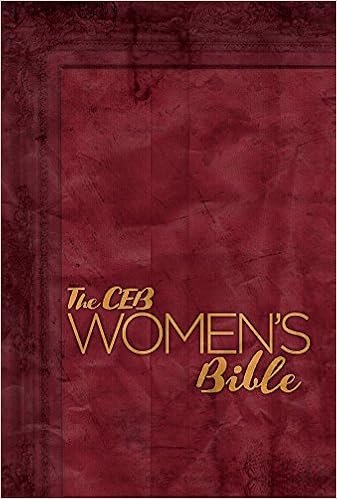
Review: CEB Women's Bible

A couple weeks ago, I was asking a group of [church-going] children what they knew about the Bible. Among other shared information, we tried to name some Bible characters. They quickly shouted out, "Jesus!... Moses!... Abraham!..." The oldest kid in the group is probably 8, so that was okay. I asked for the names of any women or girls in the Bible. Mary's name was speedily recalled and then there was a stall. My own son raised his hand and said, "I can't remember her name, but there was the girl in the garden who ate the apple." Great, our group could literally only name Mary and Eve. So, looks like my work is cut out for me. Good news: there's a Bible for that!

I recently received a copy of the CEB Women's Bible for free in exchange for a fair review. This Bible is in the Common English translation- hence, CEB. This is not my favorite translation. All translation is interpretation and all interpretation is political. So, accepting the CEB as a study bible was a stretch for me going in to this project. Not all pastors share this characteristic, many LOVE and endorse this translation of the Bible and find it to be as accurate and helpful as early translations.

It turns out that, translation notwithstanding, this is an excellent study Bible. Nearly all the chapters have summary introductions that could be used for the people who like a big picture view or as prayer prompts before or after devotions. The inserted commentaries on situations, circumstances, and people are very helpful. There is one on birth control near Genesis 38 and on one women and property at Joshua 17. There's celebration (Psalm 31), pleasure (Ecclesiastes 2), mercy (Romans 9), adolescence (1 Timothy 5)- plus ministry and widows (separately) in the same chapter.

These short explanations given insight not only to the time of the Bible's events or writing, but also for how the verses impact the life of the reader today. I enjoyed every one that I read and I think they are the best feature of this Bible.

My second favorite element of the CEB Women's Bible is that there is at least a sentence or two portrait of every single woman who appears in scripture. No matter whole small her role, how implied her presence, how unnamed she may have remained through the centuries- she or her group get recognition in this volume. Through recognition comes thankfulness and growth in understanding. I have been doing work in Daniel lately and, boom, there was the portrait in words on Belshazzar's mother (Dan. 5). She's actually critical in the story because she remembers Daniel and his skill, when others have forgotten him. Yet, she doesn't usually appear in the stories people tell off the top of their heads regarding the writing on the wall incident. Regular use of this Bible and encountering these portraits will help the reader become more familiar with all the women of scripture and, perhaps, more emboldened to speak up in times of trouble.

It is extremely exciting to flip through the front matter of the book and see how many women were involved in the creation of this volume. Lay women, professors, writers, and clergywomen all contributed their talents to the creation of this volume. I am of mixed emotions when I see this. I am so happy- nearly tearfully so- that these women were sought out and their vocations and talents used well for this book. At the same time, I hope that the work in and on this Bible will be noticed- especially in academic and professional religious circles. This amount of research, talent, and commitment deserves recognition beyond making a commercially viable devotional Bible (which is NOT nothing- far from it).

Despite my own reservations with the translation (which are NOT shared by all other pastors!!!), I believe that I will continue to use this Bible for personal devotional reading, along with others. I do say to people that the best kind of Bible to get is the kind you will actually read. This Bible is very readable and the portraits, summaries, maps, and drawings all serve the purpose of increasing knowledge and learning in faith. I recommend this Bible, particularly if you do not presently have a study Bible that you enjoy using. If you are the kind of person who is bothered by adjectives in the titles of Bibles, I still recommend this Bible and a roll of electrical or duct tape to cover the title (or use a Bible cover). Several people in my congregation do this and it seems to soothe their angst and help them to use the Bibles they find most accessible.

The stories of women in the Bible- known, forgotten, and unknown- deserve attention, scholarly time, and church/devotional study. This Bible accomplishes that task superbly. It does it so well in fact that I recommend considering one's own preferences or biases (translation, title, margin size) as adiaphora (or unimportant) relative to having a truly helpful and revolutionary study Bible that spotlights the work of women in history and the work of women today.


I received a free copy of the CEB Women's Bible from the publisher in exchange for an honest review.

You can get a FREE sample of Ephesians from this edition of the Bible here. Try it!

Monday, August 1, 2016

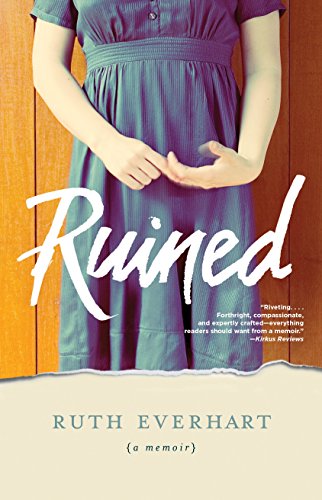
Ruined (Book Review)

Lately, I've craved sentences. As a voracious reader, I absorb large quantities of words, words by the gallon, the bucket, the ocean. However, in the present time of my life, I long for and adore simple sentences. Literally, I'm looking for something that could tattooed on the top of my foot.

Ruth Huizenga Eberhart has just such a sentence. In the middle of Ruinedher wrenching memoir of rape and spiritual agony, she writes, "The fall is a more universal theme than restoration." 


The fall is a more universal theme than restoration


Maybe I don't want that exactly inked into my skin, but its message is indelible. So was the four hour encounter in Ruth's 20th year shaped everything that came after it. As it so often does, the will of neighbor- his or her poor choice- causes a crisis when one has to examine where that choice intersects with the will of God. 

Ruth's rape, the aftermath, her relationships- all of these things intertwine with her pain, her grief, and her questioning about the God about whom she'd taught and the God she was actually encountering in silence and in space. Her lyrical writing, sometimes a little slowly paced, allows the reader to realize that God's silence is not always a big NO, but an invitation into a smaller, yet more spacious yes. 


Grace is more than forgiveness; grace says that it’s all right to need forgiveness in the first place. It’s all right to be imperfect, to intend well and mess up. To try again. Grace is getting a do-over. 


The fall is a more universal theme, because so few lack the language for expressing restoration, for understanding it, for believing it is possible. When Ruth eventually takes proactive steps to avoid being forever terrified of men who resemble her attackers, my eyes were so wide. Living day after day is surprising after a horror or a tragedy, but it happens. One hardly believes one can keep breathing. Attempting to keep something "normal" is brave. Ruth is very brave. 

Actively seeking to change something within yourself is courageous. Ruth is incredibly courageous. Her courage is not just evident in how she learns to view herself through God's understanding, but even more so in how she comes to see her experiences through God, divine mystery, and love. 

The fall is a more universal theme, but I believe it is only because we actually crave the stories of restoration. We long for the redemption narrative. We want to see it come out all right. This is because, in our hearts, we know our own falls and faults and we long to know that we too will sing restoration songs. 


I received a copy of this book for an honest review. My honest recommendation is that this book is completely worth your time and effort. 

Thursday, November 12, 2015

Lucky in Love

I love what I do.

Sure it would be nice to have more money (I don't generally say no to a raise now and then), but I feel very privileged and lucky to do the work I do.

This week I have-

- played pub trivia with members of the congregation I serve,
- debated the root of the Hebrew word miqreh on Facebook and tried to understanding the place of luck in the story of Ruth
- visited a woman post-hip replacement
- met with a variety of different groups
- presided over a wedding that left no eyes dry
- sat as a quiet witness to a broken heart
- prayed in a bunch of different place for different things
- power-napped on the couch in the church
- had a good book discussion (and a Good Book discussion)

And the week is not done.

I am tired. I'll be taking a little comp time tomorrow to make up for two long days, but on the whole-

I feel lucky and grateful to be paid to witness and participate in God's amazing work in the world.


Wednesday, May 27, 2015

The Male Gaze is Unbiblical (Reblog)

Soon afterwards he went on through cities and villages, proclaiming and bringing the good news of the kingdom of God. The twelve were with him, as well as some women who had been cured of evil spirits and infirmities: Mary, called Magdalene, from whom seven demons had gone out, and Joanna, the wife of Herod’s steward Chuza, and Susanna, and many others, who provided for them out of their resources. (Luke 8:1-3)
Why does that passage matter? In the scheme of things, Luke’s gospel is following along. There are women spoken to, healed, encountered. This also happens in John and in Mark. Matthew, too. This insertion from Luke is interesting, though. It must be there for a reason.
I believe it is there to refute the idea that the disciples traveled with camp prostitutes. This passage is inserted, in my opinion, to acknowledge what was likely rumored and true about the disciples when Jesus was in the flesh and then among the followers of the Way after the Ascension. There were women with them. Why mention that the women had been healed or to whom they were married or their names?
It keeps the women from being nameless and faceless. They are not just bodies, traveling with the men- serving food, scratching itches, and tidying up after a late-night gabfest with the Master. They were participants and, furthermore, many were of greater social status than that of the disciples. Their names are used so that those who read Luke’s account would recognize some of these women by name, habit, or story.
Additionally, the gospels and the Scripture, where the Spirit peeks through, does not allow women to function merely as sperm receptacles and fetal incubators. Jesus reminds the Samaritan woman that she has worth beyond whatever man might currently offer her protection via house or bed (John 4). He also sees fit to restore a woman beyond fertility and a woman before fertility to life and community (Mark 5).
Throughout the Scripture, women wrestle with the ability or inability to have children, but those around them affirm that their worth is beyond rubies in being who they are. There are prophetesses, female judges, women who preserve their families, their in-laws, and even their husbands’ necks and nether regions. The Bible has no shortage of women upon whom the male gaze was simply admiring of strength, wisdom, and courage.
It is when Christianity becomes domesticated, around the time of the pastorals, that the community of women as leaders, teachers, facilitators, and financiers becomes a problem. As the Empire makes its own impression on Christianity, there is a certain domesticity that becomes expected of women. The mater familias is not yet a bishopess or even a deaconess. She is no longer a theotokos (God-bearer) alongside her brother disciples, she is a vessel whose value lies in her (tamed) sexuality, which is redeemed through honorable male claiming and through the bearing and raising of godly children.
Somewhere in there, women stopped being seen with the eyes of the Son of Man, and just became seen with the eyes of men.
I’ve been thinking about this with the information that has come out about Josh Duggar and his molestation of at least five young girls when he was a teenager and they were younger. I’m not linking to any story related to that. You can google it and come back. In addition to no charges filed, Duggar’s “therapy” was to help a family friend with a construction project. Then he was readmitted to the bosom of the family and it is likely that those whom he abused, including some of his sisters, were ordered to forgive him. It has been alleged that victims of this molestation also received counseling. In the same manner as Josh? Was their counseling toward their own ownership of their bodies and their right to reject unwanted advances? Was it counseling toward releasing of guilty feelings and wholeness? Was there a time to discuss that forgiveness might never feel right or come?
Part of the reality of the Duggars’ Biblical interpretation involves the subservience of women- in childhood and in marriage. Sisters are subservient to brothers. Daughters to fathers. Wives to husbands. Day in and day out. This is the obedience that matters. This order puts women in right relationship with God.
That manipulation of the Word, as well as the male gaze, makes me wholly uncomfortable, to say the least. Women who are taught- nay, indoctrinated- to this end struggle to perceive self worth outside of their relationship with men. Where they resist, it is labeled disobedience. Where they are mistreated, they are marked as co-sinners- in temptation and “allowing” such things to occur. Even little girls know that their value comes from how men view them, not what they can do themselves.
How far we have come from Luke’s paragraph- meant to end speculation and to clarify that women were a valued and valuable part of the traveling disciples’ group… AS women. The later church rejected the Gospel of Thomas, which asserts that Jesus would make Mary Magdalene like a man so that she could be saved, as the men were to be. The accepted gospels let stand that God enfleshed only had one gender expression, but he surrounded himself with many other bodies.
We cannot allow a twisted perception of the Gospel, of women’s roles, of “obedience” to co-opt the wideness of God’s mercy. There is no joy in Mudville that Josh Duggar has been exposed as having molested young girls. There is deep, deep grief that he, along with his victims, grew up with an understanding of the Bible that left all of them confused as to what is right relationship between men and women. His sin is not the only one here and he’s not the only one who needs to ask for forgiveness.
Whether or not the forgiveness is granted, from humans, is a different story. I have to ask myself, what would Mary, Susanna, and Joanna do?


This piece is my own work, originally written for and posted on RevGalBlogPals.org on 5/25/15 as part of the on-going The Pastoral is Political series.

Wednesday, March 25, 2015

My Brother's Keeper

The younger of my two brothers works in an office that is attached to the church where I work. He is the office manager of there. So we work about 30 feet from each other, for two different entities, but technically within the same building. 

He came over to my side today and told me he didn't feel well. He asked if I would go get him some clear soda and crackers, while he laid down on the couch in the youth room. 

I told him I would. I grabbed my keys, wallet, and phone and hustled to the Safeway across the street. 

In the store, I threw things into a basket- items for him and something for myself to eat for lunch. A woman stopped me, "Can I ask you a question?"

Feeling startled out of my train of thought, I said, "Sure." 

I get stopped for directions in stores all the time, so this is what I assumed was happening. 

"Are you a priest?" she wondered. 

Suddenly, I remembered I was wearing my collar. 

"I'm a Lutheran pastor," I smiled, surprised that it hadn't occurred to me that she might ask about that. 

Her companion said to her, "See- a pastor. Now you know." 

They both walked on, leaving me wondering if I should have said anything else. 

My realization was this: I had been so concerned about my brother's well-being that I had forgotten what I looked like to other people. 

I was so concerned about my brother that I forgot what I was wearing, how I might be perceived, to care what other people thought... because caring for him was primary. 


There's something to that. 

Through the Door Into Something New

Text: John 1:29-42 The season of Epiphany, which we are in right now, can get a little lost in the church year. Coming between Christmas and...