Showing posts with label Movies. Show all posts

Monday, December 2, 2019

Let's Be Honest about Grief

Grief is a weird thing. Some people are able to push through and they think everyone can, if they want to. Some people are paralyzed and it's confusing to them how the world even thinks they can function.

Most people manage to find their basic new level of functioning (because grief inaugurates a whole new era), but that functioning waxes and wanes. All of this is normal.

There's a tiny moment of acknowledging what grief is like in Frozen 2. It passes fairly quickly in a song, but it was true enough that I wanted to call out, "WAIT! Anna is telling us something real."

Elsa (the blonde one) has gone off on a quest, which has unexpected results. The consequences of this (SPOILER) is that Olaf (the snowman) disappears. Kristof missed the women's departure and he is searching for them, lamenting that he hasn't fully expressed his feelings to Anna. Thus, Anna is alone and she can perceive that something not good has happened. Olaf's disappearance means something has happened to Elsa and this fear and sadness and confusion hit Anna like a sheet of ice.

The song is called "The Next Right Thing" and the lyrics are very sharp. It won't be your six-year-old's favorite song, but it might be yours.

Besides the lyrics about being unable to rise, this section gets me right there:

Just do the next right thing 
Take a step, step again  
It is all that I can to do 
The next right thing
I won't look too far ahead 
It's too much for me to take
But break it down to this next breath, this next step
This next choice is one that I can make

Sometimes the next right thing is just taking a shower and changing the sheets before you get back in bed. Sometimes the next right thing is texting a friend to bring you groceries. Sometimes the next right thing is pausing before you click "buy" and asking yourself if you really need that new whatever (and maybe you do).

Grief is hard and it is everywhere.

It can look strange from the outside, but there's no timeline. There's no "should be past this" or "should be able to do X" or "should feel better by now". Grief moves in and takes its luggage to the thrift store on the second day because it has no plans to pack up and leave any time soon.

Confession: Every few weeks, I go to Rachel Held Evans's Instagram or Twitter feed because I am hoping that she's not actually gone, that there was a mistake, that she's still there- speaking words that bring hope to us all. That's my grief.

Confession: Sometimes I dream that I'm in my grandmother's house and I'm going through her drawers, trying to find something, anything of hers that can be mine. She's been dead for thirteen years, but the truth is that she was someone to me who she wasn't to others and both my missing her and that mystery of her behaviors haven't fully sorted themselves out yet.

Confession: A guy I dated died years after we dated and I'm still sad that he's not in this world, doing some of the amazing things that were his passion. And I miss his Kahlua chocolate chip cookies.

Grief takes up residence in your house and you learn to live with it. You cannot wait it out or force it out or pretend it's not there. Eventually, you change your own spiritual and psychological interior design based on your preferences in consultation with grief. So it is and so it will be.

Most of us are doing the best we can in the midst of fresh grief and griefs that have scarred over, but still ache on occasion. Like Anna, most of us are trying to breathe, take a step, and do the next right thing for us.

What I hope we can learn, if not from Frozen 2 then somewhere, is that it is okay not to be okay. It is okay to admit that we are sad, that we are grieving, that we are angry. Honesty IS the best policy and the whole truth, especially about grief, lets us share our burdens and helps others know they are not alone.

I say: more honesty about grief. It's the next right thing.

Thursday, December 28, 2017

White Washing the World

I pay attention to what I see. A lot. In the past few years, I've paid additional attention to what I don't see.

Today, I saw two interesting things.

The first was brought to my attention by the professor and Biblical scholar, the Reverend Doctor Wil Gafney (to whose work I commend you). Dr. Gafney noted on Facebook that, regardless of one's actual race, if a person indicates interest or support in issues, authors, or topics at all related to Black Lives Matter, the Root, or any other item that indicates interest in being an accomplice to equality... Facebook assumes that person is African-American.

At her urging, I checked and, sure enough, Facebook's #1 categorization of me is African American. While I would happily claim this designation if I could, it's not even close to correct. Ironically, despite the fact that I belong to multiple Jewish groups and an equal number of knitting groups, Facebook is more certain that I am black than it is regarding anything else about me. (Let's not mention the number of clergy groups to which I belong.)

This means that Facebook ad bots assume that any interest in black issues, race equity, or social justice must automatically be correlated with BEING black. There is no positive correlation, in the algorithm for non-black people supporting these issues.

Huh.

Then, today, I saw my first ads for A Wrinkle in Time. I'm excited about this movie because I have loved the book for years. Meg Murry is a hero of mine and she doesn't get mentioned on enough girl hero lists (in my opinion). Ava Duvernay is directing. Excellent. I am a huge fan, among many, of her work.

The trailer revealed that Meg is played by Storm Reid. Her mom, Dr. Kate Murry, is played by Gugu Mbatha. Her dad is played by... Chris Pine. Furthermore, the movie poster looks like this: >>>>>>>>>>>>

Now I last read the book 3-4 years ago, but a central plot point is that the dad is MISSING. He's not actually a central character. In fact, his absence is central to the story. So WHY IS THE WHITE GUY IN THE MIDDLE OF THE POSTER??? Why not the inquisitive, brave, tempestuous Meg? Seriously? I don't know why the whole family couldn't be people of color. And I don't know why Chris Pine has to be in the center of the picture.

Except that I do know why.

The world still presumes that if you aren't catering to the money (ego) of white men, then failure is assured. There is little to no acceptance of the fact that women, people of color, and everyone else in the world (who are not white men) have money to spend and are begging to be catered to. Do we need Chris Pine so that this movie will make money? Without his melanin-deficient appearance, will white men fail to see this movie? Will white women? (Actually, I don't want to know the true answer to that last question because I will likely throw my computer across the room. Which indicates that I do know the true answer. And I am pissed about it.)

We can do better.

Facebook can. Hollywood can. I can. You can.

But what will it take?


Tuesday, June 13, 2017

Wonder(ful) Woman

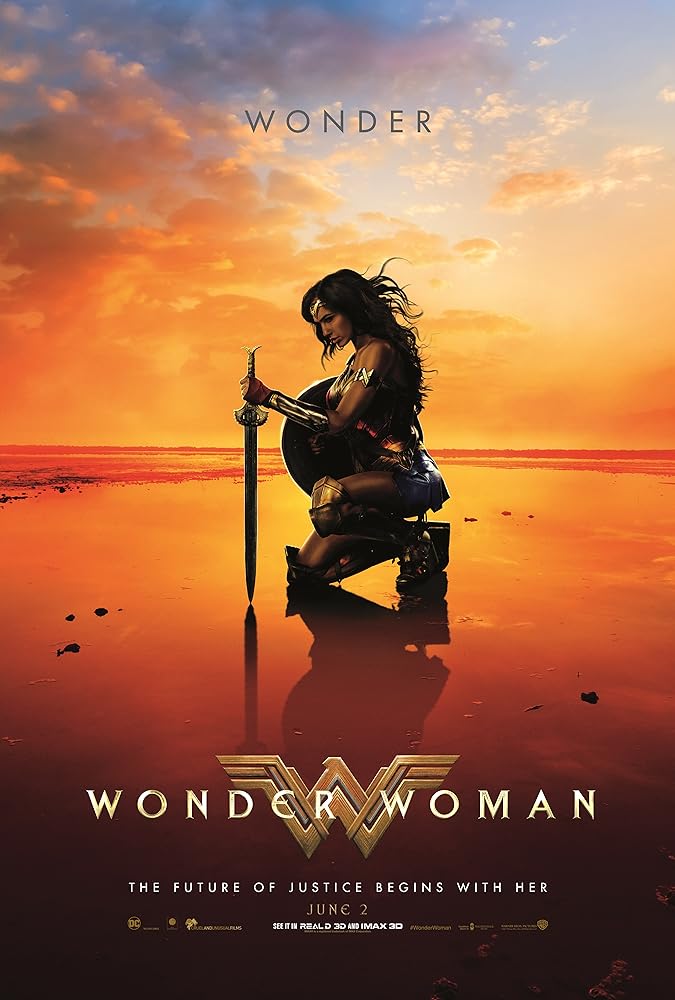
I loved Wonder Woman.

I loved it so much that I didn't want to leave the theater. When I got up, I didn't want to talk about the movie. I wanted to stay in the bubble where it was accepted that women are badasses and to be treated as equals (or even more powerful when they are!). I wanted to linger and wallow in the place where the presented and accepted truth is that women can kick butt AND love babies AND speak multiple languages AND be sexually interesting AND be warriors AND be leaders AND grieve AND can be funny AND can read maps AND can be gracious AND can silence detractors.

There was a whole lot of AND in the movie. Not so much OR.

The world is wide enough for AND.

Mostly, though, I gripped the armrests and wanted to cling to the place where I had seen something that was new to me in film.

There was a shape. A shape I see all the time. A shape that literally and metaphorically defines my life. I saw this shape in Wonder Woman and, for the first time ever, the shape was made by a female body.

In the climatic battle scene, Diana rises as she fights Ares. She rises with her arms spread from her shoulders. She rises with one leg down and the other slightly bent.

She rises and rises.

And, at the height of battle, she is in the cruciform position.

Her body makes the shape of the cross.

This is the ULTIMATE generic and specific hero body pose. It is not a subtle nod to Christian faith or human history. It is a literal appeal to the Jungian trope that has entered human consciousness in the last two-thousand years. The fighter, the bringer of salvation, the one who is on the right side of the fight will spread arms and resist power (and evil) through unconventional means. The specific physicality of the cruciform position indicates vulnerability and strength, humility and power, transgression and transformation.

The two scenes that always come to mind are at the end of Grand Torino and in the egg scene of Cool Hand Luke. The protagonists are seen- arms out, legs straight or slightly bent- triumphant, even in death.

But I've never seen a woman in this position.

There are so few movies with significant battling female heroines. In embodying female or femme heroism, our bodies are pictured as embracing, shielding, arguing, hiding, or taken by surprise.

There are likely examples that I don't know of, but for me... and I suspect for most people... the body of a woman, the savior of the movie, in the very, very familiar shape of the Western cross... seeing this was huge and transformative.

There are branches of modern Christianity that work to emphasize Jesus' maleness, as though the possession of a circumcised penis was the most significant part of the Incarnation. Jesus was male. Historically, that is factual. When read carefully, he is atypical of the men of his day- willing to talk to women, to be obedient to his mother, to acknowledge the fiscal gifts of women, and to take part in the healing of their bodies and restoring them to community. While Jesus was fully male, his male-ness did not blind him to the fullness of the creation he had always known- of which, female bodies, gifts, and lives were a significant part.

Wonder Woman is not magnificent as a film because it posits a female savior (of the film). That's not new, except in big tent comic book films. What was new was that Diana's body and spirit filled the space that heretofore we have only seen occupied by men. She was a boss- in word and deed. And the men around her knew it.

And when she rose, when she rose with her body in the shape that I try to live into every day...

When she rose with her body in the shape of the cross, not for glory, but for service and for love, I wanted to stay forever in the place where that was seen and accepted as real, good, and to be expected  (as in, of course a woman can do that).

Cruciform imagery, bodies in the shape of the cross, plays a significant role in all types of art. It matters that we see women's bodies in this position, not because they have been martyred, but because they have persisted and risen to the challenges of life and we recognize them as the heroes, the leaders, the goddesses, and children of God that they are.

Wonder Woman moved me, not because it showed me what I could be.

It reminded me of who I am.

Wednesday, March 23, 2016

What Kind of Bunny?


Last Friday (3/18), I took my kids to see Zootopia.

It was a little intense for them, but on the whole they liked it. It was the three-year-old's first movie. If I had known that it was quite that dark, I probably wouldn't have taken her, but she sat in my lap the whole time and thought it was pretty neat. 

The theme of the movie, much touted elsewhere, is good enough for the very heavy-handed Disney presentation. The animals in Zootopia have all learned to get along. The movie deals with stereotyping and what happens to individuals when we stereotype groups. Granted, foxes, elephants, sheep, and bunnies have far less biologically in common than do all people, so should we need an animal film to show us how to get along? 
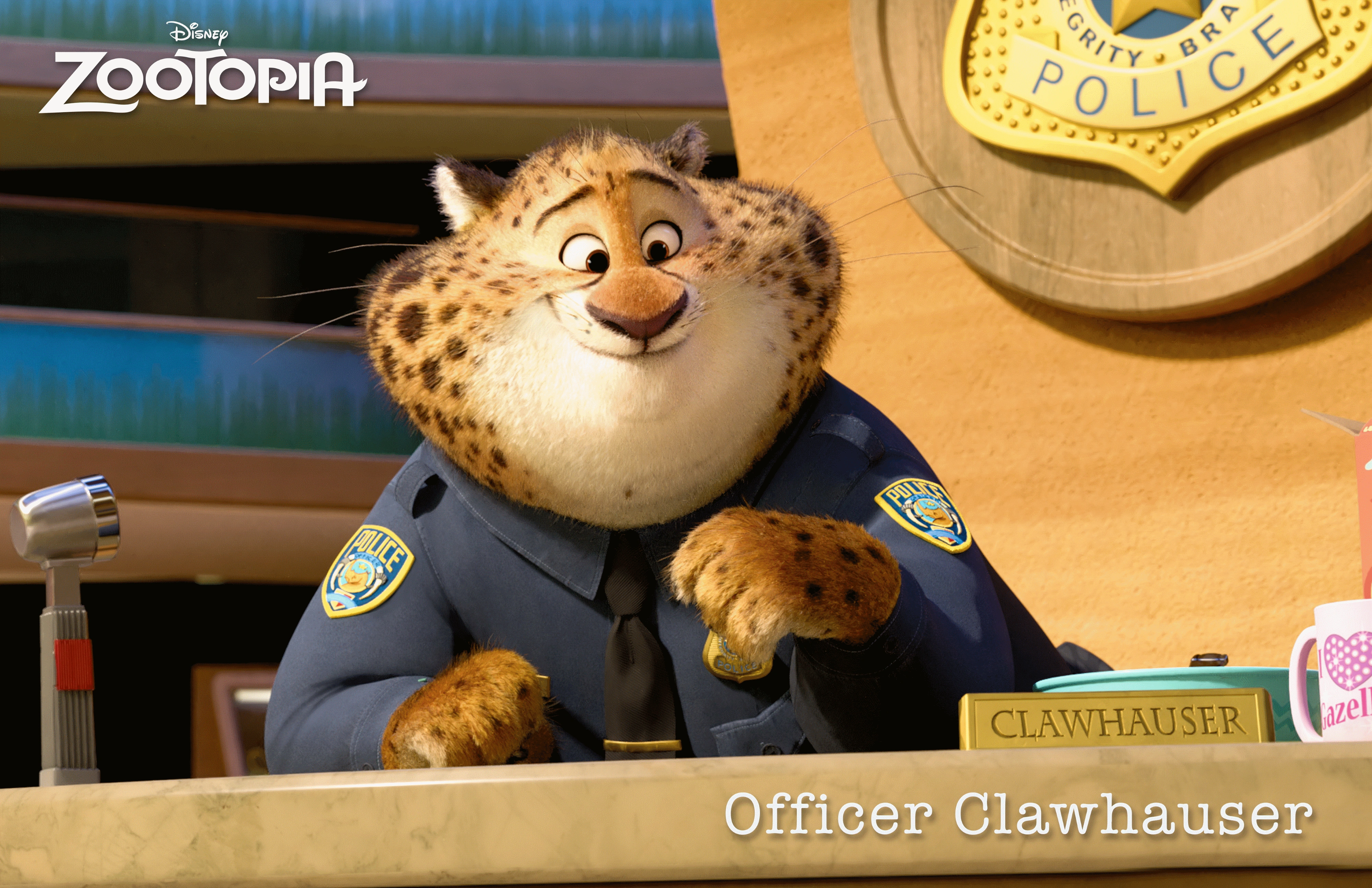
Nevertheless, as I watched the movie, I was increasingly agitated. There was obviously a lot of biological and anatomical research that went into this movie. While there were some animals that appeared slightly unusually shaped for their species (see: Clawhauser, the slightly chubby cheetah), most were drawn with some (cartoonish) accuracy. The polar bears did not have waists, the lion had a broad chest and narrow hips, the moles looked like moles, and even the rockstar, Gazelle, looked reasonably like a, well, rockstar gazelle. 

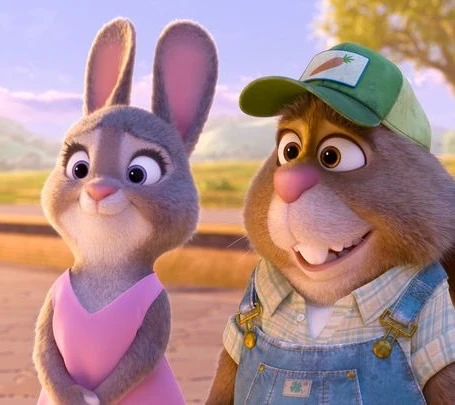
There was one glaring exception. The main character, Judy Hopps, is a bunny. She comes from a carrot-farming family of bunnies with 200+ children. She wants to be a police officer from the time she was little. Her mother and father, Bonnie and Stu Hopps, look like this:


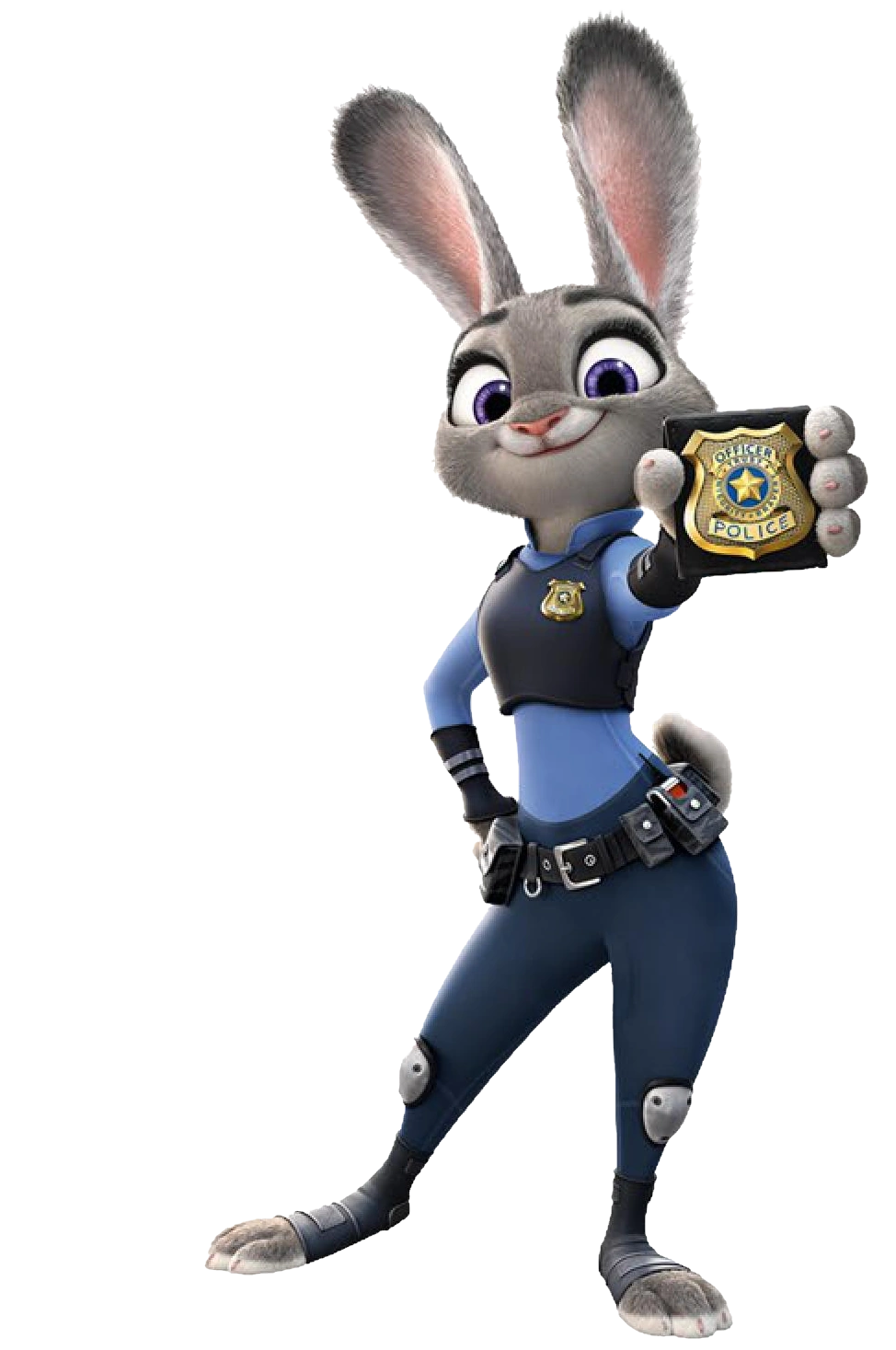
But Judy, our heroine, our poster girl, the hope for every merchandiser under the sun who wants to break Elsa's hold on little girls... Judy looks like this: 


In a phrase I thought I'd never type, I encourage you to check out the figure on that bunny. Why does a bunny have a nipped-in waist and a defined bosom? Holding a rabbit to sex it got my dad scratched many times. If female rabbits looked like, we could have saved a lot of iodine. Additionally, most little girls don't grow up looking like this. It should not be amazing to me that Disney could not resist princess-ifying Officer Hopps, but I am still surprised. Why should she look like a realistic rabbit, when she can look like an unrealistic standard of womanhood? 

Judy works hard for what she wants. She learns important lessons about friendship, stick-to-it-tiveness, and forgiveness. However, alongside those important lessons, children are imbibing, once again, an unrealistic and unhelpful body standard for women. (We never see Judy doing her time in the gym to maintain this figure.)

When it comes to bunnies and bunny merchandise, we'll stick to Ruby. We might learn a healthy dose of bossiness leadership skills and we'll learn that bunnies that walk on two feet look like this:


Tuesday, January 27, 2015

Selma and Excuses

When rejecting an invitation, according to Amy Sedaris, one simply says, “I can’t come.” You don’t add a reason. “Anything after ‘because’ is bullshit,” according to Sedaris. That’s what I think of when I see the dearth of nominations for Selma in the Oscars. There weren’t more because the movie didn’t play the game, send out screeners, open earlier, deal with political backlash well. Frankly, my dear, anything after because is bullshit.

I have already seen Selma twice and I’m trying to figure out when I will see it at least a third and maybe a fourth time. I am not much of a moviegoer. I think I saw three movies last year. Selma, though, is a big screen phenomenon. There is a nuance in the faces, in the looks, in the gritted teeth and the beads of sweat that will be missed on a small screen. Furthermore, there is a public sensitivity to the directing that is palpable when one is sitting in proximity to other bodies, hearing the gasps, sighs, cheers, and tears.

David Oyelowo is as powerful an actor as I have ever seen. The movie was not permitted, for various reasons, to use any of the actual speeches of Dr. Martin Luther King, Jr. The script, then, had to be written for the power, syntax, and deliver of one of the greatest preachers in American history. Oyelowo delivers like the prophet Dr. King was. In the scene where Coretta Scott King, played by Carmen Ejogo, confronts him about infidelity, one thousand emotions play across his face, before any words are spoken. I haven’t seen all most of the “Best Actor” nominees, but I am not really open to hearing why Oyelowo wasn’t chosen. Anything after “because” is bullshit.

There has been quite the furor over the portrayal of President Lyndon Baines Johnson in the movie. Those concerned with his legacy argue that the movie portrays him as obstructionist to the voting rights of blacks in a way that is unfair to his true feelings and his true actions. LBJ was the consummate politician of our time. Generally known as an SOB and someone who made deals to get things done, he comes across as profoundly true to character in the film.

While it is certainly true that LBJ was a powerful force in advancing the paperwork and legality of civil rights in this country, it is also true that he did not do all the legwork or showing up that was possible. So the movie didn’t make LBJ into the savior figure that some want him to be. Too bad. There are plenty of other films of historical figures that aren’t letter perfect to character, motivation, and/or action. Should we destroy them all? I just want a one-word answer, since anything after “because” is bullshit.

The reality of Selma that sticks in my head is how King and others grapple with the reality that the response to the non-violent protests means some people will likely be killed. Each of the leaders is weighing in the balance the lives of those who will come, who will march, who will be beaten, with the denied full civil and human rights of an entire group of people. Children, elders, and bright young adults will be slaughtered out of sheer hatred, malice, and fear. The film has some footage of the actual Selma to Montgomery march, in which you see not only the marchers, but white people standing along the sides of the roads- flipping middle fingers, spitting, showing the Confederate flag, screaming. As those faces go by, I can’t help but think, “For shame. There is no explanation. Anything after ‘because’ is bullshit.”

There is something about Selma- about seeing innocent black bodies, beaten and broken in the street. There is something about knowing that the denial of the vote to many people is still ongoing. There is something about seeing the terrorist act of bombing a church and killing four little girls and knowing that no one paid for that crime until years later. There is something about seeing an all-white slate of best actor and actress nominees. There is something about denying the recognition of even a Best Director nomination to Ava DuVernay.

These things say that we are not yet post-racial. We are not yet to a place of equality for all Americans. We have not reached the mountaintop. We are still working to overcome.

There is a scene in Selma when Dr. King is confronting John Lewis and James Forman, the sons of thunder of the Student Nonviolent Coordinating Committee. He tells them that SNCC is concerned with “raising black consciousness”, but the Southern Christian Leadership Conference is concerned with “raising white consciousness”. This work is not done as long as any body of any color can be and is denied both the actual and the implied rights that are inherent to all American citizens. Until that day, we must stay awake, keep our consciousness elevated, and keep our feet marching forward in work of praying with our votes, our dollars, our letters, our sermons, our prayers, our neighbor love, and our rejection of the false idols of Oscar recognition.


To those who say “no” to this call, we know what you are. No qualifiers, explanations, or caveats are needed. Anything after “because” is bullshit.


Originally published on RevGalBlogPals: http://revgalblogpals.org/2015/01/19/monday-extra-selma-and-excuses/

Through the Door Into Something New

Text: John 1:29-42 The season of Epiphany, which we are in right now, can get a little lost in the church year. Coming between Christmas and...