Showing posts with label Children. Show all posts

Tuesday, June 11, 2019

Imagine Something Better

Imagination matters. And we are failing our children when it comes to the fullest use of imagination.

Experiences of play wherein different locales, ways of being, changing movement, and evolving responses are critical to our children's emotional and psychological development. Opportunities for imagination come naturally to most children and if we, as adults, ask questions, encourage, and give healthy shape to such play, we are then shoring up a strong mental and ethical foundation for our children.

Because moral imagination is a real concept and, I would argue, a real thing. Moral imagination, even in play, involves the capactity to wrestle with ethical concepts and frameworks and apply them in new and different settings. In order to be grow into an adult ethic that seeks justice and wholeness, children have to be taught the truth of certain historic events. Girded with historical realities, in all their complexities, children can imagine their reactions, test those responses with adults or in their minds, and then sort out how to choose between options. This skill becomes the moral imagination adults require to be responsive and compassionate citizens of communities.

In recent weeks, I learned of two particular failures to tell the truth that will, if unchecked, compromise the development of moral imagination in the children who interact with these situations.

This screenshot is from Twitter and was a school assignment for upper elementary/middle school students in North Carolina. There was a long conversation between some parents regarding the assignment, mostly centering on parents who believed there was no problem with the assignment and parents who found it appalling.

Initially the assignments seem benign, offering children a variety of opportunities and ways to respond to lessons about the Holocaust. Presumably there is a list of recommended books or resources that accompanies the assignment to help. Additionally, this assignment is asking for some level of imagination. So, what's the problem?

The problem is that such an assignment cannot be fully rooted in having been told the truth about the Holocaust. This is not an assignment that would come after reading The Diary of Anne Frank or Elie Wiesel's Night. A letter from a concentration camp? It's not summer camp. There are no letters. There is survival, and barely that.

Assignments that actually wrestle with honest accounts of the Holocaust would ask children for their own reactions to what they read and heard. They would write letters about their own response to pictures, accounts, film clips, or novels. Students would be presented with the truth and then accompanied in how to emotionally, intellectually, and psychologically process the horror.

Assignments like "write a letter to your parents" or "write a skit" are the imaginative equivalent of skipping rocks across a pond. It takes some skill, but it tells you nothing about the depth of the pond. Additionally, a child who completes this type of assignment to success in the grading parameters for this class will believe themselves to have understood the depth of the assignment. When later confronted with additional information about concentration camps or the Holocaust- such as children were only kept alive for medical experimentation or days were spent in back-breaking labor or in fear for your life or the potential that you survived via the Kindertransport, but you never saw your parents again- when confronted with these realities, a young adult will retreat mentally to the reward of what was previously imagined (that sixth grade skit they wrote) and treat that as the truth.

It is very hard to write over mental scripts, which is why we have to be honest from the beginning.

Which brings me to the second failure: the Roar Vacation Bible School (VBS) from Group Publishing. You can read an excellent reflection on this VBS and its problematic issues here. Long story less long, this is an "Africa"-themed curriculum in which children pretend to be Israelite slaves, Africa is refered to as a "country", and students are asked to add "clicks" to their words to mimic an particular language and dialect.

What's the problem here? (Besides having an all-white creative team at Group Publishing.)

First, Africa is a very large continent with 54 separate countries, most containing a variety of people with differing ethnic identities. Nigeria and South Sudan are two different places with a variety of ways of being. We don't say that Belgium and Italy are the same, so why is conflating African nations acceptable.

Second, slavery is both a historical and contemporary issue. Even if you want to make the (not good) argument that it was/is an economic system (as opposed to a system of oppression), it remains true that enslaving people, particularly implying that people can be owned, is neither just nor good nor a viable economic system. Enslaving people is wrong. Furthermore, enslavement based on race or ethnicity creates generational trauma. We have no idea how long it takes that generational trauma to heal because we haven't stopped doubling down on some of the lies about enslavement in history and in modern times.

Third, the internet is real. If you want to show what a "click" language is like, get thee to YouTube and find a video with a native Xhosa speaker. It takes about thirty seconds unless your internet is slow. Then it takes 45 seconds.


Yes, the enslavement of the Israelites is a biblical reality and Pharoah's treatment of them was particularly harsh. Children can, however, be told the truth and asked to consider what people may have felt or thought without actually being told to reinact enslavement. Similar to some of the Holocaust assignments, pretending to be a slave while being faux-yelled at in a (safe) VBS setting makes a mental imprint on kids that they understand what this experience is like. They don't. Without being told the truth and then guided into processing the horror, they are imprinting a lesson that may never be written over. "I understand what X is like because I had this experience/lesson when I was a kid."

I know what it is like to water a huge garden from a five gallon bucket, refilled repeatedly, in the North Carolina heat. I know what it's like to be yelled at while doing it. I do not know what slavery is like. I can only imagine slavery because I have read accounts and historical information. I have enough understanding to comprehend a horror that I have not experienced and to be able to extrapolate, morally, that I should keep alert to prevent, to the best of my ability, such circumstances in the future. Prevention is not because I'm a savior of people, but because I am moral participant in the universe and enslaving people is not in the arc of justice.

It would be easy to say that this is just one assignment or one VBS experience, but a failure to be honest hobbles the moral imagination for years to come. If I think my imagination suffices for the truth of an experience, rather than someone else's own account of it, then I will never actually extend my ethics beyond myself.

I've been pregnant twice, so I can "imagine" what women who seeks abortion services are feeling/thinking.

I've been broke, so I can "imagine" what people who are without funds experience.

I've been sick, even to the point of being unable to work, so I can "imagine" the implications of various long-term illnesses.

I've been spanked, so I can "imagine" the consequences of long-term physical and mental abuse.

My country has been attacked, so I can "imagine" the impact of growing up and living in a war zone.


I can imagine all day long, but there are truthful accounts of real people who do tell their own stories. Reading or watching their own words, their owning of their experience, strengthens my moral imagination so that I live in an ethical framework that includes other people's truth, not just my imagining of it. And I am trying to raise my children to do this same thing.

Each assignment, each VBS or Sunday School lesson, each car conversation, or library visit matters because they are all blocks in the foundation of who our children are and who they will be. If we want them to be fully functioning, morally imaginative adults- then we have to equip them with the truth, good and bad and ambivalent, of human history. When we tell the truth, and the whole truth, there is no place for lies or fake news to take root.

And then, I imagine, the world becomes a better place.


Sunday, May 12, 2019

Eshet Chayil


It's been a hard week. In each still moment, my mind went back to Rachel Held Evans. I experienced the wishful thinking and grief again and again, as I would thinking, "Surely it's not true." How can she not laugh again? Hold her children again? Console her spouse, Dan?

Julia, you may tell me, she will do these things again in heaven. As true as that may be, it is not enough to stop the tide of unremitting sorrow that is swamping them and so many others now. Heaven is not meant to be a salve to stop earthly pain. It is the answer to the pain caused by the forces that oppose God, but it does not mean that pain is not real when it is experienced in this life.

I've literally thought about her body growing cold, her ashes or her dust, her 3-year-old wondering again where Mommy is, her husband replaying last words over and over. I think about the small anniversaries passing by at a horrible clip- last week she, a month ago she, two months ago she...

A friend pointed out that this is terrifying in many ways. It is, I agreed, because this is the kind of fluke risk we have not accepted. We have considered (or not considered) the risks of car travel, heart disease, breast cancer. We know that there are wars and even shootings in public places. We've weighed the effort to keep ourselves in good health and to balance our rest and our work.

We don't weigh the risk of a fluke medical situation when we go to the hospital to have something treated.

Even when we know the US has very poor maternal care, especially for black and brown women, we still assume most things will be fine.

An unusual reaction to medication, causing our brain to seize, is not in our catalog of worries.

Or it wasn't.

The way we make it as parents to simultaneously try to control everything and to accept that we control almost nothing. Rachel's death showed us that we aren't in control of things we hadn't even fever dreamed.

What can we do?

We can remind each other of the low chances of this kind of death and that it likely wasn't preventable.

We can work to prevent the deaths that can be eclipsed, especially with regard to maternity and maternal health.

We can promote the truth about vaccines and preventative medicine.

And we can assure one another that if the worst happens, we will always speak of them, we will mother their children, and we will not let their good legacy die.

I think that's what I need to hear today and what I will be telling the other women of valor whom I know.

And it's what I will say to Rachel when I see her. Or what I am telling her now, which she may already know.


Friday, May 13, 2016

God on the Go Kits

Like many congregations, we have lots of members who travel during the summertime. They may spend three months fishing or camping or traveling or hiking or playing. Given Alaska's long daylight hours, making it back into town on Sunday morning or even Sunday night doesn't always happen.
One could rail against that or one can ask for guidance in the Spirit for how to keep community and communion alive in these months of family and personal sabbath in the woods and wilderness. (Still, if you're in town, come on down!)

Inspired by Take Out Church, I made "God on the Go" kits for the faithful Alaskan family with kids. The kits and all their contents fit into the 64 ounce Ziplock containers with the lid snapping snugly. This should keep things watertight and just-right-sized for throwing in a duffle bag, backpack or suitcase. Or pushing under the seat of the camper. Or having at the foot of a sleeping bag.

I have included below the list of items inside and the explanation for each. This is exactly the information that each family receives in their kit. I plan to take one with me when we travel as a family and I hope others will also delight in this spiritual growth experience in their children and as a family.


GOD ON THE GO!

So let’s do it—full of belief, confident that we’re presentable inside and out. Let’s keep a firm grip on the promises that keep us going. He always keeps his word.
Let’s see how inventive we can be in encouraging love and helping out, not avoiding worshiping together as some do but spurring each other on, especially as we see the big Day approaching.

- Hebrews 10:25, The Message translation


What’s in the box?

A Flat Jesus                           
Baptism Bubbles                           
Holy Communion guide
Holy Communion instructions                  
1 Sharpie                  
1 Beach ball
1 “tablet” of paper         
Colored pencils + pencil sharpener                 
Stickers
Blessing chalk                           
Feelings play doh                           
Candle
Heavenly Sunshine songbook          
VBS reminder card
Bible apps/Music/Bible recommendations


1. Flat Jesus- Color your Flat Jesus. Take pictures of Him or with Him on your travels. Use the hashtag #GodontheGo if you share your pictures on Facebook or Twitter and link Lutheran Church of Hope or @hopelutheranak. Talk about how Jesus is always with you.

2. Baptism Bubbles- Remember your baptism(s) on occasion by blowing bubbles at each other. Talk about baptism both as a kind of washing and a welcoming. When the bubbles pop, think about how our sins (little or big things that we do that might hurt others or ourselves) are forgiven by God and can be forgiven by others. Sometimes bubbles leave residue, like sins have consequences. However, no matter what they do not last forever and they cannot separate us from God’s love.

3. Holy Communion guide- There’s a hand drawn sheet that talks about what we believe about Holy Communion. You might read through it a couple times or talk about Jesus eating with his friends. It’s important on occasion to talk about how your food gets to you (how God gets the food to you)… all the way from the seed (or the salmon roe) to your table. We are all connected.

4. Holy Communion instructions- These are here. At least once a month during your travels, take a little time as a family (2, 3, 4, 10). Get a plate and a cup (special or not) and a few crackers or a piece of bread and some grape juice or wine. (My parents let us have a sip of wine as a part of home communion as a kid.) Talk about Jesus being with his friends. Think of the words of communion and the words “For you”. Offer the elements to each other with that phrase. Pray together. Light your candle for this ritual and talk about what it felt like afterwards.

5 and 6. Sharpie and Beachball- Inflate your beach ball on occasion and write things for which you are thankful on it. Make this a habit- every 2-3 days- big fish, fun bonfire, visit from Grandma, trip to the zoo, clear sky… write them on the ball. If you meet up with family or friends as part of your adventures, have them sign the ball. Deflate it when the ink is dry and put it back in your kit. At the end of the summer, you’ll have a tangible reminder of all your thanksgivings of the summer. We can all bring our balls at the end of August and share our thanksgivings!

7. Paper, pencils, sharpener, and stickers- Use for praying in color (drawing a picture as part of praying or making a list), drawing pictures, writing lists or playing games.

8. Feelings Play-Doh- When someone needs a timeout, they may also need the feelings playdoh. They can use the dough to sculpt out their frustrations or pound them flat. Using something tactile in a timeout may seem like allowing playtime, but for younger kids- having to stay in one place with low stimulation- can really help. If the dough sits on the table, it sits. Sometimes grownups may need it too. You can use this in a conversation about choices or consequences as well.

9. Candle- The candle is for your communion, baptism, or forgiveness rituals. The congregation is also going to light a candle every Sunday morning to help them remember to pray for Pastor Julia on her sabbatical. You could do the same.

10. Blessing Chalk Use chalk to make a little washable graffiti where it’s safe and acceptable. A prayer for the boat or the car, on the side walk, at the park, etc. Bless your activities and the people involved.

11. VBS reminder card, Songbook, and suggestion sheet. I hope this is self-explanatory. :) 


Bible Apps for Kids (some are free, some are not, most are also available on Android based devices)

The Beginner’s Bible (iPad) by Zondervan
Adventure Bible Lite (or complete) (iPad) by Zondervan
Jesus Calling for Kids (iPhone) by HarperCollins ($9.99)
Smart Kids: Underground Mysteries (iPhone) by Barcelone Multimedia

(You may find others that are suitable for your family. These are just a couple recommendations. You might want to consider downloading a Bible app or devotional app for yourself.)

Recommended Children’s Bibles

Whirl Story Bible (available online or from LCOH)
Spark Story Bible
The Beginner’s Bible for Toddlers
Sprout Bible (WaterBrook Press)
Seedling Bible (WaterBrook Press)


Remember that a children’s Bible (like Whirl or Spark) is written at about a 3rd grade reading and comprehension level. If that’s not where your child is, you may wish to get a Bible aimed for younger readers. The best Bible to get is the one you will read! :)

Recommended translations for adults (if you’re curious):

New Revised Standard Version [NRSV] (most authentic academic translation)
Common English Version [CEV] (readable)
The Message translation (extremely readable paraphrase from direct translation)
New International Version [NIV] (readable)

****A “Study Bible” has footnotes to help you understand translation decisions and historical information. A “Devotional Bible” may have the same things, but will also have insets or guidance for how to pray about or interpret certain passages. Bibles marketed at specific genders, races, denominations, or age groups are exactly what they sound like. Be aware that everyone has a reason for what they’re writing or selling (even Pastor Julia).

Music:


We have enclosed a Heavenly Sunshine songbook in your kit. If you aren’t sure of the tunes, try YouTube. Look for kids singing the song. You may also consider buying “Wee Sing Bible Songs” or another children’s hymn album. Remember the Vacation Bible School songs will be Christmas carols.


Wednesday, March 23, 2016

What Kind of Bunny?


Last Friday (3/18), I took my kids to see Zootopia.

It was a little intense for them, but on the whole they liked it. It was the three-year-old's first movie. If I had known that it was quite that dark, I probably wouldn't have taken her, but she sat in my lap the whole time and thought it was pretty neat. 

The theme of the movie, much touted elsewhere, is good enough for the very heavy-handed Disney presentation. The animals in Zootopia have all learned to get along. The movie deals with stereotyping and what happens to individuals when we stereotype groups. Granted, foxes, elephants, sheep, and bunnies have far less biologically in common than do all people, so should we need an animal film to show us how to get along? 
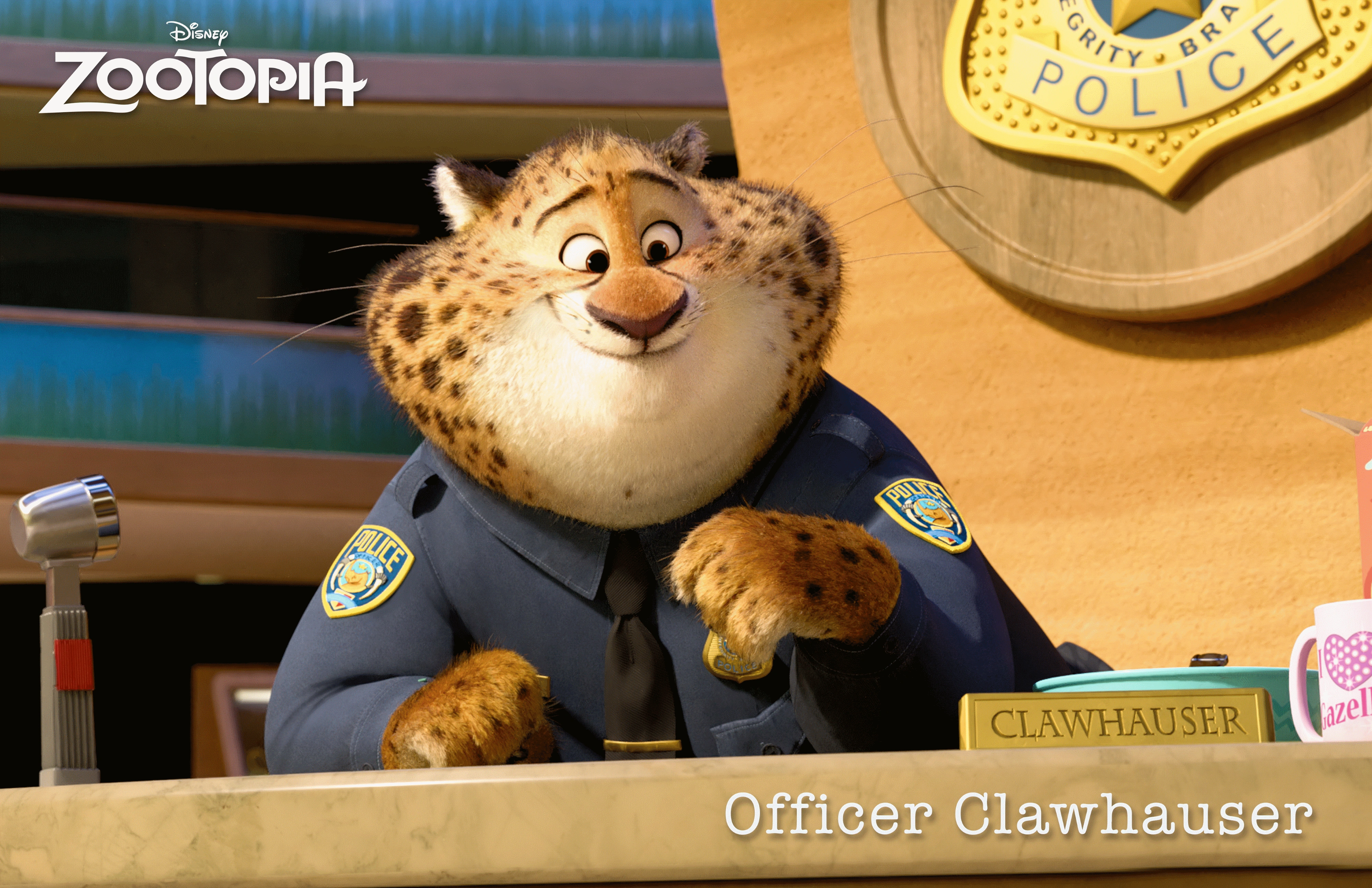
Nevertheless, as I watched the movie, I was increasingly agitated. There was obviously a lot of biological and anatomical research that went into this movie. While there were some animals that appeared slightly unusually shaped for their species (see: Clawhauser, the slightly chubby cheetah), most were drawn with some (cartoonish) accuracy. The polar bears did not have waists, the lion had a broad chest and narrow hips, the moles looked like moles, and even the rockstar, Gazelle, looked reasonably like a, well, rockstar gazelle. 

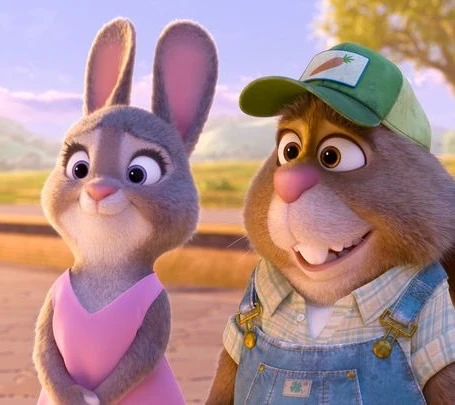
There was one glaring exception. The main character, Judy Hopps, is a bunny. She comes from a carrot-farming family of bunnies with 200+ children. She wants to be a police officer from the time she was little. Her mother and father, Bonnie and Stu Hopps, look like this:


But Judy, our heroine, our poster girl, the hope for every merchandiser under the sun who wants to break Elsa's hold on little girls... Judy looks like this: 


In a phrase I thought I'd never type, I encourage you to check out the figure on that bunny. Why does a bunny have a nipped-in waist and a defined bosom? Holding a rabbit to sex it got my dad scratched many times. If female rabbits looked like, we could have saved a lot of iodine. Additionally, most little girls don't grow up looking like this. It should not be amazing to me that Disney could not resist princess-ifying Officer Hopps, but I am still surprised. Why should she look like a realistic rabbit, when she can look like an unrealistic standard of womanhood? 

Judy works hard for what she wants. She learns important lessons about friendship, stick-to-it-tiveness, and forgiveness. However, alongside those important lessons, children are imbibing, once again, an unrealistic and unhelpful body standard for women. (We never see Judy doing her time in the gym to maintain this figure.)

When it comes to bunnies and bunny merchandise, we'll stick to Ruby. We might learn a healthy dose of bossiness leadership skills and we'll learn that bunnies that walk on two feet look like this:


Wednesday, February 10, 2016

Mixed Messages

On the way home from Ash Wednesday service, my six-year-old and I listened to a science podcast for kids. In this episode, we heard the sounds of brain waves. We heard waves during regular thinking and then during a seizure. My son asked about seizures- what were they, what happens, and what to do. 

I said a seizure is when the brain gets some signal mixed up. Then the brain and the body get mixed up messages and so they seize... which migh look like spasms or like freezing in place. 

I actually had seen a man have a seizure today, a small one, in line behind me at the grocery store. I told my son what happened and what I did. 

During the service, I actually talked to children about Lent being a "fast fast". We are supposed to fast from moving so quickly that everything and everyone becomes blurry. 

We get mixed messages all the time about our worth, our place, and our shoulds, coulds, and woulds. These mixed messages can cause spasms or paralysis in our spiritual life and growth.
We do know that too much, too fast, too bright can cause certain types of seizures.

Let us all embrace the "fast fast" and take time for contemplation, reflection, and being (as opposed to doing). Perhaps we can reduce our rush of spiritual seizure. 

Sunday, November 15, 2015

Lord's Prayer (For Kids)

God, our father in heaven, Your name is special. The whole world wants your good works. Let them happen here, just like they do in heaven. Give us today exactly what we need- not too much and not too little. Forgive us where we've messed up and Help us forgive the people who've hurt us- our bodies or our feelings. Remind us that you are always with us especially when we are afraid. The entire universe, all the power, and the most glory go to you, because you are the only God. Amen

Wednesday, July 22, 2015

Ammunition

Ruger Redhawks next to bear paw print, 2008
"Mommy, somebody has a gun."

My five-year-old called these words out to me before we'd even been at the playground for 2 minutes. 

My head snapped up and my eyes darted. I saw a furtive figure dart away from my son and across the playground, diving under the other set of equipment. 

My two-year-old was already on a a swing, calling for me to push her. 
There were three pre-teen girls laughing and playing some game out in the ball field. 

We had passed a woman walking her dogs when we came in, but there were no other adults. 

"Mommy, somebody has a gun." 

My dad instilled intense respect for guns into his children. I never had a toy gun, in part, because we were taught and able to use real guns for target practice and/or hunting. Guns are tools, not toys. 

My husband has deeper feelings about guns, if possible, than my dad did. Two large safes guard the weaponry of our house. Always. 

I've never been afraid of guns (other than the kickback of some calibers.)

Today I was frightened by someone with a gun. 

"Mommy, somebody has a gun." 

Gripping my phone, I edged to where I could see a baby-faced, nine or ten-year-old boy hiding from me. I glimpsed the orange caps of his toy rifle and pistol. I saw the curved edges of two fake daggers stuck, blades down, in the pea gravel. He obviously didn't want me to see him or his arsenal. He watched me out of the corner of his eye while he moved the gravel around to create a high wall between him and me. Yes, today I watched a white child build a bunker to hide in with his weaponry. 

We only stayed a few minutes at the playground before I told the kids we just had to go. 

All I could think was: 

1. Kid, you have no idea how privileged you are. No one is calling the cops about you, running around with toy guns (God rest Tamir Rice) and with no parent in sight (God bless Debra Harrell). 

2. Who taught you to hide with guns? To stockpile an arsenal and eye those around you. I think a nine-year-old is a little young for the hardcore "in case of government overthrow". 

3. What will you grow up to think you are owed? Is anyone, anywhere talking to you about the black and brown bodies in your very city- their worth, their dreams, their realities? 

4. What game are you playing with these guns? You're not pretending to hunt. You're not playing war. You're not pretending to skeet shoot or be at the fair. And why are you hiding? 

5. What would I have done if I had been armed, as I often am (literally, loaded for bear)? Would I have approached this child, with a hand on my .357? I can imagine many people I know (and love) saying, "What if it hadn't been a child? Wouldn't it have been better to have your gun with you and stopped something?" 

Sure, but that's not approaching from positive gun control. That's reactive gun control. 

I want the adults in this child's life to say, "These are tools, not toys. Here's what we use guns for." 

I want them to say, "Find a friend and go to the playground together." 

I want them to say, "This city is full of black, brown, tan, and white bodies. They matter as much as we do. Here are the stories of our family and stories of their families." 


I recently told my pastoral intern that I'd be glad to take her to the range to show her how to shoot. I am and I will. We'll do the same, eventually, for our children. We'll always have a sidearm at the river or on camping trips. All of this goes hand-in-hand with the messages above- over and over and over. 

That's the only way to change the automatic reaction that comes locked and loaded with "Mommy, somebody has a gun." 

Friday, July 17, 2015

Tragedy and Truth

Today, I saw the worst thing that I ever hope to see.

A tiny coffin with a three-month old little boy inside. 

I heard the grieving of a mother who barely lived a trimester with her son outside her womb. 

I touched a smooth, cold, small forehead and marked it with the cross of Christ. 

I tasted the mucus that came with the tears I tried not to shed as I prayed and preached. 

I felt a sharp, damp breeze as I walked behind the casket- carried by the mother of the baby, his grandfather, grandmother, and great-grandfather. 


I offered no words of welcome in introducing myself. A funeral for a three-month old is not a celebration of life. It is a cacophony in the attempt of death to win a battle in a war it already lost. 

Child, family, friends, all gathered were all unknown to me, but not to God. 

I lit a baptismal candle and said, with a steady voice, "Baptism is never about us or what we do. It is about, all about, God's grace and love. In life, T--- was baptized by kisses and in death, he has been baptized by tears. From the beginning, though, and through forever, he has been cradled in God's hands." 

I need this to be true. 

I believe it is true. 

Believing doesn't always answer need. Need does not always create belief. 


I've heard cynics all my life who discuss religion as a panacea to help people who are afraid of death.  
The hope of reunion with one whose life was far too short is not a denial of death. The trust in resurrection today didn't mean not acknowledging the real horribleness of what was real and tangible in a small, white box in that room. 

Speaking for God today, being the representative for faith, daring to step forward for the church of Christ and by his authority, wasn't about false comfort, but about underscoring the reality that God's love is greater. 

Greater than the forces that oppose it. Greater than the brokenness of the world. Greater than whatever tragedies converge that result in the death of a life only just begun. 


In the light of a sputtering, melting baptismal candle, there is no such thing as false comfort. Such a thing is quickly exposed for what it is. It cannot stand the heat of such painful tempering.

"Baptism is never about us or what we do. It is about, all about, God's grace and love. In life, T--- was baptized by kisses and in death, he has been baptized by tears. From the beginning, though, and through forever, he has been cradled in God's hands." 

God is Love. Only Love. 


Saturday, June 20, 2015

Words Fail Me (But I Keep Talking)

This was my Facebook update today. It doesn't exactly apply to this space, which is less about my kids and more focused on specific truth-telling. Nevertheless, the sentiments apply.

I wrote it out after prayerfully deciding to scrap the service plan and write laments and prayers and hymns for Sunday.

-----

What to say, what to say. 
I try to keep this space uplifting and hopeful. I keep it a space for truth telling. If it is going to be a space where I put up the pictures of my children, then it also has to be a space where I name the realities of the world in which they live. I want it to be better for them, for their friends, for the parents of their friends, for the people they'll never meet. 
Frankly, my dears, it is exhausting. 
I was told "turn your eyes upon Jesus, look full in his wonderful face, and the things of earth will grow strangely dim, in the light of his glory and grace".
I did. They haven't. 
I can't sing, "It is well with my soul" without somehow acknowledging that Satan is buffeting and I don't feel as consoled by blest assurance as I'm supposed to. 
I can't even rejoice in the hour I spent months ago talking to my one confirmation student about how Jesus was brown-skinned because she is too and she probably would have figured this out eventually. 
I don't feel like God has forsaken me because I do not believe that is in God's nature. God doesn't contradict God's self. 
So the reality, then, is that too many of the people who said they were on God's side turned out not to be on the side of God's people. Too many people sang, "Jesus loves the little children" and mentally added a chorus, "But I don't have to". Too many people are willing to make excuses for racism, inequity, inequality, and persistent divisions. 
I want to swear right here because even Yale didn't provide me with enough adjectives to cover this situation. 
Why do I still give a damn? Why did I spend the day re-writing Sunday's service? Why have I prayed for guidance? Why do I think that anything I say or do will matter in the slightest?
Because Ruth the Moabite was faithful to Naomi the Israelite. Ruth's faithfulness to her mother-in-law of a different race was the conclusion (generations later) to the inhospitality of Sodom and Gomorrah. Ruth's patience, openness, and dedication gave way to the lineage that would lead to Jesus, by way of David.
Maybe I could be like Ruth. Or maybe this is a generation of inhospitality and, please God, I am among those who are struggling against that tide. 
Nevertheless, God does bring good. If I have come to receive grace, and not in vain, then I am not able to leave the work of reconciliation. 
-- Sigh --
Because it's not about me, it is about Christ- I continue on. Yes, and I ask God to help and guide me.

Wednesday, June 10, 2015

Psalm 131: Thoughts

Psalm 131 was one of the selected readings for tonight's evening prayer.

The New Revised Standard Version reads:
O Lord, my heart is not lifted up, my eyes are not raised too high.I do not occupy myself with thingstoo great and too marvelous for me.But I have calmed and quieted my soul like a weaned child with its mothermy soul is like the weaned child that is with me.
O Israel, hope in the Lordfrom this time on and forevermore.

 There are beautiful images here. I feel subsumed in the image of "like a weaned child with its mother". When I hold my children in my lap, they are cradled against the breast that once fed them. They hear a heart beat that they knew in the womb, heard in the their first weeks, that beat near their ear as they fed, and that lulled them to sleep again and again.

Though my youngest has been weaned for over a year, she still comes to my lap for stillness, for consolation, for a little rebirth. Leaning against my breast again is coming back to the fount that gave order and life to each of them for so long. It is the place to regroup, recharge, re-covenant with the love that gives them the strength to go out again, try new things, fail or succeed.

Even for adopted or bottle-fed children, the metaphor holds for the lap as the place of comfort.
It holds for the heartbeat within a familiar chest as a re-orienting rhythm.

What an image for us to consider in our relationship with our Creator. That we have a place of peace to snuggle into, to be cradled, to be re-acquainted with our most primordial selves.

When we are at peace in closeness with what Is, Was, and Ever Shall Be, we are like a beloved child, held and comforted, for whom all is right with the world.

Tuesday, June 2, 2015

Bad Choices

Our five-year-old is attending a Vacation Bible School program at another church this week. He went last year and loved it, so he's going again. 

Today, afterward, I asked him what they did. He told me his schedule: games, science, snack, Bible story, crafts, music. 

"What was the Bible story today?" I asked. 

"It was about bad choices," he replied. 

"Bad choices? Who made bad choices?"

"Those two people, I don't remember their names. They lived in a garden." 

"Adam and Eve."

"Yes. They lived in a garden and God told them not to touch a special tree. But they made a bad choice when a snake tricked them. They touched the tree. God made them leave the garden, but God still loved them. If we make bad choices, God still loves us.

"So the snake lied to Adam and Eve and they made a bad choice. God gave them a punishment, but God still loved them." 

"Yes." 

"Sounds about right."

Passenger: "That seemed pretty clear. Can he teach me about the Bible?" 

Sunday, November 9, 2014

Messy House, Happy Kids

My husband and I have often talked about being careful about how much we work. While I take the effort to be sure I have lots of time with our kids, I don't take the time to be sure I have enough to time to clean the house. Or, let me put it this way, I make time to cook, for us to eat together, for the kitchen to be cleaned, for the kids to get wrestled with, read to, chased and tickled.

I make time for singing. We make time for parks and family trips.

We have the money for books, trips to the museum, and sometimes snacks.

We DON'T however spend time or money on cleaning our house. My deep down feeling about this is that I do wish it bothered me enough to do something about it. However, at the end of the day, I want to play the kids, talk to my husband, throw the ball for the dog, read a book, crochet a scarf, chat with friends, and have quiet time.

I do not want to fold laundry, mop, scrub the tub, deep clean the refrigerator, or organize the pantry.

I truly admire people who do all of the above.

My husband often reminds me how much his dad worked when he (husband) was a young boy. Often 7 days a week, both at a regular job and then odd jobs to make ends meet. Husband's thoughts on this are that he now realizes how much work that was, but at the time it was just normal.

If my kids grow up thinking wrestling, reading, singing, eating together, laughing, and time with loving parents is normal, even with a messy house, I can learn to be okay with that.

This makes an argument for regular prayers, devotions, church attendance, pondering about God, and statements of faith as well. If you are steeped in it, the language of faith, the stories of the Bible, and testimonies of trust and hope become part of your normal. Those memories last long past clean floors.

Maybe I need to sing songs of faith and mop at the same time, but, first... TICKLE FIGHT!

Saturday, July 5, 2014

Ask Away

Today I knew about a barbecue within my circle of friends. A couple people mentioned it to me yesterday (Thursday).

My Fourth of July plans, as of this morning- July 4, consisted of playing with my kids and waiting for my husband to return from a two day hike. I wanted to celebrate and be with other people, but I didn't want to put anyone out or show up where I (or my kids) wasn't (weren't) wanted.

So... to call or not to call and ask about the party.

Even with all the ways we have to contact one another these days, I am surprised how often people seem unwilling to ask other people for help. I know several people in the congregation who don't want to ask others for assistance during difficult times because they don't want to "put anybody out".

I recently had a conversation with a woman regarding a basic situation of church grounds maintenance (weeding) that she believed needed to be done, but was a bit beyond her. "Why don't you call a few people and ask them if they can help out?" I suggested.

"I shouldn't have to ask. They should volunteer. What's the world coming to when people have to be asked to help out?" This was her response. The tone in person was about how it reads in print.

It's funny. God certainly knows all our thoughts, our desires, our fears, our joys, and our longings. If there is Anyone who does not need asking to know about a situation, it is God. Yet, Jesus reminds us that we are indeed supposed to ask for what we need and desires (Matthew 7:7)

Do we obey this? Do we ask God for what we want? Do we bargain like Abraham, grieve like Samuel, and dance like David before the Lord? Do we weep like Hagar, listen like Deborah, and rejoice like Mary?

Do we ask?

What do we expect to get from God, much less anyone else, if we don't ask?

Asking, in the end, isn't even necessarily about wish fulfillment, but about communication in relationship. Meeting the needs of others- the mutuality of hope and shared experience- is how we come to understand what it means to be human. From that, we come to a better knowledge of why and how God was as one of us in Jesus.

Ask- even Jesus asked the Father for what he needed, wanted, and even wished for.

I texted the hostess around 10 am and asked if it would be okay if I came to the barbecue, allowing that it was totally okay if she already had a full list or it just wasn't a good fit this time.

She texted back, apologizing, because she thought we had already received an invite and just weren't coming. She requested that we bring dessert and I revamped our plans for the day to get the kids to take a nap and to have time to make some brownies.

She could have said no. I could have stayed home and wished we had a place to celebrate our country's independence and groused about no invitations.

But I decided to embrace my humanity and ask.


Friday, July 4, 2014

In 10 Years...

The prompt asks: What do you think you'll be doing in 10 years?

I have no idea. 

God willing, my husband and I will be celebrating 18 years of marriage. And these two squirts will be 11 and 14 (yikes!) 


Everything else will be a surprise. I ask God to help me see the surprises as revelations and blessings. Even eventually will work. 

Sunday, September 16, 2012

Not Safe for Children (Sermon, 9/16)


Text: Genesis 6-9            

          In all the things I do for our children’s service, Heavenly Sunshine, one thing I never do is read the flood story. I do a lot of wild and crazy things, but I never read that story. I do not like presenting it as a story for children. It’s not a story about cute animals- it’s a story of the idea that the world went so wrong that God decided to undo creation. That’s not Vacation Bible School-friendly, that’s apocalypse. No number of cute songs or rainbows can make me okay with this story.

            This is an interesting perspective because most of us never hear about the flood again after our VBS or day camp days are finished. A few of us may have discussed Genesis as adults or once or twice heard a sermon on the flood, but so rarely. Who wants to talk about it? Who wants to consider that God, who was merciful to Adam and Eve and to Cain (after he killed his brother), decided a few generations later that things were so bad, they had to end.

            Things were so bad (how bad were they?) that Genesis 6:5-7 says: The Lord saw that the wickedness of humankind was great in the earth, and that every inclination of the thoughts of their hearts was only evil continually. And the Lord was sorry that he had made humankind on the earth, and it grieved him to his heart. So the Lord said, “I will blot out from the earth the human beings I have created—people together with animals and creeping things and birds of the air, for I am sorry that I have made them.”

            What was the great sin of the time? As I thought about this story this week and wished I had anything else on which to preach, I read an interesting thought in a Torah commentary. A Torah commentary is a Jewish commentary on the first five books of the Hebrew Scriptures. This modern commentary sifts through thousands of years of Jewish scholarly thought and offers small nuggets to chew on regarding different texts.

            The commentary suggested that the early people- the pre-flood people- stopped valuing children. I am not saying this is what’s in the Bible, but when commentators through the centuries have read this story and the rest of Hebrew Scripture, one of the conclusions they have reached is that the destruction of the flood is attributed to a societal neglect of children.[1]

            Since Noah lived to be quite old, the Scriptural tradition understands that he did not have children until he was five hundred years old. (Remember one of the punishments that comes with the flood is that people will no longer live past 120.) Noah waited a long time to have children, possibly, because he did not think the world was a good place in which to bring children.

            A lack of spiritual and social role models, a failure to plan carefully for the future, a disregard for community support of parents, a breakdown of the societal institutions that offer support and structure for future generations… all of these might have been characteristics of that pre-flood culture (or a contemporary culture, come to think of it). Everyone did what they wanted, focused on themselves and their needs first, and failed to consider God’s preference, God’s desires, God’s commands toward relationship and fruitfulness- which means bearing children, supporting children, and being a part of a society that values children.

            To value children does not mean that everything becomes child-centric. Not everyone can or should have children, but we all live in a world in which children are affected by all kinds of decisions. Economic, political, spiritual, educational, environmental… if our thoughts are not on the impact of what we choose and how we choose it, then we have stopped considering the future generations, we have stopped valuing children.

            And so we have the story of the flood. A story told and re-told to make sense of a devastating event. A story that is filled with grief and anguish. Noah and his family surely had friends and neighbors who died, who were killed. A story in which God has regrets. A story that may have been repeated because in later generations, when the world seemed very upside down, people wondered how bad could it really have been before the flood?

            It is a story that is not for children because it can be understood to be about children. The later events of the Hebrew scripture are completely focused on children- on having them, on their struggles, on God’s promises of children. Even when we read about the time of slavery in Egypt, the Hebrew people were more focused on continuing to have and preserve the lives of children than they were on obeying the Pharaoh.

            At the end of the Noah story, God promises not to destroy the known world by flood again. Very shortly thereafter, Noah gets drunk and his sons get in trouble over their reaction. Despite the warnings of the flood, people didn’t change. Mistakes are made.

            Yet the story reveals God as resolute, as having made up God’s mind. The price of destruction is too great for a creator to pay. The pain of the loss is not worth the break in relationship. So God makes plans, plans for the generations, plans for hope and a future. There will still be judgments, but there will also be mercy. And there will not be massive destruction that comes from the hand of God as a judgment. God takes the long view and the long view includes many, many, many children.

            The question for us is do we have that same view? In a week with the death of a U.S. ambassador and many others, where are our values? Have we thought about children- about our children, about the children of our neighbors, about the children of the world? Do we trust enough in God’s promises of life and hope for all, in Jesus, that we make decisions based on the continuity and value of the people who are to come after us? Decisions about relationships, leadership, natural resources, or economics?

            The story wraps up neatly when we tell it to children, but for we who are older… it’s tough stuff. Maybe we avoid the flood story, not because of the deaths and the destruction and even what it makes us question about God, but because we can see that the same behaviors are rising, like dark water, all around us. 

           God will not forget God’s promises. Do we remember them? Do we care enough about those promises to be guided by the Spirit in all things, for the sake of children? Do we trust enough in God’s memory to believe that destruction has not been forgotten and that, if we are willing to see them, all around us are signs of renewal and creation? If not, maybe we should just leave this story to the kids.

Amen.


[1] Artson, Rabbi Bradley Shavit. The Everyday Torah. McGraw-Hill, 2008. p. 10 f. 

The Walkup Song of the Lord

Synod Sermon – Pentecost 19, Lectionary 27, Year A Isaiah 5:1-7; Psalm 80:7-15; Philippians 3:4b-14; Matthew 21:33-46 D ear Friends in Chris...