Showing posts with label Lutheran Understanding. Show all posts

Monday, March 4, 2019

Getting Ready for Lenten Discipline


Some Christian traditions observe the season of Lent and some do not. 

Lent is a six- week period before Easter, wherein churches that observe the season focus on 1) Jesus' journey to Jerusalem and the cross, 2) preparation for baptism or renewal of baptismal vows, and 3) corrective spiritual discipline with a prayer toward increased faith and deepened trust in God. 

Sometimes when people think about spiritual disciplines for Lent, they think "giving things up"- a setting aside of something enjoyable for a season of deprivation (only to resume the habit or activity at Easter). The purpose of spiritual discipline isn't (usually) deprivation, but instead an exercise to make one stronger in internal and external faith demonstration. We should be setting aside things that cause us to feel separated from Christ and/or taking up actions or practices that help us to connect with the Ground and Source of our Being. 

For most of us, chocolate is not getting between us and Jesus. In fact, when we set aside candy or sweets as our discipline or make a new diet our Lenten focus, there can be a detrimental side effect of demeaning our body, which is a generous and valuable gift from God. We may need to make changes in how we treat our body, but that often begins with how we think of it. 

Back to the spiritual disciplines of Lent. What one takes up or sets aside should be connected to reflection on the life of Jesus and to the sacrament of baptism. Let's take a quick look at the baptismal vows spoken by parents or baptismal sponsors (or by an adult candidate for baptism): 

As you bring your children to receive the gift of baptism, you are entrusted with responsibilities:
to live with them among God's faithful people,
bring them to the word of God and the holy supper,
teach them the Lord's Prayer, the Creed, and the Ten Commandments,
place in their hands the holy scriptures,
and nurture them in faith and prayer,
so that your children may learn to trust God,
proclaim Christ through word and deed,
care for others and the world God made,
and work for justice and peace.

Those are some hefty promises, only really possible with the help of the Holy Spirit and when we have learned not to fear death and hell because of our freedom in Christ. Our Lenten disciplines, then, should be connected to these promises, helping us to take up habits that relate to our baptized status or setting aside the things that get in the way of living into that same baptized status.

We are not baptized into a "Jesus and me" life; we are born again into a life that is lived in Jesus for the sake of the world, from our closest neighbors to the people across the planet whom we will never meet. Each year, we are invited into a season of course correction for the sake of those relationship. Our redirection, our repentance, in anchored in Christ, so we are not floundering about, trying to find our way. Instead, we imitate the words and deeds of the pioneer of our faith, Jesus.

So, as you prepare for Lent, prayerfully consider your disciplines. Ask God to guide you into good work that will deepen your understanding of baptism, your awareness of the Spirit, and your trust in God's presence. Be prepared to be changed.

I think, and this is just me, that it is only when we have done the hard work of Lenten discipline and still realize how much grace we need that we are truly able to glimpse the powerful grace of the empty tomb and the resurrected Savior of the world.

This will be my dismissal phrase for Lent (at the end of church services) and I'm offering it to you now.

Go in peace. Be diligent in discipline and strong in faith. 
(Thanks be to God.)

Tuesday, December 18, 2018

Revelation Read-Along: Day 15

Reading: Revelation 12:7-18

Advent Theme: Adversity

An interpretation and re-telling of Rev. 12:7-18, Revised Julia Version

And then fighting began in the spiritual realm, near God’s throne. Michael, who is a leader among the angels, and the other angels fought against the Satan, the adversary of God’s will. The spiritual forces that oppose God’s will battled mightily, but they were defeated and they could not last near the throne of God. To be clear, the Satan is the same one who is sometimes called the Devil or by other names. The Satan works to deceive the world and there are spiritual forces- on many levels- that are willing to try to work against God’s purposes. At the end of the battle, the Satan and his minions fled back to the earth, to try to make trouble there.  

Then John heard a booming voice in heaven, stating clearly:

“It is the right time. Here are the saving power and everlasting leadership of our one true God. Here is the authority of his Anointed One, the Messiah. For the one who tries to make trouble for our friends, the saints, has been defeated. Oh, that sly one tried to present a case for how they were weak in faith, but they persisted!

The saints of God won by a three-fold victory. First and foremost, Jesus claimed them through his own blood. Secondly, their testimony was certain- identifying themselves with Christ. Lastly, they both lived and died in Jesus Christ. 

It’s too bad for those who will not do those things. The Satan is loose on the earth and is angry because he knows his is a losing battle.”

So, when the Satan realized his heavenly visa had been revoked, he stirred up trouble on earth. Eagles took away the woman whom Satan harassed so that she could rest in safety in a place apart from fear and pain. He still tried to whisper lies to her, lies that he sent in a variety of ways. Yet, God’s creation would not let the lies stand. The very soil and water of the earth witnessed to the power and majesty of God’s creative love and mercy. The lies of the Satan could not stand.

The Satan was mad. Stomping off, the Satan- the spiritual adversary of the Christ followers- vowed to make life hard for all who seek to live a life of faith and hope.

The Satan made a stand at the edge of the abyss and waited to for willing accomplices, with whom to wreak havoc.

Potential Takeaway: There are spiritual and earthly forces that oppose God’s will. The internal force of sin is a manifestation of the human desire for control and our struggle to understand that only God is God. And that God is good. A very real part of the life of faith is renouncing the forces outside and within us that seek to oppose God’s will for life and wholeness. 

Holy and mighty God, Your word is love and your gospel is peace. Yet the forces that oppose You do so with such violence that it can be difficult to walk a path of justice and peace-making. Guide me in following You, identifying Your work and word, and living into Your truth alone. Amen. 

Monday, December 10, 2018

Revelation Read-Along: Day 10

Reading: Revelation 9:1-12

Advent Theme: Long-suffering

There was a story about one of my professors in seminary. One day in chapel, he was scheduled to preach. The selected passage for the day was from Leviticus. He came to the front, read the passage to the assembly, closed the Bible, and said, “This is not the Word of the Lord for me.” Then he sat down.

I find myself doing the same thing in part of Revelation. John’s intense and purposefully chaotic metaphors about the locusts and the abyss, with a king called “Destroyer’, only confuse and frustrate me. There is nothing here that reveals Christ to me, stirs the joy of my salvation, or helps me in any of my vocations (wife, mother, sister, friend, daughter, pastor, neighbor, citizen,…). This is not the word of the Lord for me.

The books, movies, and other materials that seek to explain these parts of Revelation in detail exploit people’s fears and capitalize on the same. And when I say capitalize, I mean using fear to make capital, to get rich. This is precisely the kind of behavior that John warns the seven churches against. It is not a biblical interpretation that comes out of love and service; it is an interpretation that is borne out of a desire to get rich. This is not the path of the Lamb, the Way of Christ, the life of discipleship. 

To be clear, I am not saying that having money means that a person cannot be a Christian or even a good Christian. What I am saying is that there are several generations of alleged Christian apologists (explainers) who have expounded on the mysteries of Revelation to the great gain of their pocketbooks, but not to the end of actually making the world better by an outpouring of Christ-like behavior. This, to me, is like locusts- swarming on people, stirring up fear, not actually harming them- but making them quite miserable.

Potential Takeaway: When I speak as a Christian, it should be to make a situation better and for the benefit of all concerned. When I am the major beneficiary of what I say or do, I may not be imitating Christ quite as much as His love would compel me to do. And, sometimes, a particular part of the Bible may neither inspire devotion, historical understanding, or literary reflection. For a time it may not be the word the Lord is using in my life. And that’s okay. 

Dear God, Your Word is holy and good, but also mysterious. I struggle enough with what I do understand that I should not be anxious about the parts that are not yet clear to me. Guide me to a greater depth of faith and courage to live into what I do understand, following in the way of Jesus the Christ. Amen. 

Sunday, December 9, 2018

Revelation Read-Along: Day 9

Reading: Revelation 8

Advent Theme: Silence

The seventh seal brings silence in heaven. In John’s vision, there is a short pause in the midst of chaos for silence. More than simply the absence of sound, silence can be restful, healing, or useful for focus. This pause in the action allows the suspense to build.

Then the silence ends, the seven trumpets sound, and there is ecological destruction. When people want to take apocalyptic literature literally, they comb through history to match details to what they perceive to be prophecy. Instead, we remember that John is using exaggerated language to make a point and to refocus his audience on what is important.

By describing ecological disasters, John reminds his readers- then and now- that improper worship harms creation. When we worship world leaders, or profit margins, or our own brand, we lose track of God’s first gift to humankind- the invitation to be stewards of the earth. Improper worship means we are spiritually betting the farm that still belongs to our Divine Parent.

Revelation reminds the reader not that these things are happening, but that they can and will happen because of the poor stewardship of the powers and principalities of this world. It is up to those who would be conquerors, who seek to walk the Way of Christ, to work for the good of creation. 

Potential takeaway: How often do we remember that care for creation is the other half of our baptismal charge? We are sent out to “care for others and the world that God made”. Faithful living includes careful and judicious use of natural resources, respect for animals, and support for the vocations of farming, ranching, and fishing. Looking for God’s presence and guidance around our natural resources is part of what Christians are called to do- in all times and places. 

Holy God, Your farm is all creation. Guide me in the stewardship of the resources near me, that I may take seriously the role of being a co-creator with you in this world. I do not want to be lukewarm about your creation, but zealous in care and compassion for the world you have made. Amen. 

Tuesday, November 27, 2018

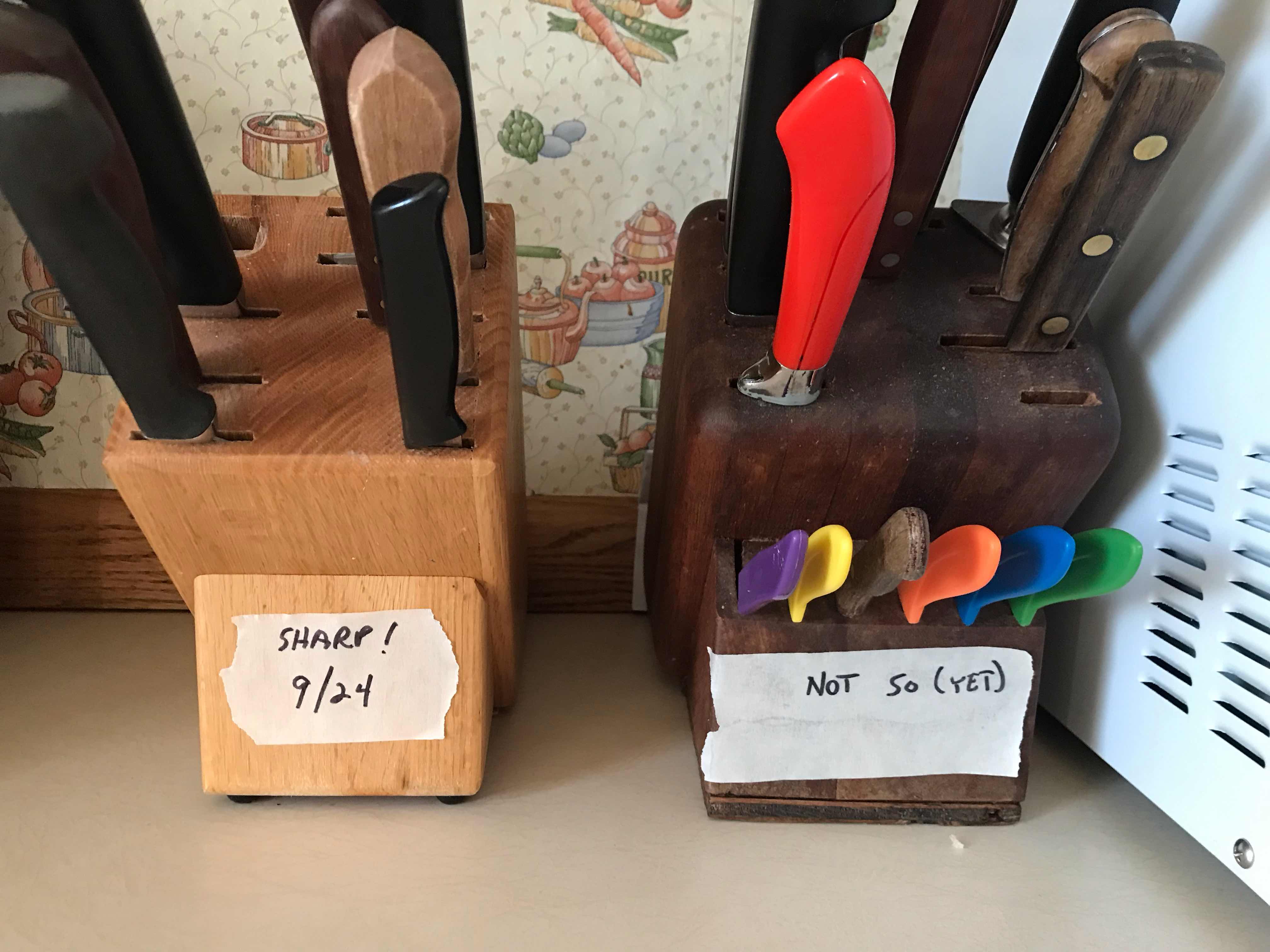
Sharper Image (Thoughts on Sanctification)

I've had this image floating around in my head and in my social media feeds for more than a week.

I even wrote a prayer around it here.

Lutherans famously are "weak on sanctification". I even have one colleague who had a t-shirt to that effect in seminary. I cringe.

The most significant theological aspect of Lutheran theology is justification. This "being made right with God by God's own work and not our own" is the whole basement of our belief system, built with the cornerstone of Jesus the Christ.

Lutheran theologian Gerhard Forde said here (in a really good article that I recommend!),
Sanctification, if it is to be spoken of as something other than justification is perhaps best defined as the art of getting used to the unconditional justification wrought by the grace of God for Jesus sake. It is what happens when we are grasped by the fact that God alone justifies. It is being made holy, and as such, it is not our work. It is the work of the Spirit who is called Holy. The fact that it is not our work puts the old Adam/Eve (our old self) to death and calls forth a new being in Christ. It is being saved from the sickness unto death and being called to new life…Sanctification is thus simply the art of getting used to justification. It is not something added to justification. It is not the final defense against a justification too liberally granted. It is the justified life. It is what happens when the old being comes up against the end of its self-justifying and self-gratifying ways, however pious. It is life lived in anticipation of the resurrection.

It takes nerves of steel to want to contradict or add to what Forde says because his pen was certainly often, if not always, guided by the Holy Spirit. Yet, I do think there is something not fully formed in this thought. Justification can be complete, through Jesus Christ, and we can be fully saved AND simul justus and peccator (simultaneously saint and sinner) AND still have growth in our life of faith and in our discipleship.

Sanctification does not have to be seen a completion of anything God has done, but instead the Spirit's on-going ordering of our internal chaos (as in the beginning of creation), so that we may more fully become the people God has made us to be.

Martin Luther himself understood that even when justification was complete (as it has been since the day of resurrection), we are still on a journey. He wrote in the snappily titled "An Argument- In Defense of All the Articles By Dr. Martin Luther Wrongly Condemned by the Roman Bull..."

This life, therefore, is not righteousness but growth in righteousness,
not health but healing,
not being but becoming,
not rest but exercise;
we are not yet what we shall be,
but we are growing toward it;
the process is not yet finished, but it is going on;
this is not the end, but it is the road;
all does not yet gleam with glory, but all is being purified

 
That sounds like sanctification to me- gleaming with the grace and power of Christ and yet becoming stronger in faith and discipleship, through the Spirit's power, day by day. Additionally, an enormous aspect of understanding the purpose of justification is that, through Christ's work, we have been freed so that we might more fully and purposefully love and serve our neighbors. It seems to me, then, that sanctification is, in part, coming to understand that our neighbors too have been justified by Christ.

It is one thing to believe that I have been made right with God. It is quite another to trust that the person whose motives I question, whose actions I despise, whose being I slander, has also been made right with God by the very same Jesus who has saved me! Surely we are all being moved along in our understanding of this.

Lastly, I think of Paul's words to the Philippians- his happy letter- wherein he is offering encouragement and words of promise to people whom he loved in Jesus.

I thank my God every time I remember you, constantly praying with joy in every one of my prayers for all of you, because of your sharing in the gospel from the first day until now. I am confident of this, that the one who began a good work among you will bring it to completion by the day of Jesus Christ. -Philippians 1:3-6

Now, it is possible to say that this is a comment to a group of Christians, not about individual growth in righteousness, but I believe that kind of theological hair-splitting isn't necessary. Clearly, God's work in and among Christians is never completed, aside from their salvation, and we are constantly being shaped, molded, reformed, restored, stretched, compelled, halted, and burnished for the sake of Christ in the world. We must take this work on God's part seriously and take our own selves less seriously. None of us is presently so good that God's work in us is done.

What's the TL:DR (too long: didn't read)here? Sanctification is a real thing. It matters for our faith and it is apart from justification. Sanctification remains God's work in us, yet we are called and empowered by the Holy Spirit to take part in it, to perceive it, to celebrate it, and to know that God remains at work in us- from the beginning to the end.

Sunday, October 28, 2018

What Needs to Be Said

How do we measure the impact of 65,000 words?

A novel is considered a piece of writing that is a least 40,000. So 65K is a book, for certain.

Now, imagine 65,000 words in 1543.

Those words have to be written out with ink and a quill. They must be scratched onto expensive paper. Then to print and distribute your work of 65,000 words, each page must be set out carefully in the moveable type of the time, inked, and printed. Then the pages must be collated and then tightly handsewn together.

If a book had an illustration, it was likely a block print- carved out of wood, pressed in ink, and the image transferred onto the paper.

All of this sounds tedious, and it was, but it was so much faster than the hand-copying of the previous centuries, prior to Gutenberg and his glorious printing press.

What was carefully written up and printed in 1543? What ideas were worth carefully laying out the moveable type, carving a block print, and distributing far and wide? What topic could inspire 65,000 words?

This is the year in which Martin Luther published "On the Jews and Their Lies". In his earlier years, Luther believed that Jews had been unable to be drawn to the truth of the gospel due to misinterpretation by the Church. Now, in the midst of reinterpretation, he has assumed that Jews and Turks (the name he called Muslims) would be drawn to Christianity. As that turned out not to be the case, and then his prince and benefactor- John Frederick, Elector of Saxony- began to persecute Jews with his (the Elector's) realm.

Slowly, as Luther aged, he became embittered against Jews and then wrote his treatise, "On the Jews and their lies". Sixty-five thousand words railing against Jewish people and calling for their schools and synagogues to be burned, their rabbis and teachers to be prevented from doing their work, for Jews to be ghettoized- unable to live among Christians, for physical protection to be withdrawn from them, and for them to be enslaved or have their property taken away until they truly converted.

Luther never renounced these views.

Neither, in full, did the Protestant Church at the time or the Roman Catholic Church. A full rejection of anti-Jewish sentiment in the church did not happen until well into the lifetimes of some of the youngest people here. 

Great effort was taken to print and disseminate this treatise around Europe, especially among those who could read German. At the same time, there was an enormous (and commendable) effort to have the scripture translated into the vernacular. Thus, people now could read the Bible in their own language, but may or may not have had the skills to reflect openly on what they read.

This means that the subject of "On the Jews and their lies" was in conversation and at the same time that people could, for the first time, read about Jesus' encounters with his own people, their conversations, and their responses to one another. If one had not been adequately taught that Jesus was Jewish, that God always keeps God's covenants, and that Christianity was grafted into Israel's tree of life, then what does do with the idea that Jews are terrible people, living in one's own cities and towns?

Like a contaminated stream flowing into a river, "On the Jews and their lies" polluted the waters of Christian consciousness. To be clear, this particular river already had anti-Jewish and anti-Semitic detritus floating in from historical persecution against Jews, which has a very long history. This poison stream, fed for thousands of years, continued to contaminate the river of Christian consciousness beyond the Reformation on through the Renaissance, the foundations of American history, in 19th century Russia, into the European and American eugenics movements, through the horrors of the Third Reich and Holocaust, continued on in various forms in the Soviet Union, was present in the KKK and neo-Nazi movements of the United States, and committed its most recent horror yesterday in Tree of Life synagogue in Pittsburgh, Pennslyvania on the sabbath day of that community.

Now, please take a deep breath.

Why on earth, on my last Sunday here [at Lutheran Church of Hope], when I have so much to tell you and so much love to share with you, would I take my last twenty minutes of sermon time to speak about the pain, the horror, and the sin of anti-Judaism? Why would I bring up this aspect of Luther's life? Is this the time? Is this the place?

Rabbi Hillel, living close in time to Jesus, said, "If not me, who? If not now, when?"

The ultimate question of life is this: Why are we here?

The religious ultimate question is not "Is there a God?" That is a philosophical question.

The ultimate religious question, which already accepts that there is a god of some kind, is: What does God want with me?

If I have accepted, on through hearing the words of faith, that there is a God and I am not that God, then my life is spent coming to understand and further accept that I am not in control of very much. 
If God has done the work of:
- providing me with a pioneer and perfecter of my faith in Jesus
- giving me the gift of the Holy Spirit
- making me righteous
- ensuring my salvation
- cultivating my love [and]
- bringing me at the last to eternal life...

If I control none of those things, then what exactly is my work?

Let us consider, briefly, Psalm 46, verses 8 and 9:


Come, see the Lord’s deeds,
    what devastation he has imposed on the earth—     
bringing wars to an end in every corner of the world,
    breaking the bow and shattering the spear,
        burning chariots with fire.

What is the devastation that the Lord causes, according to the psalmist? It is the ending of war. The bringing of peace brings devastation to the earth. The end of the weapons of war, the conclusion of the rumors of war, the elimination of the terror of violence- this is the work of the hand of God. 

Why is the end of war devastating? 

Because it shatters the lies about control. War is about dominance, about power, about winners and losers. War and its fellow travelers- death, chaos, pain, and uncertainty- are the tools of the forces that oppose God. They are evil. They tell lies. We forcefully reject them. They oppose God's true reformation work- revelation of love, restoration of relationship, and resurrection in the face of death.

If God's devastating work, to be brought to fruition in creation, is the end of war- in all its forms, then the people of God must be at that work. It is not work that saves us. It is the work we are about precisely because we have been saved. It is the joy of our salvation, of trusting that we have been made right with God and not by our own selves, that allows us to take up work in our homes, in our backyards, in our neighborhoods, in our city, in our state, in our country, and in the world. 

And the work we are to be about, then, is God's own work of ending war. 

We are called to end the actual violence of war that comes about through political contests of will. We are called to end the war of sexual violence against women, girls, and all who identify as female. We are called to end the war of racism- in all its forms, including in institutions, within our justice system, and in our own hearts and minds. We are called to end the war of violence, exclusion, and hate against our LGBTQ+ siblings and neighbors. We are called to end the war of people versus the environment, remembering that the careful stewardship of creation is our first vocation as human beings. We are called to end the war that permits the denial of mental illness, lying about its causes, and ignoring treatment and possibilities for healing. 

We are called to end the war of anti-Jewish sentiment, of lies told about Jews, of misinterpretation and misapplication of scripture, of failing to wrestle with, apologize for, and learn from history. 

If God's devastating plan is to end war, then let it begin! And let it begin with me! Now! 

What is the weight of 65,000 words? Those words have the weight of the destroyed houses of pogroms in Russia, of stolen resources through oppression, inquisition, and general theft, of children who were denied resources because of their homes in ghettos, and the accumulated heft of bodies of murdered Jews through time, political dissidents, and others. That's what 65,000 words weigh. 

It is no small thing- to decide to be on the side of God's work to end war. 

It means, truly, to think about what Jesus would do. It means to pray to have a peacemaking heart, beginning in your closest relationships. This isn't a heart of enabling or accepting pain, but a heart that seeks to speak the truth, dismantle systems that create pain, and to work for the healing of the world. 

This is hard work. 

The work of war is easier, to be sure, because it allows the illusion of control and permits the inflicting of pain to those who are in one's way. War seems easier than peace because peace means a willingness to see, to accept, and to respond to the humanity of another person or group of people. Furthermore, peace means accepting that the other person or people are equally beloved by God and have also been justified (or made right with God)in the same manner as one’s self. 

When I was approved for ordination, the two professors from the now-non-existent Lutheran Theological Seminary at Philadelphia told me that they perceived in me the gift of patience. It was a kind of stubborn patience, they said, that was kind and firm. I would be best, they said, in congregations where there had been pain and conflict. The gift of patience, they said, would be put to use in helping a congregation to heal. 

You, my friends of Lutheran Church of Hope, don't need my patience anymore. I have been called to a place that needs the end of different kinds of wars and needs my patience to help with that. 

You have your gifts- your own desire to welcome, your gift of teaching and shaping pastors, your willingness to be generous with space, time, and money, every single person here and more. You know the wars that must end in Anchorage and in Alaska. The Holy Spirit is already guiding you. 

Though we will no longer be side by side in the work of caring for others and the world that God made, we will never truly be apart. Those who have been baptized, those who have eaten together, those who have wept, laughed, worked, and rested together- those are made into one in Christ- can never truly be separated. 

This will be hard. And we will be sad. But our work will go on, because God will not let us stop. 

65,000 words have a terrible weight. 

But they can be destroyed with a single word. 

Love. 

God is love. (1 John 4)

God's love intends to destroy war. 

God's love brought us together. 

God's love will carry us forward. 

God's love gives us good work for this world. 

God's love is enough. 

I love you. I am not God. My love for you wouldn't be enough, nor would yours for me. 

God's own love for us is enough- enough for our strength, our hope, and our courage. 

Enough to end the wars. 

Enough to bring eternal peace. 


May it be so.

Tuesday, September 11, 2018

Fair to the Flag

Flags outside the sanctuary doors of Lutheran Church of Hope, Anchorage Alaska


More than once recently, I've been asked my opinion regarding flags in the sanctuary. I've written about my respect for the flag here, but I'd like to address the specific question directly.

Regarding flags (national or otherwise) in the sanctuary of a Christian church: I do not believe this is fair to the flag

The United States Code (the US Flag Code) states the following:

  • (175) (k) When used on a speaker's platform, the flag, if displayed flat, should be displayed above and behind the speaker. When displayed from a staff in a church or public auditorium, the flag of the United States of America should hold the position of superior prominence, in advance of the audience, and in the position of honor at the clergyman's or speaker's right as he faces the audience. Any other flag so displayed should be placed on the left of the clergyman or speaker or to the right of the audience.

It can be inferred from the document that "superior prominence" means to other flags. Where the flag of the United States is present, it is meant to be the unifying symbol for those who behold it. The proper display of the flag is meant not only to stir feelings of patriotism but also a sense of pride and shared community history and goals. That is the job of the flag.

The flag cannot do that job in a Christian sanctuary. The specifically unifying symbol of a Christian sanctuary is the cross of Christ. It is the symbol of his resurrection- thus drawing our hearts and minds to his birth, life, teaching, miracles, ignominious death, and God's power above all. The death of Jesus came at the hands of government officials and the wishes of religious people- all of whom sought control over the power and mercy of God as revealed in Jesus the Christ. The cross is the most powerful symbol wherever it is present.

Thus, the flag would be, at best, second to the cross.

In a sanctuary or chapel, however, the cross is rarely the only symbol of Christ's faithfulness and God's demand on the lives of the faithful. The presence of a baptismal font and/or an altar on which Holy Communion is served are also symbols of God's promise, God's presence, and the power of the Holy Spirit. The events of baptism and communion drive us back again and again to the Christ who feeds us and unites us as children of God. We are made into a community with the saints on earth and the saints who have gone before through the font and the altar.

With their presence, the flag slides to fourth.

Then there is the written Word, the Holy Bible, which people died to have translated into the vernacular. Scripture in the language of the common people represents the lives and works of men and women who believed that God speaks directly to everyone through the Spirit. The power of the narrative of Scripture belongs where it can be read, discussed, wept over, wrestled with, and treasured. Martin Luther wrote that we cannot begin to value the Bible enough until we have studied it for 100 years.

Now, the flag is fifth.

Jesus says,  “No one can serve two masters; for a slave will either hate the one and love the other, or be devoted to the one and despise the other. You cannot serve God and wealth.” Matthew 6:24

I am not arguing that the flag of the United States represents wealth. Jesus isn't discussing flags here, but the first part of the verse remains decidedly true regardless of the topic of discussion. When we are in a Christian sanctuary, we are Christ's first. (That's actually true everywhere.) In the church, we are children of God- not our denomination, not our city, not our country, not even our own family. We belong to God and it is God's demands on our lives that must and do take precedence. 

You can have more than one vocation at a time and the vocation of responsible citizen is one that I value and take quite seriously. All vocations, however, are subsumed into the primary one of being a baptized child of God, which is always our primary identity.

When I examine those vocations in their proper order, I am stirred by the Spirit to be sure that I am treating the flag of my country respectfully. Thus, I do not wish to display it in a place where it is of fourth or fifth prominence. I wish it to be displayed where it can rightfully do its job and that place, in my mind, is not in the sanctuary of a Christian church.


Wednesday, May 16, 2018

When It's Complicated

A few days ago, I was driving down a busy Anchorage road with both my kids in the car. I glimpsed something in my lane up ahead and tried to make sense of what it was. As part of my brain registered that it was a crumpled American flag in my lane, the other part of my brain began to scan for where I could safely pull off and grab it, before it was run over, soiled, further disrespected.

I have not said the Pledge of Allegiance in years. I remember clearly the curious looks I got for standing with my hands by side on my son's first day of kindergarten, silent while everyone else recited along with the principal over the intercom. I love to sing and the American national anthem is great for a soprano who wants to pretend she's Beverly Sills, but I stay quiet. My relationship to my country is not my greatest allegiance and I've pledged everything I've got to the One Who Loved Me First.

Due to my activism, my efforts to bring change on a variety of levels of society, to what people are sure they know about my politics... (Just a week ago someone mentioned assuming everyone in a group was registered as voters for a certain party- I'm not registered with any party.)... due to what people see and hear from me, assumptions are made. For most of those doing the assuming, it is an impossible idea that I would be found sprinting down the sidewalk toward a crumpled American flag, hoping to reach it before the situation was any worse. Yet there I was.

When I was about 50 yards from the flag, a man sprinted across several lanes of traffic from the other side of the road and snatched it up, rescuing the cloth itself from additional ignominy. And I returned to my car, panting, trying to figure out how to explain to my children why their mom was suddenly possessed with a frantic need to rescue a particularly patterned fabric from the street.

I barely understood the frantic need myself.

I wanted to save my own hope in the flag as a symbol of what this nation can be and could be.

I wanted to show my children that you can be deeply frustrated and disappointed and still faithful.

I want to continue to have the hope of General Lafayette in the "perpetual union of the United States" that it may "one day save the world".

Inside me, beyond how impotent I feel, how grieved, how desperate, how revolutionary, I believe there is a soul of an idea of who the United States can be that seeks to repair the wounds of the Doctrine of Discovery, to heal and repent of the on-going injury of enslavement, racism, and white supremacy, that truly embraces the concepts of equality and equity relative to justice, access, and opportunity.

My jaw is tight, I cry, and I'm so tired.

Better is possible.

Surely, better is possible.

It is a sign of high privilege that I can even entertain that notion.

And, yet, I know that I am an Esther among Esthers, an Abigail among Abigails, a Huldah among Huldahs, a Priscilla among Priscillas. I am not alone in the work or the call or the disappointment or the anger.

I will resist the efforts to cave and accept oppression, silence, complicity, lies, or misdirection as normal, representative, or necessary.

I will fight.

And I will hope.

And, if I have to again, I will sprint down a sidewalk along Tudor Road on a Monday evening, to rescue a tangible symbol that is more than history; it is possibility. It is that possibility that my Truest Allegiance will not let me ignore.

Friday, October 27, 2017

Human Being

I have been thinking about getting a new tattoo for over a year. For a while, I thought
about the phrase I read in a book by Augusten Burroughs: “Harder is just harder”. I felt comforted at the idea that harder isn’t impossible, it’s just harder. However, the right time and place for that tat never materialized.
That idea faded when I came upon another phrase: fida et audax- faithful and bold. I loved the idea of this motto and it made me feel strong and courageous to imagine it on my wrist or on an ankle. This was my plan until about 3 weeks ago.
A variety of life events came to a culmination and I found that I was exhausted, frustrated, and tense. Overwhelmed by all things that seemed insurmountable, I marinated in the idea that in this intense time, I couldn’t “do” very much. All I could do was be.
Be.
I’m not very good at being. I am good at doing. I am good at thinking. I am okay at feeling, but I tend to put that aside for what I think I should do.
I went to visit a friend in New York. She was with me in 2005 when I got my first tattoo. Getting my second with her was a natural choice, but as I thought about what I wanted, I realized that I couldn’t get fida. That was about doing. It was about actions, resistance, and persistence. Those things are very important to me, but if I was getting a permanent reminder... I don’t need one for how to do, I need one for how to be.
Then I knew... I would get sola gratia- grace alone. One of the rallying cries of the reformations of the 16th century, this phrase grounds me not in my own doing, but in God’s doing. In light of God’s doing, my response is to be. Being beloved. Being saved. Being healed. Being welcomed. Being held. By grace alone. Not by my doing, my thinking, or my successes or failures.
By grace. Alone.
So now it is permanently inked into my wrist. It is a reminder that what I am, first and last, is God’s. Thus, whether I am trying the hard thing, the bold thing, the faithful thing... there is always time to still myself. To know I am loved. To be washed again in grace alone.

Tuesday, January 3, 2017

Star Words and Approachability

In 2015, after several years of meaning to do this, I copied my friend Marci Glass and did Star words with the congregation I serve, Lutheran Church of Hope. Marci has written about this practice on her blog in several posts. I recommend scrolling down and reading this first posts and then you can pick and choose (or read them all). 

I used the PDF of words she had created and shared generously with other RevGalBlogPals via our (closed) Facebook page. LCOH's diligent administrative assistant and I cut out 300+ stars last year. We also made a separate set of stars for kids from the fruits of the Spirit (love, joy, peace, patience, kindness, goodness, faithfulness, gentleness, and self-control). While I'm not saying that adults shouldn't also choose from that list, it was easier to have a more condensed and more easily interpreted set of words for our younger members. An adult can wrestle with approachability. A six-year-old, not so much. 

This year, on 1/8/17, we will choose words again. Because I don't like to feel wasteful, we are not choosing from a complete set. We are choosing from the 260+ words that are left over, which also means that there are no repeats from last year. 

You can read from my January 2017 newsletter article below on my own thoughts about my 2016 word. 


____________________________________

Last year on Epiphany, we drew out Star Words as a congregation. Reaching into a bowl of more than 300 possibilities, we pulled out words like “fun”, “encouraging”, “solemn”, “inviting”, “tactful”, and many others. Some people may not have thought about their word again since that Sunday. Others have worked it into their lives or paid attention to where it showed up. A congregation member recently encouraged people to tell the story of their word.

I got the word “approachable”. This word gave me pause in many ways. I try to be as accessible as possible, but I frequently hear that people don’t find me approachable. Strangers feel okay asking me questions or seeking my help, so then I am surprised when I find out that church people do not. One congregation member told me that I am very approachable if a person needs help, but it is harder to approach me as a person who wants to help me.

In my time in Poland, I spent 11 days looking for people who were approachable to help me with directions, transportation, and translation. Standing on a sidewalk in the middle of a place where you know no one and no one knows you can be very scary. I think about this experience a lot when I think of refugees or immigrants who may have very little knowledge of where they are or how things work. How approachable do I seem when I am out and about?

On January 8, we will draw new stars, new words, for 2017. Does this mean I can quit thinking about approachability? We had enough stars last year to go again from the same pile. So the words that were taken are gone. We all get a fresh start. How should we approach this exercise?


When I drew stars for people who wanted them, but were not at church, I prayed for them before reaching into the bowl. Is there a way to be open to this experience and to a year of the Spirit’s work in clear and mysterious ways? Even if you’ve long tossed out your star, think back on your word and on your year. What did you learn? What would you like to learn? How approachable are you to the Holy Spirit’s work and power?


If you are interested in a word of your own, please comment below or email me at lcohpastor@alaska.net. Next week, I will pray for people by name before I draw a word specifically for them. The words are all face down in an opaque bowl. I can't see anything about any star when I reach in and draw. 


Monday, October 24, 2016

Decolonize16: First Debrief

As soon as the #decolonizeLutheranism hashtag began to be used on Facebook and Twitter, I was in and involved. It was like jumping into a river and realizing that I could swim better than I thought I
Candle station for prayer at conference
could. The impetus behind the movement is to separate North American Lutheranism from being considered interchangeable with Mid-Western, primarily imported Scandinavian, culture and cuisine. By "decolonizing" or separating Lutheranism from that context, the people in and behind (and ahead of) the movement hope to release and refine our theological and biblical commitments toward inclusion, welcome, understanding, and embracing the height and depth and breadth of the love of God in the world.

The initial conference of this movement was on 10/23/16 at the Lutheran School of Theology in Chicago. It's a long way to for an Alaskan, but I couldn't stay away. Once some of my friends knew I was coming, they signed up too. Thus, I had reunions, reconnections, and reformation (of the current church) all in a day. What a day.

The framework of the conference was sections of the Augsburg Confession pared with seasons of the church year. We heard small sermons or sharing and then had small groups to talk about our reactions and our thoughts. I'm still thinking about so many things, but here's my first thought:

Nice is the law and honesty is the gospel. 

Lutherans have a very specific way of thinking about the words "law" and "gospel". The law is anything, anywhere in Scripture (or in the world), that reminds and makes us glaringly aware of our need for God, God's work in Christ, and the aid of the Spirit. The gospel is the glad tidings anywhere in Scripture (or in the world) of how God is already aware of our need and is ahead of us, behind us, and within us- bringing us into the reality of our salvation through grace and the on-going truth of our sanctification.

In my small group, we talked about how people we know (including ourselves) resist the hard work of combatting racism, sexism, anti-LGBTQ behavior, and cultural appropriation without appreciation.   One person in the group asked if we could figure out how to use the framework of law and gospel as part of this work. I thought of my own work around "being honest, not good". I'm not a liar, but in general- my desire to be liked, efficient, and good means that I don't always own up to my own feelings, reactions, and perceptions.

In order to decolonize Lutheranism, we must stop the idolatry of "nice" and "good". We can no longer excuse that racist jokes are "just how so-an-so talks". We can't pretend it's okay to ask a queer couple if we could just not mention their wedding in the announcement or on the church calendar like we do for other couples. We can't ignore that there are women, people of color, and LGBTQ individuals who are gifted from God, but are ignored for call and service in this church and- if they get called- are held to a much higher and more scrutinized standard of behavior.

Nice and good behavior asks for there not to be so much fuss about this. Niceness says, "It's been that way for a long time and change is hard." Good behavior accepts being a token, being diminished, being ignored as part of what it means to be a child of God in a certain context.

No.

I said, NO.

No more.

No more "nice", No more "good".

When my therapist told me that I needed to work on "being honest and not good", I looked her in the eye and said "Honesty is not one of the fruits of the Spirit."

But are we really being kind without honesty? Does true generosity exist without honesty? Can we truly love without honesty?

In order to decolonize Lutheranism, we must begin a full-throated, full-bodied, and fully embodied embrace of honesty. We have to die to nice and good and be aware of how God is resurrecting us to honesty in Christ. We have to be willing to say what is obvious, what hurts, and what needs to be done. We have to be willing to sit with the pain of complicity, the reality of what we can and can't fix, and the emptiness of the seats of those who will refuse to do this work. We have to be willing to make changes and re-think how our work as congregations looks, sounds, and feels even before we believe it "applies" to anyone already there.

And we don't do it so that "others" will come. We do it so that we can be a church, the church, churches who are actively teaching and learning how to live and how to die in Jesus Christ. We do it because it is, honestly, the right thing to do.

Sunday, September 20, 2015

Difficult Questions: Hell


Difficult Questions: Hell
20 September 2015

Texts: Isaiah 14:12-20; Psalm 139:1-18; Revelation 6:1-8; Luke 12:1-12

The Top 10 Things to Know about Hell

10. About 99% of the images in your head of hell- the red demon with a pointed tail, the levels of suffering, the pit of fire, the presence of those who never knew Christ, the darkness, AND the eternal wailing and torment (plus the image of Judas in hell)- are all from Dante’s The Divine Comedy (or The Inferno). His writing was a piece of political literature that condemned powers of his day that he didn’t like. It also was Dante’s way of confirming himself as a poet for the ages by using the poet Virgil, who lived and died before Jesus, as his guide. Additionally, Dante’s work was a distillation of Greek and Roman mythology, some alleged gospels from the second, third, and fourth centuries, and one other work that had serious influence in Dante’s lifetime. The majority of the artwork about hell is not from Biblical interpretation, but is based on The Inferno- which takes very little from actual Holy Scripture.

9. What was the influential work that circulated in Dante’s life? It was a work that had been translated
into Latin and was very popular in upper class Italian household in the thirteenth century. Even if Dante hadn’t read this work, he would have been familiar with its descriptions of a fiery hell, divided into seven levels, and particularly populated by people who did not believe in God. What was this book? The Koran.

8. Isaiah 14, when it mentions Lucifer, is not talking about Satan. It is a prophetic statement against the then present-day Babylonian leader who brought suffering upon God’s people. The punishment for the shining leader would be an ignoble death and then to be completely forgotten. The prophecy also turned about to be prediction as no one is quite sure to which king this passage refers. Dante, as well as John Milton in Paradise Lost, expounded upon medieval Christian ideas of the ruler of the underworld being an eternal force that opposed God and was cast down. What force, anywhere, would have the temerity to attempt to oppose an eternal God? Also God has no eternal counterparts. Only God, as the Holy Parent, Holy Word, and Holy Spirit, exists outside of time.

7. The four horsemen in Revelation are not signs of the apocalypse. Apocalypse means disclosure. The four horsemen, as the images in Revelation 6 are called, are signs of apocalyptic literature. They help the reader to know that they are dealing with a story that seems to be about the future, but is really dealing with present realities. The four horses and their riders are the gospel, war, poverty, and death. These things struggle together, but only one will triumph. Those who are believers must remember to place their trust in what is truly permanent and act accordingly.

6. In the Hebrew Scriptures, the dead are dead. Period. Sheol is a place where the dead may be gathered and perhaps they are shades, or shadows of their former selves in that place. Ancient Israelites did not engage in ancestor worship, unlike most of the other regional religions of the time. Furthermore, an attempt to contact the dead (as Saul did when he used a fortuneteller to contact Samuel) is a sign of failure to trust in God as the one who holds the future and in whom one should place all confidence. Sheol is sometimes perceived to be a pit where one might descend spiritually- like the psalmist or the prophets Jonah or Jeremiah. Yet the fear is of being forgotten and God does not forget God’s children. Even in the deepest depths, God still knows the intimacies of creation.

5. Satan is an adversary in the Hebrew Scripture, but not an eternal being. When Satan’s name is used in the New Testament, it is either a pseudonym for powers and principalities or how the presence of evil, within one’s own heart or outside of one’s self, is named. When contemporary religionists empower the name of Satan by attributing works to him or giving him characteristics that are not biblical, they are engaged in a form of idolatry. Idolatry is not only worshipping the wrong god. It is also idolatrous to be afraid of the wrong power. The idea that there is a force equal to God with evil intent and the power to lure us into eternal separation and that we would be motivated by the fear of that being… Nope. That is not the essence of the Gospel, which is about the good news of the life, death, and resurrection of Jesus the Christ.

4. When Jesus talks about hell and says, “hell”, he is referring to an actual geographical location outside of Jerusalem. There, outside the city, was a horrible trash pit that burned constantly. The place was called Gehenna and it is the word that we have translated in the gospels as “hell”. Gehenna had once been the site of child sacrifices, the very sacrifices that were forbidden to Jews, but were practiced by other religions to appease their gods. It eventually became the place of the very worst trash and it was where Roman soldiers would dump the bodies of people who were crucified. It was this horrible place- a place of ignominy, terror, and avoidance- that Jesus urged people to avoid by encouraging them to care for one another, to tend to the sick and the dying, and to practice a radical kind of welcome. The Way of Christ would have meant being a community that saved one another, and the outcasts of society, from being burned with trash and forgotten.

3. Some strands of Christianity hold these truth to be self-evident: “Baptism, praying in the name of Jesus, and the King James Version of the Bible are all magical talismans against suffering in hell. Not drinking, dancing, swearing, or getting caught wanting to are also important.” If “I will draw all people to myself” (John 12) AND “Nothing can separate us from the love of God” (Romans 8) and “I have seen the Lord” (John 20) are true, then which of God’s children will be cast into an eternal separation from the presence of grace? We are not all traveling up the same mountain. We are not all feeling different parts of the same elephant. But if God is God AND God is love AND God has been revealed in the person of Jesus AND the Spirit intercedes for us in a variety of ways, then we cannot confidently make predictions about anything that comes after what we know, except to say, “God will still be God and, therefore, in charge.” Is it in keeping with how God has revealed God’s own character to the world to punish people for an infinite amount of time for bad decisions made during a finite period of time?

2. He descended to the dead. Everything from Acts to 1 Peter to the Gospel of Nicodemus to The Inferno written about Holy Saturday- the day between Good Friday (when Jesus was crucified) and Easter (when he was known to be raised from the dead)- everything written about Holy Saturday is an attempt to answer the question, “Where the hell was he?” Truth: no one knows. We are comforted by the idea that Jesus took the message of his triumph over death to the spirits of those who had died and brought them (or those who believed) to heaven. It makes great artwork. We don’t know. Theologian Yvette Flunder says, “Religion is violent because we insist on making the uncertain certain.”  Trying to create a definite answer for what happens on Holy Saturday is, essentially, an attempt to nail Jesus down. Again. So that we don’t have to live with a little mystery.  

1. Hell is not a geographical location. It’s not even a spiritually geographical location. Hell, if it is anything, is a perception of the absence of God. A perception that is patently false, but that appears when our own experiences, ideas, certainties, or doubts attempt to make gods of themselves through confidence or through fear. That perception is transformed through our acceptance, with Christ’s help, of the height and depth and breadth of grace. People need hell to exist as a reality because they don’t trust that there’s enough of God’s love, grace, or mercy to go around. If there’s not, they want to be sure they’re on the receiving end of it.

When we open ourselves to the hopeful truth that God’s grace overflows- in terms of time, space, context, materiality, and spiritual revelation- we then become more rooted in the joy of our salvation and the good news of freedom in Christ. Rejecting hell as something that must exist removes the scales from our eyes so that we can see how the kingdom of God is at hand.

Living faithfully, through God’s grace, means separating what we have ingested culturally through literature, art, theater, movies, and television and actually examining the written Word and the revelation that can come from tradition, reason, and experience. Anything else leads us away from the grace that is amazing, transformative, salvific, and eternal. And you know what? Resurrection grace says, “To hell with that.”

Amen. 


Thursday, May 28, 2015

Verbs are Action Words (Newsletter)

14 What good is it, my brothers and sisters, if you say you have faith but do not have works? Can faith save you? 15 If a brother or sister is naked and lacks daily food, 16 and one of you says to them, “Go in peace; keep warm and eat your fill,” and yet you do not supply their bodily needs, what is the good of that? 17 So faith by itself, if it has no works, is dead. 18 But someone will say, “You have faith and I have works.” Show me your faith apart from your works, and I by my works will show you my faith… 26 For just as the body without the spirit is dead, so faith without works is also dead. James 2:14-18, 26

            I just realized today that I haven’t posted a single thing to my blog since Easter. For some of you that doesn’t mean anything and for others, you’re screaming, “I know!” Though, in most weeks, I write sermons, litanies, commentaries, and (sometimes) book reviews, my blog remains a necessary outpost of ongoing thought and conversation. It is also the most frequent conversational intersection I have with people who are not active members of Lutheran Church of Hope. Among some of my friends, we have a phrase, “Writers write.”

            You can’t call yourself something, if you’re not doing the thing that proves the title. There are a few exceptions to that rule, but on the whole, we have to backup our words with actions. Having faith in God, trusting that we are people on the Way of Christ, and giving thanks in and for the Holy Spirit is good and important. However, mere assertion of faith through words is not enough to demonstrate what we have received through God’s own grace.

            Since we are decidedly not earning our salvation, we sometimes forget how much our actions matter and are essential to the life of faith. We are not convincing God to act or completing what Jesus has begun. Faithful actions- love for neighbors, care for creation, active pursuit of justice and peace- are part of a faithful life. Salvation is a one-time thing and not of our own doing. Sanctification, on the other hand, is an on-going work of the Holy Spirit.

            That work, sanctification, is about shaping us. The Spirit puts opportunities in our way, people in our lives, situations in our sight, and concerns on our hearts, so that we might respond and learn what it means to trust Christ’s desires for the world and God’s plans for the kin-dom. None of the efforts to which we are drawn happen magically or through our mere words among ourselves. They require prayer, sweat, tears, and effort. We must dare to get it wrong, but dare more greatly to trust in the forgiveness that exists for us- so that we might try, try again.


            Christians Christ. I do realize that “Christ” is not a verb. However, if “writers write”, Christians…? What is the verb that closes that sentence? It’s in your hands.

Through the Door Into Something New

Text: John 1:29-42 The season of Epiphany, which we are in right now, can get a little lost in the church year. Coming between Christmas and...