Showing posts with label Let's Talk about Sex. Show all posts

Wednesday, July 18, 2018

The Idol of Virginity

CN: This might not be for you if you're uncomfortable with the idea of me having sex. Hi, Dad! :)


There's an article circulating the internet right now where the TL:DR is "real" Christian men prefer debt-free virgins without tattoos. Some men (and women) may prefer this in a wife. Nevertheless, the blanket prescription that living your best wife life depends on retaining your virginity, rejecting college, and continuing to live with your parents until marriage is not only false, it's dangerous.

I'm going to digress.

There was a point in my life where I was taught and I believed that retaining my virginity until my wedding night was the highest virtue I could attain. I was certainly expected to go to college. I could change my own tires and learned how to figure out when I was being upsold unnecessarily at the mechanic's shop. I worked in a grocery store, a hotel, as a tutor, a babysitter, and an office assistant. In the two years that I was at a four-year school (graduating when I was 20), I never even drove to the beach for a weekend. I broke up with a guy who pressured me to have sex with him because that was not in the plan. The plan, the big plan, beyond graduation and everything was to be a virgin when I got married. It was the Right Thing To Do.

Then I met a guy. I moved to Nome, Alaska, worked for a radio station, did my first tequila shots, saw the Northern Lights, and met a guy.

I liked this guy. I liked him a lot. He was interesting, smart, generous, and had a great dog. We stayed up very late talking, had intensely competitive Scrabble games, and cooked for each other.

But here was the kicker: he didn't care that I was a virgin.

By this I mean, he neither celebrated it nor denigrated it. To him, it was one part of me, just like the fact that I would never beat him in push-ups, but that I would always kick his butt in Boggle. He told me that it would be wrong to be excited about something that was just a choice I had made since he wouldn't have been offended or put off it if I had made a different choice. Being a virgin was just part of me, not all of me. Accepting all of the parts of me was what made love, love.

It took me a while to see this for the grace that it was and is. The party I wanted for having held on to a specific social construct of purity was an idol that I had built with help from certain denominations and role models in my life. None of them had ever talked about the worth of my friends who had been raped, molested, or simply chosen differently and what they would bring to a relationship. Or, worse, it might have been mentioned that a truly, godly man would see past those things.

SCREW THAT NOISE.

Showing grace and love to a partner means loving who they are. In the Mr. Rogers's way, "I like you just the way you are" isn't that you're perfect, but that you don't have to earn my affection. I care about you as you.

When you love someone, you love who they are- which is a combination of the good and bad things that have happened to them, the choices they have made, and the paths they didn't choose. In love, we don't celebrate the pain in a person's past, but we do love who they are in the wake of healing. In love, we don't idolize isolated skills or choices, but accept them as part of what makes the beloved just so.

So in my life, I've only had sex with one man. It's the same man who likes that he's been the only one, but wouldn't care if there had been 1 or 50 before him, because he loved who he met and how her experiences had shaped her.

Since I'm not a Christian man or any kind of man, I'm going to speculate on what they might like. I think a real man (or woman or person!) will love and appreciate a person for who they are. Part of loving someone is knowing that the person is going to grow and change and accepting a future together is agreeing to be part of that change and trusting that the person in question will love you as you are evolved (sanctified) into the future that's ahead of you.

Putting "virginity" (typically a social construct about the absence of penis in vagina sex) on a pedestal is idolatry as much as any other kind.

Love yourself. Be kind to yourself. Move slowly and make choices, with the Holy Spirit, that minimize your regrets. Forgive yourself and get help to deal with the pains that happen to you.

And remember that a person who is worth sharing a life, a car, vacation time, and a bed with will graciously do all these things to you as well... and to themselves.


I have written about a similar topic here.

Tuesday, November 14, 2017

The Jesus Test (A Corollary to The Rock Test)

In response to new/old news about powerful men abusing and manipulating women, blogger Anna Victoria Clark wrote a fun and true piece called The Rock Test: A Hack for Men Who Don't Want to Be Accused of Sexual Harassment. I recommend this piece and if you haven't read it yet, take a moment, click over, and then come on back for some theological reflection.

I like The Rock Test, but it's not totally great for my context.

Confession: I don't think about Dwayne "The Rock" Johnson as much as I do about Jesus.

Thus, I'd like to propose that for a certain part of the population, "The Jesus Test" may be a more effective hack to prevent bad choices and encourage good (and godly) behavior.

Setting One: Passing the Peace

Sure, maybe you're a "hugger", but you know the person who has always stiffly held out their hand? That person doesn't want to be hugged. You don't know why. It may be taking all they have to be in the presence of all these other people. It may be that they have an illness where even light touch is painful. They may just not like to be touched. Your identity as a "hugger" doesn't surpass their desire not to be hugged.

Think of this Jesus:


This is when Christ appears to Mary Magdalene in the garden and asks her not to touch him. We don't know if he didn't want it because it would break his resolve to ascend to the Father, because it would be hard for her, or if it would disrupt some other divine part of His work. 

Jesus has the right to ask not to be touched and to have that request respected. Look at the person you are approaching. What are their body signals? What do their eyes say? If you know you are a person who is NOT good at reading those things, a handshake is always your best bet. If someone has a hand out, respect that hand. Noli me tangere, Jesus says, "Do not touch me." We listen to that from him and when he says it from within our neighbor. 

Pro tip: This applies beyond passing the peace. When someone asks you to withdraw your hand or to step back, additional commentary or pressure is absolutely uncalled for and unnecessary. No means no. It did for Jesus, it does for those whom Jesus loves. 


Setting Two: The Inappropriate Story

Are you in Bible study or a group meeting? Are you having a one-to-one with another person? Are you having coffee, drinks, or a snack with a group of 2-3? Are you leading? Are you a participant? Do you have a question you want to ask or a story that you want to tell neither of which is for the full edification of the group? 

Is your story because it gets a good laugh or because you like to shock people? 
Is your question to show how much you know, rather than to offer information? 
Is your goal to disrupt or unseat the person in charge? 
Is the purpose of the story or the question to show your power in the group and/or in the community? 

Would you tell this story to Jesus? Would you interrupt Jesus to ask the question? Is there a way that you would frame things differently if Jesus were the one in the front of the room or the one listening to you teach? 

Distant Shores Media/Sweet Publishing [CC BY-SA 3.0
(https://creativecommons.org/licenses/by-sa/3.0)], via Wikimedia Commons


_____________________________________________________________________________


I began this blog post on 10/11/17, right after the Harvey Weinstein allegations came out and the "Rock Test" was fresh and viral. However, I never mustered the energy to finish it. Frankly, my dears, I'm tired of having to think of clever ways to say, "Do unto others as you would have them do unto you." 

It's not about how you would want someone to treat your mother or daughter. It's not about how you feel about your gay son or your cousin who is trans. It's not about whether you could see your Indian neighbor's face or your Muslim cab driver's family picture. The truth is that you either believe all people to be your equals in the eyes of God or you don't. 

And if you don't, if you don't... you won't- even if someone rises from the dead. 

If you don't, it's not about things being different in the era in which you were raised. 

If you don't, it's not about a boys' club or what was good enough for you or your father or your grandfather. 

The fact is that you think that you are better than people around you and that the rules that govern everyone else don't apply to you. 

My carefully constructed writing will not convince you that other people are not means to your end of power, perceived control, money, awards, rewards, or advancement. 


So, here's the deal. I will not be sad when you lose your job. I will not be sad when your empire collapses. I will not shed a tear if you find yourself without everything that you so carefully built, believing yourself to be invincible. 

Someday, when (not if) it happens, I will have tea with you. If you want. I will not be sympathetic to your plight. I will look you in the eye and say, "This was always going to be a totally shit time." 

And I will wait to see if you want to make it better or make it right. 

I will not offer cheap grace. 

That's the true Jesus' test. 

And many people are shocked to find themselves failing. 


Friday, October 28, 2016

When the Body of Christ is Fat

Bitmoji Julia enjoys tea
Within a very short amount of time, two people whom I love were called "fat ass". One of these slurs occurred in the church building and the other occurred in the same building and within the context of worship. Both incidents were the result of a person with already impaired judgment lashing out at the person who was in front of them, perceiving them to be unhelpful or denying aid or service. Regardless of the "why", the reality is that the name was uncalled for, hurtful, and aimed to be a deep cut.

The reality is that a person who is under the influence of legal or illegal substances and often displays impaired judgment can still tell that body shaming- comments about shape, appearance, or size- is a way to lash out at someone who is frustrating you. That means those words and that way of using them are deeply rooted in our culture. An additional truth is that when we, as a congregation, attempted to console and listen to those who had been hurt in this encounter, I don't know that we said anything about the slur "fat ass" being wrong. "You shouldn't have to hear that" or "I'm sorry that happened" is not the same as "That was a crappy thing to hear, especially since it's untrue."

Bitmoji Julia doesn't care for this.
I've turned these events over and over in my mind. I have an unformed set of theological thoughts roiling around in there and I can't seem to make them beautiful, but I can sense their truth. The church is not good at talking about body image- especially as it relates to size. Even as we come to understand race, culture, sex, gender expression, attraction, and even mental health as things that are innate, but not necessarily immutable- we have not applied that learning or that spiritual growth to body size and shape. Even in the life of a congregation, we reflect the cultural idea that a bigger body is related to immorality. Despite a wealth of scientific information related to body size and shape as inherited, that BMI is not worth the metal to make the calipers, that a sedentary life is the biggest health risk, and that diets rarely produce long-term, lasting results... despite all of this, the church still jumps on the bandwagon of good/bad food choices, silence in the face of fat and/or thin shaming, privatizing size (it's all your fault), and ignoring the call to physically move.

The church is the place where we are supposed to reveal an inclusive welcome, open arms, and a reflection that all people are children of God. What happens when we don't include size- fatness and thinness- in that conversation? When our scripture readings are about banqueting, feasting, rich wines and marrow, open tables, hospitality, and eating in community, how often do we subvert that welcome and the joy of creation by creating binaries about what we should and shouldn't eat, can and can't wear, do and don't look?

Bitmoji Julia feels this more than real Julia
Lest you think that I have no idea what I am talking about, I know my own weight so well that I know if I am down just 2 pounds. I wrestle with my own body image, including how much of it there is. I would be tempted to respond being called "fat ass" with saying, "You probably need your eyes checked because that's not all that's fat." Of course, I acknowledge that while I have high BMI (worth nothing!), I am on the smaller side of being overweight. My weight also doesn't conflict with what I enjoy doing- outdoors or otherwise and yet I am hyper-aware of it. When I think of the gifts I can give to God, I would quickly name my brain or my ears or my hands and feet- as though these exist on their own, instead of within the sanctified casing of the rest of my body.

I appeal to you therefore, brothers, by the mercies of God, to present your bodies as a living sacrifice, holy and acceptable to God, which is your spiritual worship. Romans 12:1

Bitmoji Julia tells it on the mountain
Then God said, “Let us [shape soil] in our image, after our likeness. And let them have dominion over the fish of the sea and over the birds of the heavens and over the livestock and over all the earth and over every creeping thing that creeps on the earth.” So God created [humans in the  Divine] image, in the image of God [they were created]; male and female he created them. Genesis 1:26-27

So, whether you eat or drink, or whatever you do, do all to the glory of God.1 Corinthians 10:31


So, what do we do with this? How do we move to make sure that body shaming is not part of church culture and that health, wellness appreciation, and confidence in God's creation is? 

1. Do not make food "good" or "bad". All food is a political choice. When we decide what to eat or what to provide, we are deciding where to put our money, our community resources and time, our energy, and our support (expressed and unexpressed). Think about what you want to communicate about how you perceive God in farming, ranching, research, community life, and vocation through the food you provide or consume- both as individuals and as a congregation. 

2. Fat people know they are fat. They probably know better than you what they weigh, their measurements, and where they can find clothes and where they can't. Do not participate in shaming by ignoring or by patronizing. Also, do not assume they have no idea how to make correct food choices or exercise habits. Don't moralize size. 

3. Consider what it means that a sedentary life is more dangerous than being overweight or obese. Who do you know who might need a walking partner who is understanding and willing to go slow? Who might need a friend to come by a couple times a week for a low-impact exercise video? Who else might need to know that they aren't alone in having Type 2 Diabetes? Could you rideshare to the hospital's T2 class or organize a presentation with a nurse at the church for the community? 

4.  Do not assume that all health issues are related to weight or that weight is automatically related to stress. Sometimes yes, but sometimes no. Are you the doctor of everybody? 

5. When someone struggles because of their size (thinness or fatness), do not pretend that their body is not a real thing. Being rejected from an exit row seat because one needs a seat belt extender isn't actually an FAA regulation and it is pretty insulting. Acknowledge that this is a hurtful thing and be willing to listen to what it stirs up in the person. When someone is called a "fat ass", listen to that story. Maybe it hurt them, maybe they dismiss it. Acknowledge that this is about an attempt to embarrass them about their body- a reality of their world and how they are created. 

6. Do not participate in body shaming of any type (yourself or others), including when it happens to people you don't particularly like. Loving your neighbor means critiquing their behavior with an eye toward repentance or metanoia (turning around), not being cruel about something that is part of how God has made them. 

7. The Body of Christ is the body of Christ. Sometimes it has a soft, squidgy tummy or flappy upper arms or large strong thighs or round face. The fat body of Christ can still come to your house and do a load of laundry when you are flattened by chemotherapy. The underweight body of Christ can still bring a pizza to a family after an adoption. The roly-poly body can collect your cups after communion with Spirit-filled smile and the body that cannot keep up with its metabolic disorder can still read the gospel during Bible study. The Body of Christ is the body of Christ.

What would it look like for the church to embody this? 


Monday, August 1, 2016

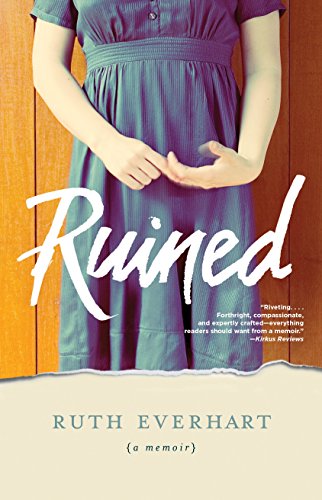
Ruined (Book Review)

Lately, I've craved sentences. As a voracious reader, I absorb large quantities of words, words by the gallon, the bucket, the ocean. However, in the present time of my life, I long for and adore simple sentences. Literally, I'm looking for something that could tattooed on the top of my foot.

Ruth Huizenga Eberhart has just such a sentence. In the middle of Ruinedher wrenching memoir of rape and spiritual agony, she writes, "The fall is a more universal theme than restoration." 


The fall is a more universal theme than restoration


Maybe I don't want that exactly inked into my skin, but its message is indelible. So was the four hour encounter in Ruth's 20th year shaped everything that came after it. As it so often does, the will of neighbor- his or her poor choice- causes a crisis when one has to examine where that choice intersects with the will of God. 

Ruth's rape, the aftermath, her relationships- all of these things intertwine with her pain, her grief, and her questioning about the God about whom she'd taught and the God she was actually encountering in silence and in space. Her lyrical writing, sometimes a little slowly paced, allows the reader to realize that God's silence is not always a big NO, but an invitation into a smaller, yet more spacious yes. 


Grace is more than forgiveness; grace says that it’s all right to need forgiveness in the first place. It’s all right to be imperfect, to intend well and mess up. To try again. Grace is getting a do-over. 


The fall is a more universal theme, because so few lack the language for expressing restoration, for understanding it, for believing it is possible. When Ruth eventually takes proactive steps to avoid being forever terrified of men who resemble her attackers, my eyes were so wide. Living day after day is surprising after a horror or a tragedy, but it happens. One hardly believes one can keep breathing. Attempting to keep something "normal" is brave. Ruth is very brave. 

Actively seeking to change something within yourself is courageous. Ruth is incredibly courageous. Her courage is not just evident in how she learns to view herself through God's understanding, but even more so in how she comes to see her experiences through God, divine mystery, and love. 

The fall is a more universal theme, but I believe it is only because we actually crave the stories of restoration. We long for the redemption narrative. We want to see it come out all right. This is because, in our hearts, we know our own falls and faults and we long to know that we too will sing restoration songs. 


I received a copy of this book for an honest review. My honest recommendation is that this book is completely worth your time and effort. 

Thursday, September 17, 2015

Consent

Rape culture is a phrase that causes defensiveness in many people from across a wide spectrum of society, particularly Western society. No person or group wants to be identified as condoning or endorsing rape. Yet, if a society has a history or habit of

- blaming victims,
- failing to prosecute perpetrators,
- prosecuting sex workers instead of johns,
- sex negativity about assertive behavior in a specific gender or sexual expression,
- commodification of bodies (especially particular kinds of bodies) for the purposes of selling anything and everything,
- trivializing rape, trivializing self-control of one's own body, and/or
- failure to societally reject sexual predators...

the presence of any or all of these indicates rape culture. Whether it is part of a national culture, a school, a social organization, a religious group, a housing situation, or any other social setting, this kind of behavior is unacceptable.

For non-Christians or non-believers, this kind of behavior ought to be understood as a basic failure to create a moral and supportive foundation for a safe and just society. For those who claim to follow Christ or to be People of the Book, this kind of behavior represents a complete rejection of the understanding that God is the creator of all life and thus it is to be respected, valued, and cherished. The bodies that we see in front of us are tangible signs of the kingdom of heaven at hand and we are called to treat them as such- since therein is contained the very presence of Christ.

I have come to realize there is one aspect of rape culture that is not usually discussed.

CONSENT.

In the past couple of years, sex-positive teachers, clergy persons, and community workers have been making an effort to communicate the fact that CONSENT is required and on-going consent is part of a healthy sexual encounter. A person who cannot consent either because of temporary or permanent disability, power differential, or bodily or mental incapacity is not a suitable sex partner. A living being that is always unable to consent is not a suitable sex partner.

Children cannot consent.

Animals cannot consent.

Persons who are drunk/high/comatose/heavily medicated cannot consent.

Subordinates in almost all job settings cannot consent.

Persons over whom one may have spiritual, emotional, or physical power cannot consent.


Consent is more than recognizing that "no means no". It is also means paying attention to the yeses one is receiving. Are they enthusiastic? Is affection being reciprocated? Are the yeses being communicated verbally and non-verbally with either eye contact, positive tone of voice, and/or affirmative body language?

I was recently at a public hearing about adding sexual orientation and gender identity to Anchorage's non-discrimination clause. (I support this.) There were a number of people who spoke, as Christians, claiming to be concerned that allowing this would lead to permitting behaviors like sex with children or animals. This "slippery slope" argument is a sign of rape culture. It reveals a kind of thinking that promotes sex generally from a cis-gendered, straight, vanilla point of view.

Bestiality and pedophilia are against the law because those laws protect parties who CANNOT consent to any type of sexual encounter. Period.

Changing a non-discrimination clauses does not change the law. Consenting adults, gay, straight, or otherwise, are still permitted under law to engage in non-procreative sex. Changing the non-discrimination clause means you cannot refuse housing to someone or reject their business in a public accommodation or fire someone because of who the person in question chooses to have non-procreative sex with on a regular (or irregular basis). In the case of gender identity, that's not about who one is having sex with, but about having one's inner and outer selves be in sync with one another. (This doesn't actually need consent from anyone else because, contrary to popular belief, it's not a sexual expression.)

We must learn to embed a clear understanding of consent in our thought process, cultural conversation, and lessons to our children. There are times when you don't have to share, you don't have to be nice, and you don't have be patient while someone else takes his or her turn. When it comes to your body, these things do not apply. If you do not like what's happening, say something. If someone says "no" or  "I'm not sure" or even "maybe"- there is NO consent.

Regardless of where we are in various "culture wars", we can all agree to take a stand against rape culture and an active, enthusiastic stand for consent.

In a conversation with another person, I once mentioned that I would like people to make a clear statement against rape, incest, and abuse before they launch into discussions of abortion. My conversation partner replied, "Well, that goes without saying."

No, it doesn't.

Rejection of rape culture, promotion of consent, and clear, truthful representation of the law NEVER go without saying. Ever.


Thursday, July 10, 2014

Lost Girls: An Unsolved American Mystery (Book Review)

Last year, I read a book called I [Heart] Sex Workers. Written by Lia Scholl, the book opened what I had previously assumed were my open eyes to some realities of how and why sex is sold, who sells, and who buys. Parts of that book have remained solidly with me, though I reviewed it in February 2013 here. Scholl wrote:

You might ask, if everything was equal, everyone had shelter, food, clothing, and jobs they loved, would people still sell sex? In all honesty, I believe they would. Some people sell sex because of sexual desire. Some people would sell sex to get one step further up the food chain. Some people would sell sex because they like it.
If everything was equal, though, the desperation around sex work would diminish. Sex works would be less likely to trade sex in risky situations. They’d be less likely to ignore their inner voice that says, “Run!” when a client is violent. They’d be less likely to have sex without a condom and risks HIV/AIDS and sexually transmitted infections. They’d be less likely to get into coercive relationship with pimps and more likely to keep more of their earnings. (44)

I haven't forgotten that paragraph or Scholl's point that women who sell sex are in much more danger, typically, than johns or pimps. Not only at greater risk for being arrested, sex sellers (male and female) are simply more frequently in vulnerable positions wherein they can be harmed physically or otherwise.

All of this kept floating up to the top of my mind as I read Lost Girls: An Unsolved American Mystery by Robert Kolker. The book give the personal histories of five young women whose bodies
were found in the brambles off a Long Island beach between 2010 and 2011. The women all had struggles with their families, frustrations in their lives, plans that were thwarted, and hopes that were expected to be realized. What all five actually have in common is that they were all killed and probably by someone who had contacted them through Craiglist or another site under the auspices of buying sex from the them.

They were not killed together, but over a span of month. Their bodies, along with the bodies of others who may or may not have been killed by the same person or have been selling sex, were all found along a stretch of a deserted highway.

Part of what made me ache about this book is how each woman came to make the decision to sell sex, often for short-term financial gain. Frequently, this decision came with a cavalcade of other situations- pimps or "bodyguards", drivers, competition, drugs. Not everyone who chooses to sell sex finds themselves in these situations, but that is what happened to most of these young women. The combination of crackdowns on streetwalking makes "escort services"- contacted through the internet- more appealing, especially since it can allow the sex worker to be his or her own free agent, separate from a pimp or madam.

Yet the decision to sell sex seemed to make these young women "less than" in the eyes of police and other investigators when their families first reported them missing. In the book's conclusion, Kolker notes:
It may no longer matter anymore whether the sale of sex among consenting adults is wrong or right, immoral or empowering. What's clear is that no good can come from pretending that the people who participate in prostitution don't exist. That, after all, is what the killer was counting on... Shannan, Maureen, Megan, Melissa, and Amber were over twenty-one. They were more or less working alone and of their own volition. Despite what some family members said after the fact, they were not lured or overtly pressured. Some would say this makes them complicit in their fate- in other words, they brought this on themselves by doing something so dangerous. But to suggest they had it coming because they put themselves in a risky situation is disingenuous; no one walks through life thinking they're going to be killed. (381)
These women were people, are people. Yet their decision led at least one person to think it wouldn't matter if they died. Maybe it led a person to believe that they should die because of the work they were doing. The police were also complicit in dehumanizing the women:

The police had failed to help them when they were at risk. They'd failed again when they didn't take the disappearances seriously, severely hobbling the chances of making an arrest. And they'd failed a third time by not going after the johns and the drivers. (363)

Frankly, this situation is unsurprising in that our culture generally chooses to thrill in women's sexual expression in certain social situations (product placement, magazines, movies, etc.), but frown on women's sexuality when it is expressed as blatant non-procreation activity, for whatever reason. Women who dare to engage in *that* get what's coming to them, whether it be STIs, unintended pregnancies, or murdered.

The murderer in these cases remains at large, insofar as anyone knows. Sex continues to be a commodity, but only the act. The bodies of those who deliver the commodity are still viewed as disposable. Women and children, and some men, are trafficked around the world for this trade. Others make the decision to sell sex for a wide variety of reasons. Some of these situations are far, far worse than others.

One thing remains, true though, a sex worker could be your sister or brother, your mother or uncle, your friend or neighbor, the person next in line at confession, or passing your groceries over a scanner. That woman or man is a person, a child of God. It is only when we start to think about society as a whole- education, opportunity, community, work, safety net- that we can begin to change some of the situations that cause some people to feel that selling their body is their only option.

If these girls, these women, are to have any legacy at all, let it be that we remember them with kindness, compassion, and a prayer for their families' peace. And that we do not fail them by refusing to see the truth around us.

Sunday, March 13, 2011

God and Bodies (Sermon, Lent 1A)

Song of Songs 5:1-6a; Matthew 4:1-11

            The book most of us grew up calling Song of Solomon is now more frequently being referred to as Song of Songs. When we called it Song of Solomon, we did so because we thought it was written by Solomon or at least attributed to him. However, as the book has begun to be more deeply read and examined, we’ve come to realize that at least 60% of the book is written from a woman’s point of view.

            In fact, though the action of the book can be a little difficult to follow at times, the female narrator has a distinct voice as she makes her case for being allowed to be with the man she loves. We may long have attributed the book to Solomon because it’s kind of a racy book and, according to biblical sources, Solomon knew his way around a, ahem, bedchamber. (See 1 Kings 11:3)

            That worried feeling that you having right now, the one that I might start talking about sex, that feeling has accompanied biblical interpreters for years when they come to Song of Songs. A book that so frankly approaches human desire and physical longing makes everyone a little nervous. And, when the clergy was mostly male and celibate, a book that makes feminine sexuality couldn’t be interpreted as anything but allegory.

            So, for much of history, allegorical interpretation was the way Song of Songs was read. It was considered a demonstration of God’s love for Israel, Christ’s love for the church or even the Spirit’s love for the individual soul. But look at what we read today. Does anything in that passage make you think of God’s love?

            Stay with me here for a moment. I don’t think Song of Songs was initially included in the Hebrew Scriptures because it’s allegorical. In some deep way, this book expresses a truth about how human relationships reveal divine love. In some way, this book’s uncomfortable stanzas about the desire of the body for fulfillment help us to be in touch with our struggle in what it means to be human.

            Songs of Songs is part of the Wisdom literature, like Psalms, Proverbs, Job and Ecclesiastes. We don’t interpret Psalms allegorically. We read the psalms of joy, the psalms of lament, the psalms of anger and fear and the emotions resonate with us. We learn from the Psalms that there is no human cry that God has not already heard and, therefore, we should not be afraid of our prayers. Proverbs and Ecclesiastes are interpreted as wise sayings or philosophy. We don’t make them allegory. And we read Job, again and again, to understand how we can keep going in the face of tragedy and for the assurance of God’s presence and awareness of our pain.

            If allegorical interpretation is not generally a part of Wisdom literature, why would we apply it to Song of Songs? Is it possible that this book, this poem of poems, was brought into the Scripture because it celebrated the mysteries of human love, an experience we believe God created us to enjoy?

             Song of Songs is very similar to other ancient Middle-Eastern love poems that were used as funeral or wedding songs, affirming the power of love in life and over death. Is it possible that this book, this poem of poems, was brought into the Scripture because it celebrated the mysteries of human love, an experience we believe God created us to enjoy?

            That’s the hard part. Most of us have absorbed and internalized negative ideas about bodies, about sex, and about our physical selves that we are unable to separate those feelings from what we think about God. That’s the first temptation of the devil with regard to our physical selves. If we can be made to believe that God is only interested in our souls, we will either ignore our bodies to their detriment or we will think what we do with them doesn’t matter.

            If God didn’t want us to have bodies, God wouldn’t have given them to us. If our physical selves didn’t matter, then God would not have sent the Son, in the flesh, so that we might know more fully God’s love. In addition, Jesus’ temptation in the desert wouldn’t matter because we would have nothing to gain from knowing God’s body was hungry, tired or bruised. Furthermore, if God had no interest in our bodies, then we would be able to God’s work with our minds. How’s that working out for any of you?

            The second temptation of the devil with regard to our bodies is that if God so loves our bodies, then sex corrupts them. True enough, through lust, shame or misuse, sex can cause us to sin and to feel separated from God and from other people. However, that’s not the only thing that can happen. The church draws boundaries around sex not because of its corrupting power, but because of its creative power. I don’t just mean creative power in the sense that you can procreate through sex. I mean that sex makes co-creators with God. A healthy sexual relationship between two committed adults nurtures respect, hope, confidence and future fulfillment. In that love-making, we get a glimpse of God’s hope for us, God’s desire for the fulfillment of creation, God’s deepest desires for our redemption. That’s powerful and God desires that for us as much, or more, than we desire it for ourselves, not some cheap imitation of it.

            The third temptation of the devil is that if our bodies matter, then our bodies define us. Each of us, right now, could probably fill a sheet of paper with what we would like to fix about our physical selves. Some of us might have a slightly longer list, some of us shorter ones. Some of the repairs might be cosmetic while others are for deeper physical struggles. Some people really struggle with their physical image and the way they feel about their bodies gets in the way of their ability to believe in God’s grace. If you have changes to make, make them and if things can’t be changed, let them go. The woman speaker in Song of Songs had very dark skin, a flat chest and hair that looked like a flock of goats running down a mountain. She thought she was beautiful, as did her lover, and we’re still talking about her as a paragon of beauty. God defines us through Christ and Christ’s body alone.

            Song of Songs deserves our attention as the deep, erotic hymn to human love that it is. This hymn of hymns keeps us from ghettoizing our sexual selves, keeps our bodies at the forefront among our gifts from God, reminds us of women’s voices in Scripture and in the world and serves as resistor to temptations from the forces that oppose God. That’s pretty good for a book with only 117 verses.

            At its finest, the Scriptures remind us of what it is to be human, both the highs and lows, and where God meets us in our humanness. “I opened to my beloved, but my beloved had turned and was gone.” That verse alone reminds us why Song of Songs isn’t allegorical. Human love, even its best form, bring disappointment. God’s love for us does not fade, not for our spirits, not for our bodies, not for eternity.

Amen.

The Way of the Cross Can Have Rhinestones (Sermon)

This is a sermon about Jesus, adversaries, and Dolly Parton.  When Jesus says to Peter, “Get behind me, Satan”, I imagine the other disciple...