Sunday, December 24, 2023

Always Christmas

In the C.S. Lewis classic, The Lion, the Witch, and the Wardrobe, the four Pevensie children are sent away from London to a house in the country. More specifically, they are sent away to keep them safe(r) from the horrors and dangers of World War II. While in the country house, they discover a magical wardrobe that transports them to a different world: Narnia. 


Lucy, the youngest Pevensie, is the first to enter Narnia. There she meets Mr. Tumnus, a gentle faun, who tells her some about this magical world. While Lucy marvels at the animals who speak and the reality of magical creatures, Mr. Tumnus explains to her that all is not well in Narnia. “It is winter in Narnia,” said Mr. Tumnus, “and has been for ever so long…always winter, but never Christmas.”


This long-lasting winter goes on and on. For the creatures of Narnia, always winter 
means a perpetual state of longing for spring and no end to the season of not-enough. Never Christmas means there is never a celebration of light and love, there is no exchange of joy, no thrill of hope. Narnia is a weary world that longs to rejoice. 


There is the faintest rumor that Aslan, the lion king, is on the move, but until that whisper becomes a shout, there is only endless snow, unrelenting darkness, and a worry about having enough for as long as the season will last. The entirety of the "always winter" metaphor is meant to describe what it is like to live in fear, under a curse, without an end in sight. 


The reality for most of us, right now, is that even when we are having unseasonably warm weather, we still live in a world that feels like always winter and never Christmas. The news of wars does not end. The reality of cruelty, from one group to another, is inescapable. We know all too well what it means to feel as if there is not enough- not enough money, not enough time, not enough hope. 


There is a restful side of winter- the thoughts of seeds and plants preparing underground or within their barest stems, pregnant animals, and quiet stillness before the rush of spring. But like Mr. Tumnus, we’re rarely getting the chance to experience the restorative side. The chaos and frenetic nature of life today means we only get that positive wintering in small bits, rather than a whole season. 


Christmas itself easily gets caught up in the frantic worry about deprivation, rather than in the stillness and renewal. Confronted with buying for the holiday by mid-summer, the pressure to take advantage of sales, to do everything, to be cheery, and jolly, and to make perfect memories does not carry the warmth of July into the winter. Instead, this overwhelming tide of commercials and expectations carries winter deprivation into the season of more than enough. Always winter and never Christmas- never ready, never prepared enough, always going to be a letdown. 


The frustrating reality of this ongoing metaphor, for this preacher, is that we are not in Narnia. We are not waiting for Aslan to appear. Our lion king has already come! Our wait ended two thousand years ago when a young, affianced woman in Nazareth said "Let it be" to the angel Gabriel. Our longing was met when Joseph laid that tightly swaddled newborn on the clean hay in the manger. 


We've been singing, "He comes to make his blessings known, far as the curse is found" for generations. It was likely the chorus that the shepherds hummed to themselves as they returned to their flocks, after seeing the truth of what the angels had told them. We talk about the reason for the season, sometimes forgetting that same Reason is truth for every season- every season of the year, every season of life. 


I am not saying that winters of grief and frustration and stress are not real. I am saying, however, that they do not define us. They are not the last word in a world wherein the Word of the Father has appeared in the flesh. A word of love, a word of hope, a word of mercy- Jesus was born to poor parents, in a small town, and his birth announcement went to outsiders- shepherds in the fields and foreign kings from Persia. They were the outsiders of their time, and we receive the same birth announcement in our own time. 


For a child has been born for us,
    a son given to us;
authority rests upon his shoulders,
    and he is named
Wonderful Counselor, Mighty God,
    Everlasting Father, Prince of Peace.
 (Isaiah 9:6)


More than just an earworm from Handel, this is the announcement for our time. Already, in and among us, is One who mediates and brings peace to all, who is greater than any idol to which we give time and treasure, who raises us with justness, mercy, and love. 


What would it be like if we who believe in this Christmas miracle lived it all year long? Not in the permanent Santa’s village way, but more in the way of this quote from Albert Camus:


In the midst of hate, I found there was, within me, an invincible love.
In the midst of tears, I found there was, within me, an invincible smile.
In the midst of chaos, I found there was, within me, an invincible calm.
I realized, through it all, that…
In the midst of winter, I found there was, within me, an invincible summer.
And that makes me happy. For it says that no matter how hard the world pushes against me, within me, there’s something stronger – something better, pushing right back.
 (Albert Camus, The Stranger)


Invincible calm, invincible love, invincible summer. This is the gift of Christmas. As we sing in Hark! The Herald Angels, “Hail the heaven-born Prince of Peace! Hail the Sun of Righteousness! Light and life to all He brings, Risen with healing in His wings.” One bright star shines within all of us- the invincible love and tenderness of the One who made us, knows us, and loves us. 


Light and life, light and life, light and life. In the midst of the world’s winter, light and life. 


We are called and equipped, when we trust in this original Christmas miracle, to carry the joy of this moment through the whole year. Not in a fake way, but just as the Bible readings and the carols do. We acknowledge the weary road of life. We acknowledge the curses of the forces that oppose God. We acknowledge that the fullness of peace and joy does not yet seem evident. We see the brokenness, but we work to bring healing and we know that pain does not have the last word. We hold the truths of what has already been done in God’s love alongside the promises of what is to come, and we wait.


And still, we sing. And still, we hope. And still, we rejoice. 


We do it today. And in March, and in June, and in September, we are never worried about how many days until Christmas. 


Because for us, for the whole world, Christ the Savior is born. He has come. We are not waiting. 


And, thus, at the very heart of our human experience with the Divine, it is always Christmas, never winter. 


Always Christmas. 


Always. Christmas. For everyone. Forever. 


Amen. 

Thursday, December 21, 2023

When Not Yet isn't Soon Enough (Longest Night 2023)

Within the Christian faith, we have many tensions. A tension, in this use of the word, is when we hold more than one thing to be true at the same time. It is not a coincidence that Christianity has the Trinity- Father, Son, and Holy Spirit- as a central tenet because we must learn early that binaries will never encompass the fullness of God and how Divine Love works in the world. 


We have the tension of both discipline (law) and grace (gospel) to hold together, guiding us toward the range of God’s expectations and mercy. We have the pull between mystery and revelation- the ways that the Eternal Light has been made manifest and tangible on earth and the things that we still hold in faith to be true, without having seen any kind of proof.  


We also have a time tension- a strain between understanding that God’s ways are not our ways. Neither God’s time nor God’s timing is like ours either. The pressure of this difference highlights one of the more difficult of the Christian tensions- already and not yet. 


Already and not yet covers the span of what we already know God has done- made promises to our ancestors and kept them. The Holy One reconciled the earth to her Maker through Christ. The Spirit has kept the church alive through the ages- even when the way the faith was lived changed shape and expression. 


That same reconciling and sustaining power is still at work today, which gives us a “now” in the middle of the already and the not yet. (I told you binaries don’t fully elucidate the situation.) 


The not yet is hard. There is no way to cushion that blow. 


We do not yet know why bad things happen to good people. 


We do not yet perceive the full reign of the Prince of Peace. 


We do not yet see all people united as one family of God and the animals together as in the image of the peaceable kingdom from Isaiah. 


We have not yet beaten our swords into plow blades. 


We do not yet understand suffering or what to do when it seems the shadows have overcome the light. 


Not yet, not yet, not yet. 


When the not yet becomes overwhelming- as we watch the news, as we grieve, as we experience a season of difficulty- we must help one another remember the now. 


When I looked for good news headlines of 2023, I saw information about entering a golden age of medicine- including a potential cure for AIDS, new cancer treatments, and many countries eliminating specific deadly illnesses. Many countries began to have more collaborative conversations about changing weather patterns and how to cooperate through the experience. Deforestation in the Amazon decreased by 55% and several animals were taken off the endangered species list, as well as other animals being reintroduced to their original homes. More than 254 million acres of land have been restored to Indigenous groups around the world through successful land back and reparations movements. 


I invite to you pause for a minute and think about your own “nows” of the year- what are the things that happened across the year that fed your hope, gave you joy, or increased your awareness of God’s work in the world. 


(For me, my daughter’s all-clear MRI two years out from her brain tumor surgery is a massive NOW of God’s work through science and medical vocations.) 


Our songs tonight were selected to highlight and comfort us within the tensions of already, now, and not yet. 


When we sing “Joyous Light of Heavenly Glory” and “Children of the Heavenly Father”, we’re singing of what God has done. We sing of the love of creation, and we sing of God’s knowledge of nesting birds, stars in heaven and our own needs. These two songs underscore our trust in what God has done. 


“Come Now, O Prince of Peace” is a song of not yet. This is a specific song on that theme for it was written by Korean hymnist Geonyong Lee as a hymn for the opening worship service on a conference for the peace and reunification of the Korean peninsula in 1988. This song speaks to our ache for what is not yet, but what we know God can do. 


Finally, we will close our service with “It Came Upon a Midnight Clear”. Unusual among Christmas carols, this hymn does not mention Jesus’ birth at all. The song is purely about the message of the angels. While recalling the angels of the Christmas story bringing good news to the shepherds, it speaks of what the angels are doing right now. They are still singing a song of peace- a song that can be heard by those who pause and listen for it. Rest beside the weary road and hear the angels sing. 


The song of peace is happening now. It echoes what is already and it leads toward what is not yet. It is a song of love, a song of peace, a song of joy, and a song of hope. It is the song we need when the “not yet” gets too loud and the substance of the “already” is too far in the past. 


In this season, remember the nows of this year. Know that the light shines in the darkness and the darkness cannot, will not, shall not overcome it. Pause and listen and for a few moments, on this longest of nights, give back the song, which now the angels sing. 


Sunday, November 12, 2023

Give Us Oil For Our Lamps

Pentecost 24, Year A

Matthew 25:1-13

Today’s gospel makes me think about Hanukkah. You might be wondering, “Why Hanukkah? That’s not our holiday as Christians. What does that have to do with anything?"

You’re right. Hanukkah isn’t our holiday. It’s specifically not our holiday, but the holiday honors the work of the same God we worship. Thus, it’s worth considering for a moment. 


The Festival of Lights, or Hanukkah, commemorates a miracle of God’s providence. I’m going to give you an unbelievably abbreviated story of the holiday. Alexander the Great spread, via his militaries, a Greek influence and Greek rule over most of the Mediterranean, until he died in 323 BCE. 
 

After his death, Judea (the area of our concern) was ruled by the Ptolemies- Greek-influenced rules from Egypt until 200. At that point, a Syrian king defeated the Egyptian rule and Judea became part of the Syrian empire. (Still with me?) This went okay for about 25 years until the Syrian ruler- Antiochus IV Epiphanes got into a dispute with the leadership of the Temple in Jerusalem. Long story less long, because of internal political divisions in Jerusalem and the pressures on the distant Syrian rules, Antiochus IV went into Judea, wreaked havoc, killed many people, and desecrated the Temple. In doing so, the Temple was out of commission for worship and daily sacrifice for more than 3 years. This means the Jewish people in the area were cut off from their worship rites and consolations for that amount of time. 


(If you’re tempted to dismiss that as inconsequential, I invite you to remember how you felt when we were unable to worship in the sanctuary for some amount of time in 2020.) 


Under Antiochus IV’s rule, Judaism was outlawed and a large statue of Zeus was erected in the Temple. This was too much for many of the Jewish people in the community and so a large-scale revolt began in 167 BCE. A man named Matthias, along with his five sons, led the revolt. It was his youngest son, Judah Maccabee (aka Judah the Hammer), who completed the effort in 164 BCE and drove the Syrian leaders out of Jerusalem and Judea. 


With that victory, the Temple needed to be cleansed and rededicated so that worship could be again. This not only required the physical clean-up but also the ceremonial aspects of recommitting the space to the service and worship of God. Part of that rededication was the required lighting of certain lamps for 8 days. Within the temple, they only found one day’s worth of pure and still consecrated olive oil- in its original jug, sealed with the wax and mark of the High Priest. 


They needed a whole week to press and clarify more olive oil, but they decided to at least light what they had as a demonstration of their intention. The miracle of Hanukkah is that the oil lasted 8 days- long enough for them to obtain and consecrate additional oil so that the people’s work in the Temple could begin again and continue. The provision of the oil for longer than expected during this time of rededication was perceived to be a blessing of God’s providence and favor. Commemoration of the miracle during the rededication became a minor festival in Judaism from that time forward, observed in homes with the lighting of candles 8 days in a row at a given time in the Jewish calendar. 


If you’re still with me, thank you. If you left off, come back… I’m about to make my connections! 


We know by way of notes from rabbinical schools around the time of Jesus’ birth that Hanukkah was being observed. This means that Jesus knew the story of Hanukkah and so did his disciples. It means all his Jewish followers knew the story. It means Mark, Luke, John, and Matthew knew the story. 


Which brings me to my question about today’s gospel: if we say that the gospel of Matthew was written between, say, 73-83 AD/CE, how did people go from believing God would provide enough oil in an emergency to believing it was a personal failure not to have enough? 


In slightly over 200 years, we go from believing God provided for the community and sustained their needs, to panicking that if we, personally, were not prepared- then it was all over and we were shut out. The Hanukkah story is not our story, but it is a story about our God. 


How does a God of provision, mercy, and hope become the bridegroom who locks out the people who didn’t cover their own behinds by having extra oil? 


It happens through the loss of hope. By the time Matthew is writing, at least 40 years after Jesus’s ministry and resurrection, two or three generations of believers have come and gone. People who earnestly believed in Christ’s imminent return started to think the stories might have been exaggerated. Children who had heard the stories from their parents and inherited their hope, buried their parents and grandparents without seeing the fulfillment of the promises. 


As hope wanes, complacency sets in. People look to other sources for strength and survival. When hope fades, so does care for the community. After all, why should I be bothered to care about you and your needs, when I’ve got my own and your problems have nothing to do with mine? 


It is worth noting that in today’s parable, all the waiting bridesmaids fell asleep. Not just the foolish ones, they all (wise and foolish together) became exhausted with the waiting and dozed off. When they were awakened by the shout, the lamps were out, having burned out while they slept. Some of the women had brought extra supplies and relit their lamps. Some didn’t have extra supplies and they panicked, “We’re not ready!” Their friends sent them running to the oil dealers and while they went, the bridegroom came. 


Here's the problem with that: maybe you can’t share oil, but you can share light. 


Maybe you can’t share oil, but you can share light.


People who remembered the miracle of Hanukkah and God’s provision, it seems to me, would have been likely to say, “Let’s walk together. It might not be quite as bright, but we have enough lamps to welcome the groom.” 


Instead, there was panic, hoarding of resources, loss of hope, and then the hyperbolic end to the parable where some people were left in the dark. Left in the dark by the one we allegorize to be the same one who made one day of oil last for 8 days. 


I cannot rescue this parable from its terrifying conclusion, but I can give it context. This parable is coming right in a chapter of warning before the story of Christ’s passion. It’s coming right behind many warnings about being prepared for the struggle that will come to believers in the world- mainly to Jewish and Gentile followers of Christ in a territory occupied by Rome. 


It is a story about keeping faith and keeping the faith. The early hearers of this story knew they were called into discipleship community- a way of sharing hope together, lest any fall away in despair because Jesus tarried. 


We are called into the same type of life- living together, sharing light, waiting in the same dark, refusing to hoard power or resources, and trusting in God’s provision. That trust is not a blind refusal to do anything for ourselves, but an active way of watching for divine provision and sharing it with others. 


The Hanukkah story is not our story, but it is a story about our God. 


Our hope is built on nothing less than Jesus’ blood and righteousness. That blood, that righteousness, that redemptive love is of the same substance and being as the provision of oil for the Temple lamps, as the keeping of promises to Abram and Sarah, as to forgiveness to David for his sins, as the annunciation to Mary of Nazareth and the inspiration for her canticle of turning. 


When we say that God is the same- yesterday, today, and forever- then it means we have hope, confidence in things unseen, that God provided, provides, and will provide. This provision may occasionally be evidenced by individual blessings, but the overarching story of God is blessing and supply for the community. In this way, hope is shared. Light is shared. Mercy is shared. 


God grants all we need. God pours forth more than enough. Our cups runneth over. Surely the goodness and mercy that follows us all our days stirs up enough hope that we could share with our neighbor- in word and deed, in church and in the world- so that everyone has enough light to walk together to meet the future. 


The Hanukkah story is not our story, but it is a story about our God. 


A God who provides. More than enough. For everyone. 


Amen. 

Sunday, November 5, 2023

What I Know (And What I Don't Know)

All Saints Day - 2023


I realize that many of you believe I either can't or won't utter the phrase, "I don't know." Many of you have heard me say, "I could be wrong", but it is far less often that I will admit to not knowing something. Part of it is the way my memory works and that I can either remember the answer to the question or I can think about related issues and potentially answer your question from a different angle.  

One thing I am pretty sure of, though, is that no one wants to hear their pastor start an All Saints Day sermon with the things she doesn't know. If any day calls for certainty, it's this one. In this time of remembrance, stirred loss, and shared grief and hope, we all want me to lean hard on what I do know. This might even be a day to exaggerate a little and make sure the words about grace, mercy, inclusion, and holy reunion are spacious and comforting to blanket any and all doubts. 


So, let's get out of the way what I don't know. Despite the movies, books, poems, and even personal narratives of life after death, I don't know what heaven is like. You would be correct to point out that I'm generally considered something of an expert on the book of Revelation, so surely I know something about heaven. An expert on Revelation knows about... Revelation, not heaven. 


The imagery in the book is meant to be a consolation to the Christians of the late-first century. A significant portion of the book uses images from the Roman Empire and turns them on their head. I find it difficult to believe the God of all creation is employing the same interior and exterior decorator as some mid-first century two-bit Roman emperor just to make a point for eternity. The actual descriptions of heavenly realms- the pearly gates, the sea of glass, the gemstones- are meant to awe the minds of John the Revelator's audience and remind them of their ultimate home in this place of unparalleled beauty and splendor. 


I don't know what heaven is like and I don't know how we will get there. To the criminal who asks to be remembered in his kingdom, Jesus says, "Today you will be with me in paradise." How does the corporeal body of the Messiah go to the tomb and the spirit of the Savior descend to the dead and the essence of the second person of the Trinity greet someone in paradise all on the same day? I don't know. 


Jesus promises paradise on the day of death to that man, but St. Paul tells the Thessalonians that those who have died in the faith are patiently waiting for Christ's return. They will not be forgotten on the last day and they will be caught up in the blink of an eye. Are the dead waiting for Christ or are they already with him? The Bible tells it both ways (and more). I don't know. 


I don't know when the life of the world to come will become the life of now. Even Jesus himself tells people that only the Father knows. It is a mystery. It is, in fact, so mysterious that I'm always surprised and dismayed when people claim they know when it will be or how to make it happen. If it was even above Jesus' pay grade, I think it's definitely above ours. We wait, we pray, we hope, we trust. But the truthful answer to the question, "When", is "I don't know."


I don't know when. I don't know how. I don't know where. I kind of know what- that God will wipe away all tears and there will be no more pain or dying. 


For me, and I hope for you, the two things I do know and trust are enough. I know who and I know why. 


I trust that God who made all things and who promises to make all things new, in some way, somehow, beyond our understanding, knows and holds all those who have gone before in light and peace. The scripture points to God's creative nature, God's renewing power, and God's grief over destruction. The entire book of Jonah is not meant to awe us with a narrative about a whale who gets indigestion but to help us more deeply understand the God who has no desire to see a city full of people and animals destroyed- either by their own bad behavior or someone else's. That is a preserving God, a saving God, a healing God, a seeking God- a God who would choose to pour divine love into a human form and come among us so that we might have a deeper and better understanding of that renewing, restoring, and then resurrecting nature. 


I know that God has provided for our beloved dead and even those who have been forgotten by this plane of existence but remain remembered and cherished in another. 


Knowing who and why get tangled together in my mind because I cannot separate the who of God from the why of the nature of God. 1 John tells us in the next chapter that God is love. Not God loves or God loved or God will love, but God IS love. The bedrock source of the universe, of all that is seen and unseen, known and unknown, spoken and unspoken is Love. A holy parent, defined by love, will always welcome home all of the children- whether they die of old age or in tragedy or from illness, whether they are prodigal in deed or spirit- they have a place in the mansion with many rooms.


On this day, I could have given you a sermon on the many things I do know- on the Greek translations of meek, peacemaker, or mourning and their applications in the life of faith. I could talk about these verses in Revelation being the image of Gentiles surrounding the throne of God, the expanded vision from the earlier verses in the same chapter which affirm God’s keeping of promises to the 12 tribes of Jacob who also surround the throne. I could speak about the history of All Saints or the reason we put a time of remembering the dead in close proximity to harvest festivals and a clear change in the seasons. Those are all things I know. 


But on this day, on this day of remembering and questions and hope, those are not the most important things to know. The things we don’t know are also irrelevant. 


Here is all we need to know: there is not a person remembered today in this space, or any other, who was not made, known, loved, and saved by God.  


There is not a person remembered today in this space, or any other, who was not made, known, loved, and saved by God.  


Each person we remembered was known first by their Creator and that Creator is love. Love does not end. Love does not relinquish responsibility. Love does not stop welcoming. Love keeps a perpetual porch light on- not in hope, but in certainty. That light will remain on until everyone comes home and is at the table. 


I don’t know how, when, or exactly where. 


But I know Who and Why. And that’s all I need to know. Amen.  

Sunday, October 1, 2023

Is the Cost Worth the Cure? (Side Effects of Spiritual Health)

This is a sermon outline and not a direct manuscript, but still useful for reflection (I hope). 

Most of us have listened to or seen commercials for medications that address varieties of ailments. Most of these medications indicate that life will clearly be improved with the use of the medication, but the list of side effect that are rushed through at the end can be overwhelming. Without listing them, they often sound so unappealing that I have great sympathy for the person for whom the side effects are worth the risk in the hopes of restored well-being or at least functioning. 


While I am not a doctor (and I don't even play  one on television), I do feel equipped to do some spiritual diagnosing. This is not to be done at home and must be done in concert with the Holy Spirit. Within our readings today, I recognize the symptoms of restlessness of heart, among other things. The question in each scenario is not whether the medicine (cure) will work, but if the side effects are worth it. 

The diagnosis of restlessness of heart comes from the following quotation:

“[Y]ou have made us and drawn us to yourself, and our heart is restless until it rests in you.” – St. Augustine, Confessions


Reading: Exodus 17:1-7 - in which the Israelites cry out for water and Moses intercedes on their behalf to the Lord. 


Symptoms: overwhelm at life circumstances (sudden freedom, witnessing of plagues, leaving known situations for unknown future= trauma, trauma response); concern for the welfare of their children and animals; exhaustion, hunger, and thirst – literal and metaphysical


Diagnosis: dehydration and restlessness of  heart 


Cure: relationship with God (via trust in God’s providence) 


Healthy state: a promised land and a new beginning- out of enslavement and in relationship with the Creator


Side effects: growth in patience and self control; increased expectation of continued trust and faithful response; eating and drinking the same thing all the time (manna, water, quail); new and unexpected experiences; annoyance with the difference between God’s time and their time; terrifying encounters with the presence and power of the Lord


Is it worth it? 


Psalm 78:4 We will recount to generations to come the praiseworthy deeds and the power of the Lord, and the wonderful works God has done. 


Gospel: Matthew 21:23-32 - in which Jesus' authority is questioned and he tells a parable about the people who say yes, but do nothing and people who say no, but do what is asked. The diagnosis applies to the people in Jesus' own day and to Matthew's audience.


Symptoms: distress at the scene in the temple (disruption of an economic system); questions about God and God’s expectations; worry about “getting it right”; significant economic stratification (large space between haves and have nots); religious complacency; reduced hope and expectation in holy provision; liturgy about God’s promise keeping has become rote and unenthusiastic


Diagnosis: oppression (Roman) and restlessness of heart 


Cure: relationship with God (via trust in God’s presence and awareness) 


Healthy state: renewed spiritual health; integrated faith community across social and economic strata; evangelism via deeds (doing of God’s will) 


Side effects: potential persecution from neighbors and/or from occupying forces; changes in worship life- style and perhaps substance; new people in worshipping community (perhaps in your pew); increased internal drive to respond to God’s work; inability to tolerate injustice and inequity; collaboration with unexpected partners to the end of working out God’s will; awareness that saying one thing, but doing another will cause internal distress


Is it worth it? 


Psalm 78:4 We will recount to generations to come the praiseworthy deeds and the power of the Lord, and the wonderful works God has done. 


Reading: Philippians 2:1-13 - Paul has come, taught, and left. The Philippians are wondering what to do next as faithful people. Passage includes the famous "Christ hymn". 


Symptoms: longing for the past to return (Paul, come back!); hesitation in faithful action; drawing in to focus on individual needs and missing out on community faith and strength; disunity 


Diagnosis: distraction and restlessness of heart 


Cure: relationship with God (via faithful action in community with other believers) 


Healthy state: having the same mind that was in Christ Jesus 


Side effects: fear and trembling; hymn earworms that last until the next worship service; community work with people you wouldn’t otherwise choose to be with; tender knees or other body parts from hours of prayer; increased sense of humility in the light of Divine power; a spirit of service that could be taken advantage of; no room for selfish ambition or conceit; a desire for Christian accord leading to openness, compromise, and forgiveness (with everyone).


Is it worth it? 


Psalm 78:4 We will recount to generations to come the praiseworthy deeds and the power of the Lord, and the wonderful works God has done. 


In our own time:


Symptoms: social and political upheaval; many demands on our time, finances, and energy; lack of trust in institutions; reduced expectation in the bodily return of Christ (and thus reduced trust in other divine promises); too much awareness of all the bad news in the world; longer lives mean living longer with loss or grief; increased recognition of disruption in creation; pain of historical actions rising to the surface (no longer able to be ignored); idols don’t look like idols, but like everyday items that seem essential


Diagnosis: acedia and restlessness of heart


One of the ancient desert fathers, the ascetic monk Evagrius Pontikus (345–399), observed an “inertia of the heart” termed 'Acedia' as a cause of spiritual dryness, with symptoms of spiritual/emotional fatigue, tired or even bored negligence, and thus reduced attention in prayer. Acedia refers to a lack of motivation or enthusiasm for one's religious or spiritual duties, often associated with a sense of desolation and a struggle to maintain one's faith or commitment.


Cure: relationship with God (via understanding of God’s continuity of character throughout time- merciful, trustworthy, loving, and present). 


Healthy state: willingness to rest and resist busyness; increased alertness to the presence and work of God; greater ability to participate in faith community; larger tolerance for when the pastor talks about the mystery of God instead of expecting concrete answers for everything; improved prayer life (even if untraditional); proliferation of the fruits of the Spirit: love, joy, peace, patience, kindness, generosity, gentleness, faithfulness, and self-control. 


Side effects: dissatisfaction with church as a mere social event; increased awareness of injustice in history and in the present; more tensions that must be held instead of resolved; spiritual heartburn; longing for deeper conversations, prayer, sermons, and bible study; marked desire for meditative silence; cognizance of one’s own lack of control over most things 


Is it worth it? 


Will we recount to generations to come the praiseworthy deeds and the power of the Lord, and the wonderful works God has done? 


Sunday, March 19, 2023

Amazing Grace, In History and Now (Sermon, Lent 4)

On New Year’s Day 1773, in Olney, England, the pastor of St. Peter and St. Paul Parish led a prayer meeting to mark the new year. As was expected of clergy at the time, this pastor wrote hymns and verses for his congregation to help communicate the faith, lift their spirits, and continue the tradition of the church to praise God in song. Most of the songs and chants in his day had no set tune but would fit any number of tunes with a common meter or rhythm. 


For this New Year’s Day, the parish pastor had written a set of verses he called “Faith’s Review and Expectation”. He felt that the occasion called for remembering all God had done and how God had delivered each person to the present. Reflection on the past and understanding the hand of God at work built the necessary trust in the Divine for the future. The pastor, one John Newton, began his hymn with a quotation from 1 Chronicles 17:16, Then King David went in and sat before the Lord, and he said: “Who am I, Lord God, and what is my family, that you have brought me this far?


Newton’s use of singular pronouns and declaration of himself as a wretch in his new song was not unusual and, in fact, was part of what made him a relatable and popular parish priest. He often told stories about himself, and what he was like before his conversion to Christianity. He assured those who listened that he couldn’t begin to exaggerate the extent to which he swore, gambled, and drank. 


The extent of his sins, however, wasn’t limited to bad language and poor habits. His reflections on his pre-Christian life included regret for participating in the triangle trade, wherein finished goods were shipped from Europe to Africa and exchanged for enslaved people, who were then traded in the Americas for coffee and sugar. 


In 1788, 34 years after he had retired from the slave trade, Newton broke a long silence on the subject with the publication of a forceful pamphlet Thoughts Upon the Slave Trade, in which he described the horrific conditions of the slave ships, which he knew firsthand. He apologized for "a confession, which ... comes too late ... It will always be a subject of humiliating reflection to me, that I was once an active instrument in a business at which my heart now shudders." 


Newton’s conversion to Christianity took place on a merchant ship in 1748. He was caught, with others, in a terrible storm off the coast of Ireland. While manning the bilge pump to rid the ship of extra water for hours, he off-handedly spoke about the need for the Lord’s mercy if they were to survive. It was from this day forward that he began to read his Bible and study other Christian literature. 


Newton always marked that day as significant to his life of faith, but he didn’t believe that his true or complete conversion happened until later. He captained 3 separate voyages with enslaved persons as cargo in 1750, 1752, and 1753. He had a stroke in 1754 that kept him from captaining any more voyages, but he continued to invest in slaving operations for another four years. He wrote that he couldn’t consider himself a believer in the full sense of the word until a considerable time after his 1748 experience in the storm. 


For Newton, one couldn’t be fully a Christian without a full and recognizable practice of Christian living, discipline, and devotion. It was this attitude, not the song for which we know him, that made him a popular parish priest. In fact, after serving for 15 years in Olney, he was moved to a London parish where he served for almost 30 years. In that position, he was consulted by many social and political reformers, including those who sought to remove England from the slave trade. 


In England, Newton’s reputation is as an abolitionist, as well as a thoughtful advisor to important historical figures. In the United States, however, he became known more through his song, “Amazing Grace, How Sweet the Sound”, which was very popular in the religious Great Awakenings of the early 19th century. Amazing Grace, along with other songs in common meter, struck the right note between praise and personal piety, which was the sweet spot for the spiritual revivals. 


In the American South, singing preachers used the shape note tradition to teach music for congregational and social singing. Amazing Grace was a popular song and was matched with the now familiar tune “New Britain” in 1847 by William Walker in the songbook Southern Harmony. No one is certain of the origin of this tune, but it is particularly interesting because it makes use of the pentatonic scale- played on the black keys of the piano. Almost all songs we think of as African American or Black spirituals used the 5-note pentatonic scale, which goes way back in human history in use across the world and across world religions. 


In 1852, Harriet Beecher Stowe included a scene in which Tom, from Uncle Tom’s Cabin, sings verses of Amazing Grace during a time of deep crisis. As the daughter of a well-known preacher, Stowe likely went to many revivals and had heard and sung the hymn many times. Familiar with its power to strengthen faith’s hope and trust, she also included Tom singing the verse, “When we’ve been there ten thousand years.” This wasn’t in Newton’s original verses, but was a verse cribbed from the hymn “Jerusalem, My Happy Home”. Revival singing of hymns often mixed and matched verses, by Stowe’s inclusion of this verse in her very popular book linked it permanently with the hymn’s other lines. 


I could easily go on about the history of this hymn, since we’re not even to the American Civil War yet. (The hymn was included in hymnals for soldiers on both sides), but I want to give you more than a history lesson on a Sunday morning. 


While Amazing Grace may have started as a simple chanted verse for a small English congregation to mark a new year, its words and tune are now inextricably linked with abolition, with civil rights, with freedom, with community effort, with grief, and still with faithful hope in God’s provision and deliverance. 


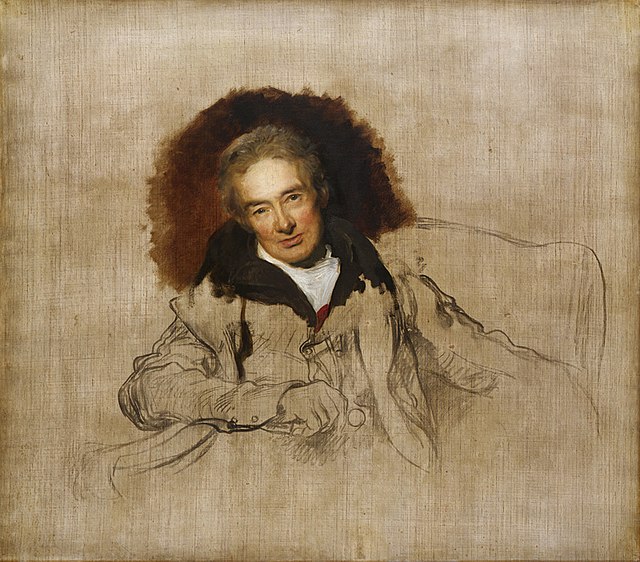
Here's the thing I can’t stop thinking about: one of the people who consistently sought advice and guidance from John Newton was William Wilberforce. William Wilberforce entered British Parliament at the age of 21 in 1780. He was a man of great conscience and considered leaving Parliament to become a clergyman. John Newton encouraged him to serve God where he was, with the influence he had. Every year from 1789 until 1806, William Wilberforce entered a bill into Parliament to abolish the slave trade. The bill was finally passed in 1807. 

How many times was Wilberforce jeered at by his fellow parliamentarians? How often was his bill called “woke” or whatever word they used for “woke” at the time? How many lectures did he endure about the idea that businesses and the economy depended on the trading of human beings? How many times did people point out the verses wherein the Bible seems to "support" slavery or racial inequity? How many times did Wilberforce listen to people say “what about” while mentioning things they had no intention of changing? And now, they are just footnotes in his biographies, because he is the one worth remembering. 


Wilberforce fought on for what he believed in his heart was right, what he had been encouraged to do by a man who had spent some time on the wrong side of that argument and more time regretting what he had done regarding the slave trade. 


And here we are, in a time that is just as contentious as any other in history, celebrating the 250th anniversary of a song that speaks to the sweetness of God’s grace, the ongoing provision of Christ’s care, and the everlasting revelation of the Holy Spirit. If we are to sing this song with any integrity, we cannot simply admire its words and tune, but we must accept the power of its history and we must yield to what it may yet be compelling us to do today, for the sake of the One who has done so much for us. 


In one of his letters of guidance, John Newton wrote, “We often fail to see our present circumstances in the right perspective.” Let us seek, with the Spirit’s help, that right perspective that we may understand the work to which we have been called, the grace we have been given, and the love poured out for us and for all people, by the One who made and kept promises to David and who still finds the lost and causes the blind to see. 


Amen. 


Love Has Come

Sermon for the First Sunday in Advent, Year A (2025)   Written for the Montana Synod    Isaiah 2:1-5; Psalm 122; Romans 13:11-14; Matthew 24...